
If you’ve been considering a home energy upgrade, one of the biggest questions is simple: how much will it actually cost me? New data from Sustainable Energy Authority of Ireland (SEAI) gives us a clear, real-world snapshot of what homeowners paid in 2025 under the One Stop Shop scheme—and the numbers are both revealing and encouraging.
Let’s break it down.
The Big Picture: Costs vs Grants
Across 1,406 homes upgraded in 2025, the data shows a consistent pattern:
- Grants significantly reduce upfront costs
- Most homeowners still invest tens of thousands
- Deeper upgrades (and bigger homes) cost more—but deliver stronger energy improvements
Interestingly, 74% of homeowners spent more than €50,000 on upgrades, highlighting a clear trend toward comprehensive retrofits rather than small fixes.
Mid-Terrace Homes: A Step Up in Investment
Mid-terrace homes show a noticeable jump in cost:
- Median cost: €55,250
- Grant: €18,813
- Homeowner pays: €37,266
Upgrades often expand to include:
- Attic insulation
- Ventilation systems
- Solar panels
This reflects a shift toward whole-home energy solutions rather than isolated improvements.
Semi-Detached & End-Terrace: The Sweet Spot
These homes strike a balance between cost and impact:
- Median cost: €60,805
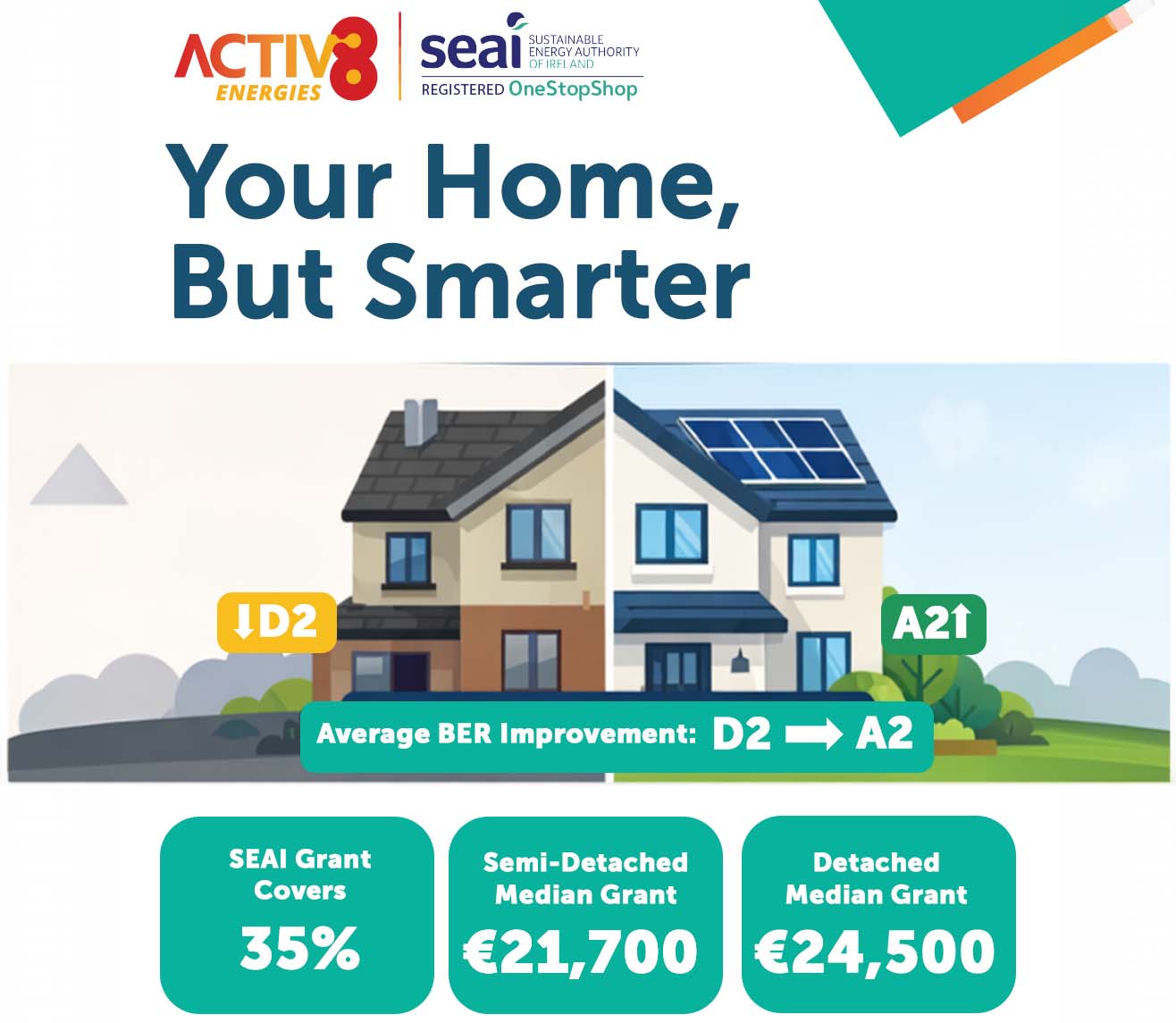
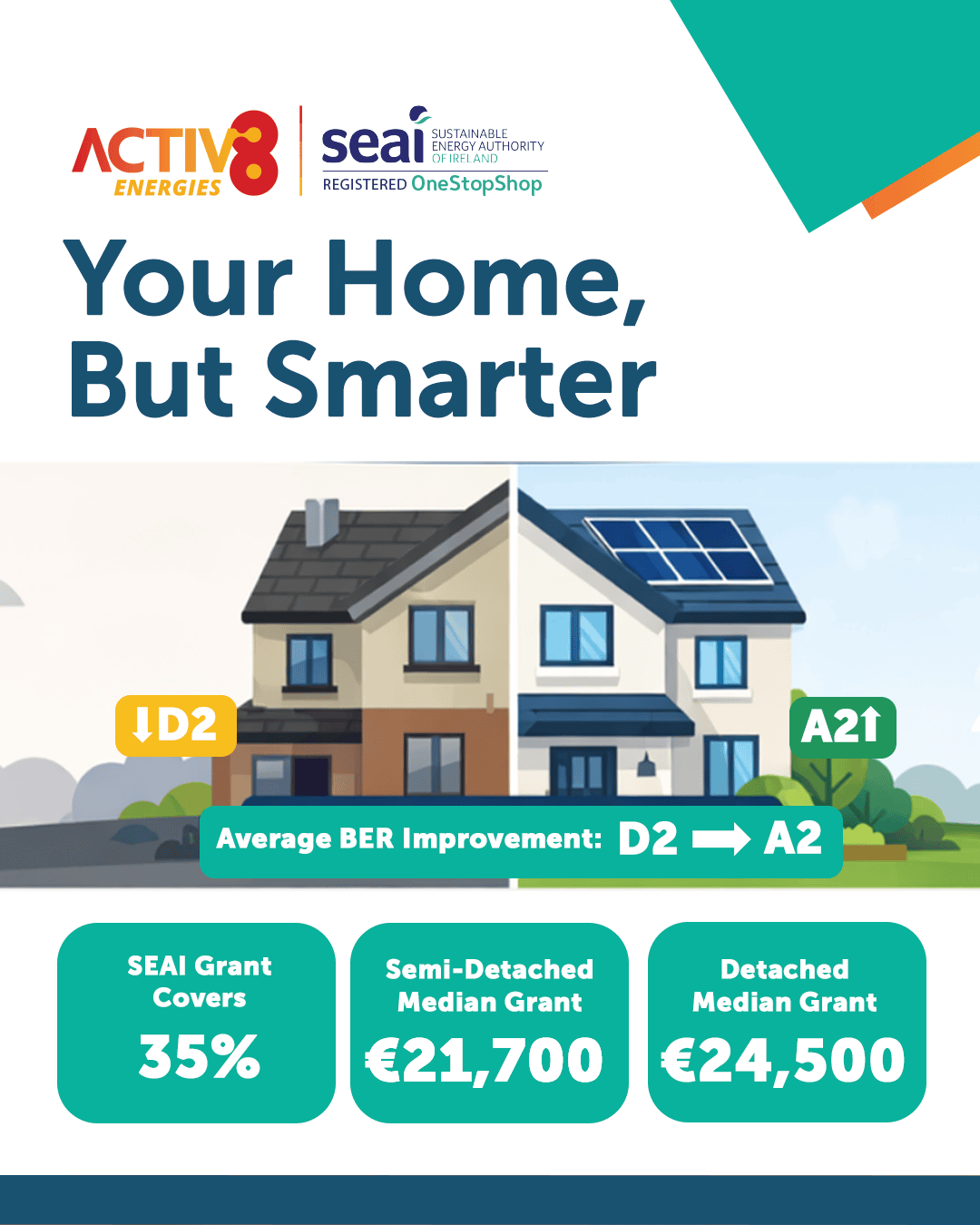
- Grant: €21,700
- Out-of-pocket: €38,932
Common upgrades:
- Heat pumps
- Insulation (wall + attic)
- Solar panels
- Ventilation
Many homeowners in this category are aiming for deep retrofits, which explains the broader upgrade scope.
Detached Homes: The Biggest Investment
Detached homes are the most expensive to upgrade—but also offer the greatest potential for energy savings:
- Median cost: €69,795
- Grant: €24,500
- Homeowner pays: €45,067
These projects typically include:
- Full insulation upgrades
- Heat pump systems
- Solar installations
- Advanced ventilation
Larger surface areas and older construction often mean more work—but also bigger long-term gains.
What Are People Actually Spending?
Here’s how upgrade costs break down across all homes:
- 5% spent under €30,000
- 21% spent €30,000–€50,000
- 40% spent €50,000–€75,000
- 34% spent over €75,000
The takeaway: deep retrofits are becoming the norm, not the exception.
What Do You Get in Return?
While the data highlights costs, the real value lies in outcomes:
- Improved Building Energy Ratings (BER)
- Lower energy bills
- Increased property value
- Greater comfort and air quality
Even modest upgrades can make a difference, but the trend clearly shows homeowners are opting for comprehensive, future-proof solutions.
Final Thoughts
Energy upgrades are a serious investment, but they’re no longer just about saving money on bills. They’re about:
- Protecting against rising energy costs
- Increasing home comfort
- Reducing carbon footprint
- Future-proofing your property
With grants covering a meaningful portion of costs, the question is shifting from “Can I afford to upgrade?” to “Can I afford not to?”
If you’re planning a retrofit, the key is understanding your home type, setting a realistic budget, and thinking long-term. This data shows that while the upfront costs can be substantial, the combination of grants and long-term benefits makes energy upgrades more compelling than ever. To take the first step toward a warmer, more energy-efficient home, you can get started today with Activ8 Energies One Stop Shop.