

All the latest solar related news in Ireland and around the world
September 29, 2026
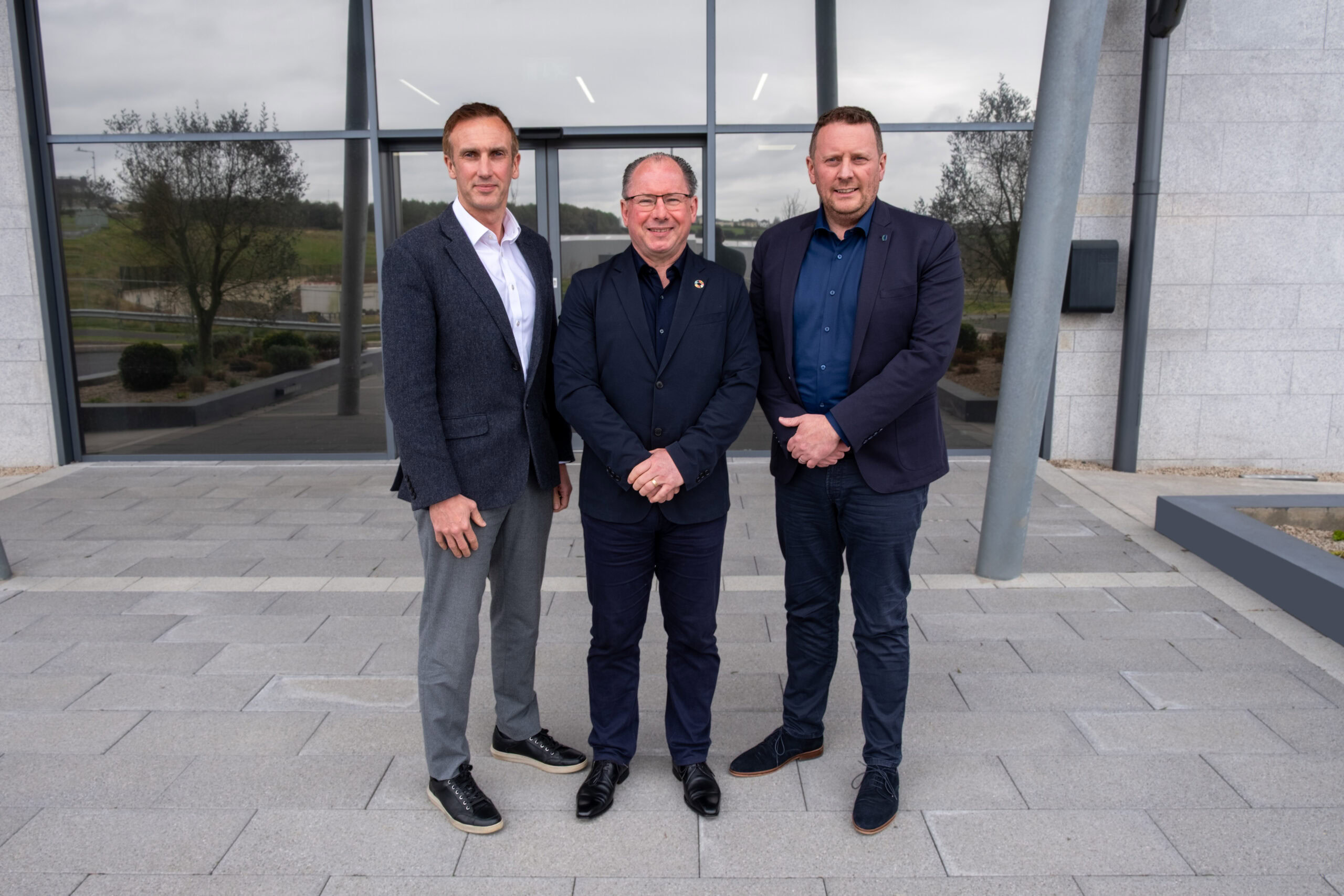
L-R Stephen Gallagher – MD SSE Airtricity, Barry Gavin – Activ8, Ciaran Marron – CEO, Activ8
The solar energy solutions provider aims to strengthen its board with Gavin’s senior sustainable finance and clean energy infrastructure expertise
Activ8 Solar Energies, Ireland’s leading solar provider, has appointed Barry Gavin as an Independent Non-Executive Director and Chairperson of the company’s board.
Barry brings over 25 years’ experience in sustainable finance and clean energy infrastructure, spanning C-suite executive, Chair and non-executive board roles with organisations including Gaelectric, CODEMA, An Post and FuturEnergy Ireland. He has extensive experience in corporate governance, strategy and investment, alongside sector expertise spanning the primary emitting sectors: power, heating/cooling, and transport, with experience across residential, commercial and industrial markets. This gives him a broad, cross-sectoral perspective on the challenges and opportunities associated with the energy transition. Barry is also an Adjunct Lecturer at UCD Michael Smurfit Graduate Business School, where he lectures in Sustainable Finance and Renewable Energy Finance.
He is a Fellow of the Chartered Institute of Management Accountants, holds an MBA from Dublin City University, has been approved by the Central Bank of Ireland to hold Pre-Approval Controlled Function (PCF) roles as an Independent Non-Executive Director, and is a member of the Institute of Directors.
Ciaran Marron, CEO and Founder of Activ8 Solar Energies, said: “Barry’s experience across sustainable finance and clean energy infrastructure is a significant addition to our board. He is a real authority in our sector, with a rare combination of executive and non-executive experience and a deep understanding of governance in regulated environments – all of which will support us well as we continue to grow.”
Commenting on his appointment, Barry Gavin said: “This is an exciting time to join Activ8. Over two decades, the team has built a strong position in the Irish solar market, providing a solid platform for the next phase of growth. I’m looking forward to working with Ciaran, the Board and the wider team as the business develops. The energy transition has been a significant part of my executive, board and academic work, and I’m pleased to bring that experience and perspective to Activ8.”
This appointment comes at an exciting time for Activ8, as the company celebrates 20 years in business, having recently launched its all-island funded solar initiative – worth up to €200 million – helping Irish businesses install on-site solar systems without upfront costs through long-term Power Purchase Agreements.
All the latest solar related news in Ireland and around the world

We’ve a First Communion this weekend, so the window cleaner was out this morning getting the house looking respectable.
I remembered him telling me last year that he’d installed ten solar panels and that they were “the best thing he’d ever bought – better than any car, van or tools!”
I asked him how they were performing and he laughed, “Good enough that I added another six.”
That probably says more about how attitudes towards solar have changed in Ireland than any statistics ever could.
A few years ago, most conversations around solar panels were still centred around whether they worked properly in Irish weather, or how long it would take to “pay them back.”
Now, more and more people simply seem to know somebody who has them – and are glad they made the move.
But once people start seriously considering solar, the same question usually follows fairly quickly – How many solar panels do I actually need?
The answer is rarely as straightforward as people expect.
Two houses sitting side-by-side can need completely different solar systems.
One might have two retired people at home most of the day. The other could have two adults working remotely, an EV charger outside and a heat pump running in the background.
The size of the house matters to a point, but electricity usage matters far more.
That’s one of the biggest misconceptions around solar in Ireland. People often assume there’s a “standard” setup for a three-bed semi-detached house or a bungalow, when in reality the right system depends much more on how electricity is actually used inside the home.
In most cases, the starting point for sizing a solar system is your electricity usage.
That’s why installers usually look at previous electricity bills first rather than simply counting bedrooms or measuring roof size.
A household with high daytime usage will often benefit more from solar than a household that uses most of its electricity late at night.
Likewise, somebody charging an electric car several times a week is naturally going to need a larger system than somebody with relatively modest usage.
The way homes use electricity has changed significantly in recent years as well.
Remote working, electric vehicles, heat pumps, home offices and rising electricity costs have all shifted the conversation around solar system sizing.
Electric vehicles are probably one of the biggest reasons homeowners are now installing larger systems than they might have considered a few years ago.
Once people begin charging a car at home, electricity usage can increase quite dramatically.
And because of that, many homeowners are now planning solar systems not just around current usage, but around future usage too, which is an important distinction.
Someone who doesn’t currently own an EV may still decide to install a slightly larger system today because they know there’s a good chance they’ll buy one within the next few years.
At that point, adding a few extra panels during the initial installation can often make far more sense than expanding the system later.
Many homeowners worry that their roof may simply be too small for solar. In reality, modern solar panels are far more efficient than they used to be.
That means even relatively modest roof areas can often generate meaningful amounts of electricity.
Of course, roof orientation, pitch and shading still matter. South-facing roofs generally perform best, but east and west-facing roofs can still work very well in Irish conditions.
And even homes with some shade are not automatically ruled out anymore either, particularly as panel and inverter technology continues to improve.
One of the more interesting shifts in the solar market is that homeowners are becoming much more informed than they used to be.
A few years ago, there was often an assumption that the biggest possible system was automatically the best option.
Now, people are thinking more carefully about balancing installation cost, electricity usage, battery storage and long-term value.
Installing too small a system can leave homeowners disappointed with the savings.
But oversizing a system significantly beyond what a household realistically uses can also lengthen the financial payback period unnecessarily.
The best systems are usually the ones designed around how the household actually lives.
Battery storage has become much more common in Irish solar installations.
Previously, homeowners mainly focused on generating as much electricity as possible during daylight hours and using what they could immediately.
Now, many households are storing excess electricity for use later in the evening when electricity demand is often higher.
That means batteries can sometimes allow homeowners to make better use of the electricity already being generated, rather than simply increasing the number of panels on the roof.
For many households, the conversation is no longer just “How many panels do I need?” But also “How much of my own electricity do I want to store and use later?”
This is another major change compared to just a few years ago.
People are no longer thinking about solar purely in terms of today’s electricity bill. They’re also thinking ahead.
Will electricity prices continue rising? Will they buy an EV? Could they add a heat pump later? Will battery storage become even more important over time?
Those questions are increasingly shaping how systems are designed.
And in many cases, homeowners are choosing systems that give them flexibility for the future rather than simply covering current usage alone.
Government grants continue to make solar more accessible for Irish homeowners.
SEAI supports reduce the upfront installation cost and can significantly improve overall value compared to where the market was a few years ago.
That doesn’t mean every household should simply install the maximum number of panels possible because grants are available.
But grants do make it easier for homeowners to consider slightly larger or more future-focused systems than they might previously have considered financially viable.
There’s no perfect universal answer.
Some homes may benefit from relatively small systems designed mainly to offset daytime electricity usage.
Others may need larger systems because of electric vehicles, heat pumps, higher occupancy or future plans.
For many standard Irish family homes, systems often fall somewhere in the middle – large enough to make a meaningful dent in electricity bills without massively overshooting actual usage.
And that’s usually the key.
The best solar systems are rarely the ones with the highest number of panels. They’re the ones designed properly around the household itself.
It depends more on electricity usage than house size. Factors such as EV charging, heat pumps, remote working and battery storage can all affect the ideal system size.
Yes. Oversizing a system well beyond what a household realistically uses can reduce overall financial efficiency and lengthen payback periods.
Not necessarily. Two similar-sized homes can have very different electricity usage depending on occupancy, heating systems and lifestyle.
Yes. Modern panels are more efficient than older systems, meaning even smaller roof areas can often support worthwhile solar generation.
If you’re trying to work out what size solar system might actually suit your house, it usually makes more sense to look at how your household uses electricity rather than searching for a “standard” number of panels online.
With over 20 years’ experience and more than 25,000 installations across Ireland, Activ8 Solar Energies designs systems around real homes, real electricity usage and long-term energy goals – helping homeowners understand what makes sense for their own situation clearly and without pressure.
If you’d like a clearer idea of what could work for your own home, including potential savings, battery options, EV charging and SEAI supports, you can get in touch with the Activ8 team here.
May 20, 2026

There’s an old Chinese proverb that says: “The best time to plant a tree was 20 years ago. The second best time is now.”
The point, I suppose, is that while some decisions would have been even better made earlier, there’s not much value in endlessly waiting for the perfect moment either.
Which brings me to a question we hear quite a lot from homeowners thinking about solar panels – “When’s the best time to install them?”
And to paraphrase the proverb slightly, the best time was probably yesterday. The second best time is today.
That might sound slightly simplistic, but it reflects how much the thinking around solar has changed in Ireland over the past few years.
Not that long ago, many people treated solar as something seasonal. You’d start thinking about it once the evenings stretched a bit longer, the hum of lawnmowers returned and you’d had your first 99 of the year.
But increasingly, homeowners are no longer viewing solar as a summer project. They’re viewing it as a long-term energy decision.
The thinking is understandable. Longer days naturally mean more daylight, and stronger solar generation usually happens during spring and summer months.
People also tend to become much more conscious of household energy costs after winter. Once the weather improves, solar often moves from “something to look into eventually” into something homeowners actively start researching.
And visually, you simply notice solar more at that time of year too. You spot new panels appearing on neighbours’ roofs. Somebody mentions they’ve installed a battery. Another person starts talking about charging their EV using solar electricity.
That tends to trigger interest and a certain sense of FOMO.
One of the biggest misconceptions that still lingers is the idea that solar panels somehow stop being worthwhile outside sunny summer weather.
In reality, solar panels generate electricity from daylight rather than heat.
That means they continue producing electricity throughout the year, including during cloudy and overcast conditions.
Obviously, generation levels are usually stronger during spring and summer because daylight hours are longer. But modern solar systems still contribute meaningfully during autumn and winter too.
And importantly, solar is normally judged across the full year rather than any single month.
This is probably the biggest shift in mindset around solar in Ireland recently.
A few years ago, delaying installation until “next spring” felt relatively harmless.
But electricity prices haven’t exactly settled down over the past few months, and more households are now thinking differently about energy costs altogether.
Because every month spent waiting is also another month fully reliant on grid electricity prices.
That doesn’t mean people should rush into solar without proper advice or planning. But it does explain why more homeowners are no longer treating it as a purely seasonal decision.
The conversation has become less about chasing perfect sunshine and more about reducing long-term exposure to unpredictable energy costs.
Another thing many homeowners don’t initially consider is that spring and summer are traditionally the busiest periods for solar enquiries and installations in Ireland.
That can sometimes mean longer waiting times, busier installation schedules and greater demand for surveys and appointments.
So ironically, waiting until “peak solar season” doesn’t always create the advantage people assume it will.
Many homeowners now install systems year-round simply because the long-term value matters more than trying to perfectly time the calendar.
There’s also a practical argument for installing solar before or during winter rather than immediately after it.
Many households only start seriously considering solar once they’ve already gone through another difficult winter of high electricity bills.
Installing earlier means the system is already in place and generating electricity once brighter months arrive again.
And psychologically, many homeowners simply like the idea of heading into winter knowing they’ve already started reducing reliance on imported electricity and volatile energy markets.
Solar systems themselves have evolved quite a bit in recent years too.
Battery storage allows households to store excess electricity generated during the day for use later in the evening.
Electric vehicles have also changed how many homeowners think about electricity usage altogether.
For some households, solar is no longer simply about generating as much electricity as possible during sunny afternoons.
It’s about lowering long-term electricity costs, charging vehicles more affordably, reducing reliance on the grid and creating more predictability around energy bills.
At that stage, people aren’t really thinking about sunshine anymore. They’re thinking about their bills.
Honestly, the best time is usually when your household is ready, your electricity usage justifies it and you want to start reducing exposure to rising energy costs.
There’s no magic month where solar suddenly becomes worthwhile.
Modern systems work throughout the year in Irish conditions, and the long-term value comes from cumulative electricity generation over many years rather than chasing a few extra weeks of summer sunshine.
For many households, waiting for the “perfect” time simply delays the benefits they could already be getting.
Yes. Solar panels continue generating electricity throughout winter, although output is generally lower than during longer summer days.
Summer can be a good time to install solar, but it’s also one of the busiest periods for installers. Many homeowners now install systems throughout the year.
Not necessarily. Waiting may simply delay the electricity savings and energy generation you could already be benefiting from.
Yes. Solar panels generate electricity from daylight rather than direct heat, meaning they still work during cloudy and overcast conditions.
If you’re considering solar, it usually makes more sense to focus on your household’s electricity usage, long-term energy costs and future plans rather than trying to find the “perfect” season to install.
With over 20 years’ experience and more than 25,000 installations across Ireland, Activ8 Solar Energies designs systems around real homes, real electricity usage and long-term energy goals – helping homeowners understand what makes sense for their own situation clearly and without pressure.
If you’d like to explore what solar could look like for your own home, including potential savings, battery options, EV charging and SEAI supports, you can get in touch with the Activ8 team here.
May 20, 2026

Activ8 Solar Energies, Ireland’s leading solarprovider and leading energy provider SSE Airtricity have partnered to launch an all-island funded solar initiative for businesses, worth up to €200 million. The initiative will help Irish businesses install on-site solar systems without upfront costs, offering long-term energy price stability.
Activ8 and SSE will invest in funding, installing and maintaining the Solar PV system while businesses will pay for the electricity they generate on site, at an agreed and attractive rate compared to grid electricity, through Power Purchase Agreements (PPAs).
This initiative comes as energy costs continue to fluctuate due to international supply pressures and geopolitical uncertainty. By ensuring a portion of their energy costs is covered for 15-25 years, participating companies can improve financial predictability, competitiveness; and ultimately the long-term stability of their operations.
The Solar PV initiative is available nationwide and is expected to appeal to sectors with high and consistent energy demand, including manufacturing, logistics and large-scale commercial operations. Projects may also qualify for support through the Sustainable Energy Authority of Ireland commercial grant scheme.

Commenting on the launch, Ciaran Marron, CEO of Activ8 Energies said “Energy price instability has become a real issue for Irish businesses, and many are looking for ways to take control of a cost that can fluctuate dramatically from month to month. This funded initiative gives companies a clear path to predictable energy pricing without upfront investment. It is a sustainable solution for businesses of all sizes, allowing them to plan ahead with greater confidence, invest in growth and remain competitive even as energy markets remain uncertain.”
Minister for Climate, Energy and the Environment, Darragh O’Brien attended the launch, saying, “Key priorities for me in government are renewable energy expansion, energy affordability and security, and climate targets alignment.
Alongside this, private investment at this scale helps give companies practical options for businesses to reduce exposure to market volatility and plan with greater confidence; while also ensuring we are taking steps towards our 2030 climate targets.”
Also in attendance at the launch, Stephen Gallagher, Managing Director SSE Airtricity said “This funded Solar PV initiative provides price certainty for businesses while also removing the upfront cost barrier to decarbonising operations. Eligible organisations will avail of the Solar PV system with no upfront cost. Through the PPA, they will buy the electricity generated on site, at a attractive rate compared to grid electricity. I would really encourage businesses to avail of this opportunity. We’re providing a practical way to bring more certainty, resilience, and stability to Irish businesses.”
This announcement comes at an exciting time for Monaghan-based Activ8 Energies, which this year celebrates its 20th anniversary, underscoring its growth and leadership in large-scale renewable energy solutions for Irish businesses.
Businesses interested in funded solar can contact Activ8 Solar Energies directly at www.activ8energies.com/funded-solar-initiative
May 11, 2026

There are 44 houses in my small estate in a village in rural Ireland.
This time last year, only one of them had solar panels. The homeowner was clearly ahead of the curve – Tesla out the front, EV charger on the wall, the whole lot.
Fast forward twelve months and a quick stroll around the estate counts eleven homes with panels on the roof.
That’s a fairly dramatic shift in a short space of time. And it says a lot about how the conversation around solar has changed in Ireland.
A year ago, most discussions around solar panels in Ireland revolved around one thing: return on investment.
People wanted to know how long it would take to “pay back” the system. The thinking was fairly simple. Spend money upfront, lower your electricity bills over time, and eventually come out ahead.
But even in the space of a year, the conversation has changed quite a bit.
Because for a lot of Irish homeowners in 2026, the question is no longer just “will solar panels save me money?”
It’s whether they help bring some level of predictability, control and long-term stability back into a part of life that has become increasingly uncertain.
Energy prices still haven’t properly settled.
Electricity bills remain significantly higher than they were a few years ago, and most households now understand how exposed Ireland still is to global energy markets. Events happening elsewhere in the world can still have a direct impact on what arrives through the letterbox every couple of months.
That uncertainty has changed behaviour.
A few years ago, solar panels were still viewed by many people as a niche upgrade or something environmentally focused homeowners invested in. Now, they’ve become far more mainstream.
You see solar panels on housing estates, farm buildings, warehouses and ordinary family homes across the country. More people know somebody who has installed them. More people understand how grants work. More people have looked into batteries, electric vehicle charging and smart tariffs.
And importantly, more people now understand that solar panels work perfectly well in Irish conditions.
For years, one of the biggest misconceptions around solar in Ireland was the idea that the weather somehow made it pointless.
That perception has changed dramatically.
Most homeowners now understand that solar panels generate electricity from daylight rather than heat. Even on overcast days, modern systems still produce electricity. Ireland may not have Mediterranean sunshine, but it has long daylight hours for much of the year, particularly through spring and summer.
And the technology itself has improved considerably as well.
Modern systems are more efficient, batteries are better, monitoring tools are smarter and overall awareness is much higher than it was even five years ago.
The conversation has shifted from whether solar panels work in Ireland to whether it still makes sense not to consider them.
This is probably the single biggest change.
When electricity prices were lower and relatively stable, solar savings looked like a nice bonus.
Now they feel far more significant.
Ireland continues to have some of the highest electricity prices in Europe, and while rates vary between suppliers and tariffs, many households are still paying dramatically more than they were before the energy crisis.
That changes the maths completely.
Every unit of electricity generated on your roof is a unit you don’t need to buy from the grid at full market rates.
Solar doesn’t eliminate electricity bills entirely, but it can reduce them significantly and lower your exposure to future price spikes. For many households, that predictability is becoming just as important as the financial savings themselves.
Another thing that has changed the conversation is microgeneration.
A few years ago, homeowners mainly thought about solar in terms of reducing daytime electricity usage.
Now, households can also receive payment for excess electricity exported back to the grid.
For some homeowners, the return is modest. For others, particularly during brighter months when systems are generating more electricity than the house is using, it can make a noticeable difference over the course of a year.
More importantly, it changes how people think about the roof itself.
Instead of simply reducing bills, solar panels are now seen by many households as something capable of actively generating value over time.
Battery storage has become much more common in Irish solar installations.
Previously, many homes simply used the electricity generated during the day and exported whatever they didn’t need.
Now, more households are storing excess electricity to use later in the evening, when electricity demand is typically higher and rates can be more expensive.
That changes the maths quite a bit.
Instead of only benefiting from solar during daylight hours, households can continue using stored solar electricity after sunset, reducing reliance on the grid even further.
For people who are out at work during the day and use more electricity in the evenings, batteries have made solar far more attractive than it once was.
The rise in electric vehicles has also changed the conversation around solar in Ireland.
For many households, an EV increases electricity usage significantly. And once people start thinking about home charging costs, solar panels tend to enter the discussion naturally.
That’s because solar changes the economics of driving as well as household electricity use.
Instead of relying entirely on petrol, diesel or grid electricity, part of your driving can effectively be powered by electricity generated at home.
As fuel prices continue to fluctuate, that level of control appeals to more people than it did a few years ago.
While rising electricity costs are driving much of the recent demand for solar, environmental concerns still matter to many homeowners.
Generating electricity at home reduces reliance on fossil fuels and lowers the carbon footprint associated with everyday electricity usage.
For some people, sustainability is central to the decision. For others, it’s an added benefit alongside the financial side.
Either way, the environmental argument for solar has become easier for people to connect with as renewable energy becomes more visible across Ireland generally.
Government supports continue to play an important role in making solar more accessible.
SEAI grants reduce the upfront installation cost significantly, helping shorten the payback period compared to a few years ago.
That doesn’t mean homeowners are only installing solar because grants exist. But they do make the decision easier to justify financially, particularly when combined with higher electricity prices and improved technology.
The overall cost still depends on the size of the system, battery storage and the home itself, but grants remain an important part of the equation.
Historically, one of the biggest reasons people delayed solar was simple: the upfront spend.
Even homeowners who liked the idea often pushed it into the “someday” category because it felt like a major one-off project.
That’s changing too.
New financing and payment options are making solar more accessible for households that may not want to commit a large lump sum upfront.
And psychologically, that changes the conversation.
Instead of comparing solar to a large renovation project, more homeowners are now comparing it to what they’re already spending every month on electricity.
That’s a very different way of thinking about it.
There’s also the property side of the equation.
Energy efficiency has become a much bigger consideration for buyers in recent years, particularly as electricity and heating costs have increased.
Solar panels can contribute positively towards a home’s BER rating, helping improve overall energy performance and potentially making a property more attractive when it comes time to sell.
That doesn’t mean people should install solar purely to increase resale value. But buyers are becoming far more conscious of running costs, efficiency and future-proofing than they were even a few years ago.
Homes already equipped with solar are increasingly viewed differently in the market.
That’s probably the biggest shift compared to older conversations around solar panels in Ireland.
A few years ago, most people focused almost entirely on upfront cost, payback periods and yearly savings.
Now the conversation is broader.
Homeowners are also thinking about long-term stability, energy independence, battery storage, electric vehicle charging, environmental impact, future property value and reducing reliance on imported energy markets.
And that wider context matters, because “worth it” means something slightly different now than it did even a few years ago.
For most homeowners, yes. Rising electricity prices, SEAI grants, battery storage and the ability to reduce reliance on the grid have all strengthened the case for solar in recent years.
Yes. Solar panels generate electricity from daylight rather than heat, meaning they still work effectively in Ireland’s climate throughout the year.
Homeowners can receive payment for excess electricity exported back to the grid through microgeneration schemes, although the amount varies depending on generation and supplier rates.
Solar panels can improve BER ratings and may make homes more attractive to buyers who are increasingly conscious of energy costs and efficiency.
If you want a realistic picture of what solar could actually look like for your own home – including potential savings, battery options, SEAI grants, EV charging and the different ways systems can now be paid for – it’s worth getting advice based on how your household actually uses electricity.
With over 20 years’ experience and more than 25,000 installations across Ireland, Activ8 Solar Energies designs systems around real homes, real usage patterns and long-term energy goals, helping homeowners make informed decisions clearly and without pressure.
May 8, 2026

It’s not something most people sit down and properly compare.
You pay for oil when the tank runs low. Electricity bills arrive every couple of months. And solar tends to sit in a different category altogether – something you might look at down the line.
But when you step back, all three play a role in how your home is powered – and what it costs you to run it.
They’re not direct like-for-like comparisons. Oil is mainly used for heating. Electricity powers most of the home. Solar generates some of that electricity. But together, they shape your overall energy costs.
And when you look at them that way, the more important question isn’t just what each one costs today – it’s how those costs behave over time.
At first glance, it seems straightforward.
Oil has a price per litre. Electricity has a price per unit. Solar has traditionally come with an upfront cost – although that’s starting to change, with options now available to spread the cost over time and align it more closely with the savings it generates.
But those numbers on their own don’t tell the full story.
Oil and electricity are ongoing expenses. You pay for them continuously, and their prices can change quickly depending on global markets.
Solar works differently. Once installed, it generates electricity from daylight, meaning part of your energy cost becomes fixed from that point on.
So rather than comparing prices at a single moment in time, it’s more useful to look at how each option behaves over the longer term.
Oil is still common, especially in rural homes. The big problem isn’t just the price – it’s the wild swings.
In early 2026 we saw heating oil jump dramatically. As of April 2026, 1,000 litres typically costs around €1,480–€1,600, but it has spiked much higher in recent months. A sudden cold snap or global event can turn a normal fill into a painful €1,700+ hit.
You feel oil in big lumps rather than steady drips, which makes budgeting harder. Many households dread the “time to order oil” conversation.
Electricity feels more manageable because bills arrive regularly and you can track usage easily. But it’s far from stable.
In 2026, unit rates typically sit between 25c and 42c per kWh depending on your supplier and tariff. For an average household using 4,200 kWh per year, the typical annual bill lands between €1,700 and €1,800 (sometimes higher with standing charges and network costs).
Because much of Ireland’s electricity is still tied to gas prices, your bill can rise even if you use exactly the same amount as last year. Fixed daily standing charges add cost no matter how little you use.
It’s smoother than oil, but you’re still fully exposed to wholesale market movements.
Solar panels don’t replace your energy system entirely.
But they do change how much of it you rely on.
Instead of buying all of your electricity from the grid, you’re generating some of it yourself during the day.
That means fewer units bought at fluctuating prices, less exposure to global energy markets, and more predictability over time. You’re effectively locking in part of your energy cost.
It doesn’t eliminate bills completely, but it shifts the balance.
If you look at oil, electricity and solar side by side, the biggest difference isn’t just cost – it’s exposure.
Oil leaves you fully exposed to price swings. Electricity spreads those costs out more evenly, but still tracks wider energy markets.
Solar reduces that exposure by allowing you to generate part of your own energy, meaning fewer units need to be purchased at whatever the current market rate happens to be.
You tend to notice that difference most when prices start moving again.
What’s changed in recent years is how people think about energy.
It’s no longer just about finding the cheapest option today.
There’s a growing focus on predictability, long-term value, and how much control you have over your energy.
That’s because when prices can move quickly, stability becomes just as important as cost.
There isn’t a single solution that suits every home.
Some properties are better suited to solar than others. Oil may still be the primary heating source in certain cases. Electricity usage patterns vary from one household to the next.
Most homeowners end up looking at a combination of factors, including how much energy they use, how their home is set up, and the level of control they want over future costs.
The right approach usually comes from understanding how those pieces fit together, rather than focusing on one option in isolation.
With energy prices becoming more unpredictable, the differences between these options are becoming more noticeable.
It’s not just about how much you pay. It’s about how exposed you are to change.
And for many households, that’s becoming the more important question.
It depends on usage and market conditions, but both are subject to price fluctuations and can increase due to global factors.
Solar can reduce the amount of electricity you need to buy from the grid, which can lead to lower overall costs over time.
No – most homes still use a mix, but solar can reduce reliance on both.
It provides greater predictability, as part of your energy is generated at home rather than purchased at variable market rates.
Looking at oil, electricity and solar side by side, the biggest shift isn’t just about cost – it’s about control.
That’s why more homeowners are starting to look beyond short-term prices and towards longer-term energy planning.
Activ8 Solar Energies has delivered over 25,000 energy upgrades across Ireland, working with homeowners to design solar systems around real usage patterns, Irish homes, and available SEAI supports – helping reduce reliance on the grid and bring more stability to long-term energy costs.
April 30, 2026
Updated June 2026
It’s funny who ends up buying an electric car.
I bumped into an old work colleague recently – the last person you’d expect to be driving one. He wouldn’t exactly be the type you’d picture rinsing out yoghurt pots or separating cardboard from plastics.
But there he was, telling me he’d made the switch. I’d only have been more shocked if he’d revealed he’d become vegan.
And when I asked why, it wasn’t anything to do with the environment or the tech. It was simple enough – fuel costs, and the feeling that things could spike again at any point.
That stuck with me, because it’s not just him.
Electric car sales have been rising sharply again in Ireland, and a lot of that is being driven by the same thing – uncertainty around energy costs, both at home and on the road.
And what’s interesting is what’s starting to happen alongside it. More homeowners aren’t just switching how they drive – they’re starting to look at how they power that driving as well.
There’s been a noticeable shift in the Irish car market in recent months.
Electric vehicle sales are growing quickly again in 2026, with EVs now making up a significant share of new registrations and continuing to rise year-on-year, as highlighted in recent RTÉ coverage.
That’s not just happening in Ireland either.
Across mainland Europe, electric vehicle sales jumped by more than 50% in a single month earlier this year, with rising petrol and diesel prices – linked to global tensions – seen as a key driver behind that surge.
The economics of EV ownership may also become even more attractive for some households following the Government’s announcement of a new EV scrappage scheme in June 2026. For eligible motorists replacing older petrol or diesel vehicles with a new electric vehicle, support of up to €8,500 is now available through a combination of grants and scrappage incentives.
That’s not a coincidence. When the cost of fuel becomes unpredictable, people start looking for alternatives.
For years, the cost of driving was relatively predictable. Now, it’s anything but.
Petrol and diesel prices are tied to global oil markets, which means they can change quickly – often driven by geopolitical events, supply disruptions, or shifts in demand.
We’ve seen that play out again recently, with volatility returning and costs creeping upwards.
And unlike electricity bills, fuel costs are felt straight away – every time you fill the tank.
Electric cars are often cheaper to run – and in many cases, noticeably so.
Charging at home can cost significantly less per kilometre than petrol or diesel, which is one of the main reasons more people are considering the switch.
But it’s not completely separate from the wider energy system. If electricity prices rise, the cost of charging rises too.
So while EVs reduce your reliance on fuel, they still leave you exposed to electricity markets – which, as we’ve seen, can also be unpredictable.
This is where solar panels start to make a real difference.
Instead of relying entirely on the grid to charge an electric car, solar allows you to generate some of that electricity at home.
In practical terms, that means part of your driving cost is no longer tied to petrol or diesel – and not fully exposed to electricity price increases either.
You’re effectively using daylight to power part of your driving.
It doesn’t remove costs entirely, but it shifts a portion of them into something far more stable.
What’s changing isn’t just how people power their homes – it’s how they think about energy altogether.
Recent commentary, including coverage in RTÉ and analysis in the Irish Examiner, points to a broader shift. Households are starting to look at energy as a whole system, rather than separate costs.
In the past, the car and the house were two different conversations. Now, they’re starting to overlap.
An electric car increases your electricity usage. Solar panels reduce how much of that electricity you need to buy.
So instead of just switching from petrol to electric, many homeowners are starting to look at the bigger picture such as how much energy they use, where it comes from and how much of it they can actually control.
Cost still matters, of course, but increasingly, the bigger driver is predictability.
Fuel prices can spike. Electricity prices can fluctuate. Both are influenced by factors outside your control.
Solar doesn’t remove all of that, but it does reduce how much of your day-to-day energy – including driving – is tied to those external pressures.
And for many people, that stability is becoming just as important as the savings.
This isn’t something that might happen – it’s already happening.
Electric vehicle adoption is accelerating, awareness is higher, and more households are starting to think about long-term energy costs rather than short-term price changes.
At the same time, solar adoption has grown rapidly in Ireland, driven by rising energy costs and the desire for more control.
Put the two together, and it starts to make a lot more sense.
In most cases, yes – particularly when charging at home, although costs still depend on electricity prices.
Yes – solar panels can generate electricity during the day, which can be used to charge an EV or offset charging costs.
Not entirely, but it can significantly reduce how much electricity you need to buy from the grid.
Because it reduces exposure to both fuel prices and electricity price volatility, bringing more predictability to overall energy costs.
For a lot of households, the conversation is starting to move beyond individual bills.
It’s no longer just about electricity, or heating, or fuel – it’s about how everything connects.
That’s why more homeowners are looking at ways to reduce reliance on external energy sources altogether, whether that’s through efficiency upgrades, solar, or a combination of both.
Activ8 Solar Energies has delivered over 25,000 energy upgrades across Ireland, working with homeowners to design solar systems around real usage patterns, Irish homes, and available SEAI supports – helping reduce reliance on the grid and bring more stability to long-term energy costs.
April 30, 2026
For a long time, solar panels were seen as a big, one-off expense by Irish homeowners.
Something you’d look at when your Credit Union savings balance looked healthy, or when you were already planning a wider home upgrade.
Even people who liked the idea of solar often parked it for later – not because they didn’t see the value, but because of how it had to be paid for.
But that part of the conversation is starting to change.
Solar has always been a different type of purchase compared to your usual energy bills.
With oil or electricity, you pay as you go. The cost is spread out over time, even if the total adds up.
Solar flipped that model.
You invested upfront, and the return came gradually through lower electricity bills over the years.
That worked for some households, but for others, it created a barrier – even if the long-term savings made sense.
More recently, the way people pay for solar has started to shift.
Instead of needing to cover the full cost upfront, there are now options that allow the cost to be spread over time.
That brings solar closer to the way people already pay for energy – not as a single large outlay, but as something that can be managed more gradually.
In practical terms, that can mean monthly payments rather than one upfront investment, depending on the option chosen.
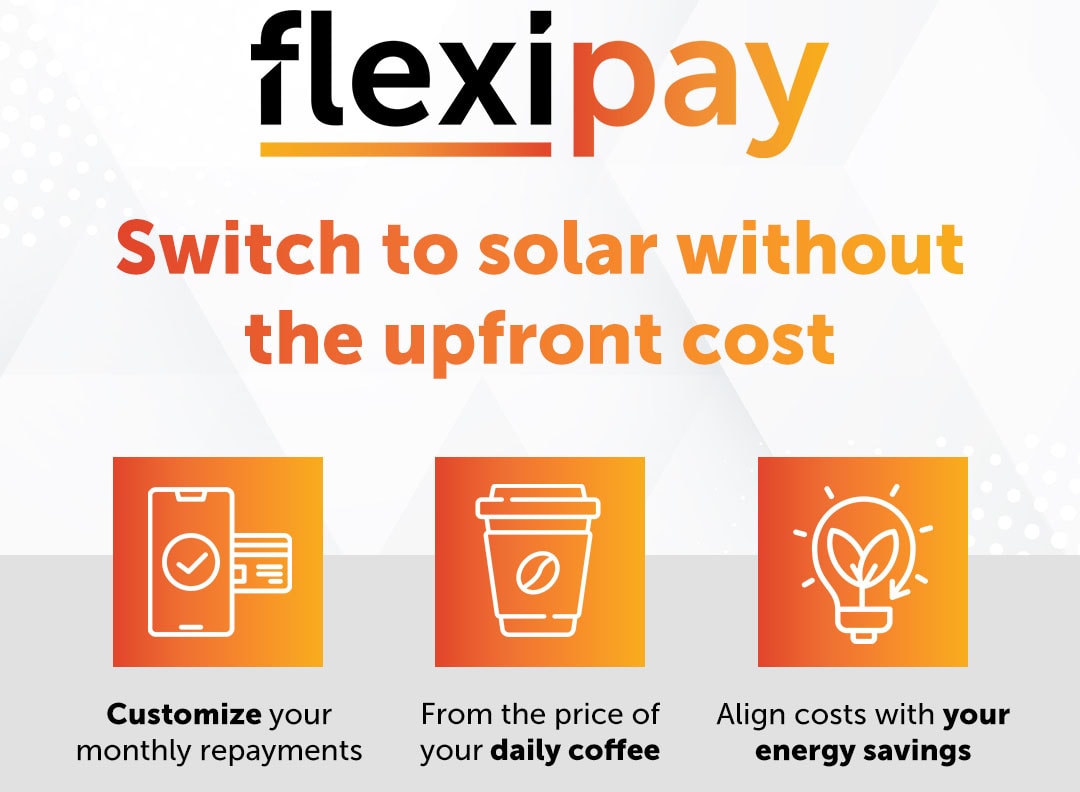
We’re seeing this reflected in the market as well. Solutions like Activ8’s Flexipay, introduced in partnership with humm, are designed to give homeowners more flexibility in how they fund a system.
It doesn’t remove the cost, but it changes how that cost is felt – and for many households, that’s a meaningful shift.
For many homeowners, the decision isn’t just about total cost – it’s about cash flow.
A large upfront payment can be a blocker, even if the long-term outcome makes sense. Spreading the cost changes that.
Instead of needing a lump sum, the decision becomes easier to weigh against what you’re already paying for electricity when your bill lands every two months.
This shift in how solar is paid for is starting to change how people approach the decision.
Previously, it was something you planned for, saved towards and often delayed.
Now, it’s being considered much earlier in the process.
Instead of asking “can I afford to pay for this upfront?”, more homeowners are asking: “How does this fit into what I’m already spending on energy?”
That’s a very different way of thinking about it.
Energy costs haven’t stood still over the past few years.
Prices have moved – sometimes quickly – and that’s made long-term planning more difficult.
At the same time, awareness of solar has grown, and more households understand how it works and what it can do.
The result is that the conversation is shifting.
It’s no longer just about whether solar is “worth it” – it’s about how it’s paid for, and how flexible that can now be.
Do you have to pay for solar panels upfront in Ireland?
Not always. While solar has traditionally required an upfront payment, there are now options that allow the cost to be spread over time.
It depends on your situation. For some homeowners, spreading the cost makes solar more accessible, while others may prefer to pay upfront.
For many households, yes – but it depends on how the system is set up and how the costs compare to your current energy spend.
If you want a clear, honest picture of what solar would actually look like for your home – including the grant, realistic monthly payments, and potential savings based on your own usage – it’s worth getting proper advice.
Activ8 Solar Energies has been installing solar systems across Ireland for over 20 years and has helped more than 25,000 homes make the switch. We design every system around how your household actually uses electricity and explain all the options (including SEAI supports) without the hard sell.
Feel free to reach out if you’d like straightforward answers tailored to your house.
April 30, 2026
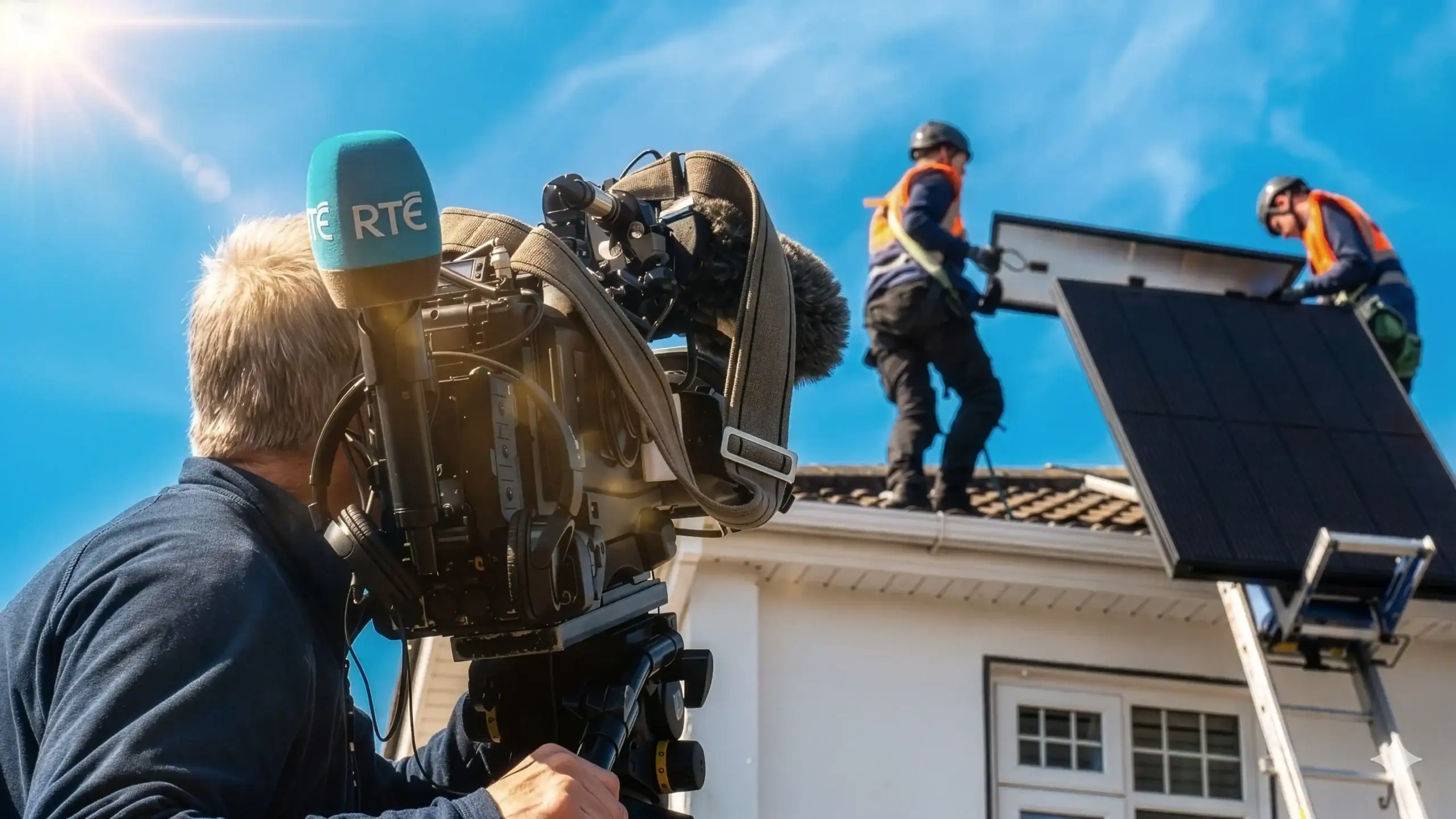
It’s not just that energy prices are rising again – it’s how quickly people are reacting this time.
Over the past few weeks, as tensions in the Middle East have increased, there’s been a noticeable shift. Enquiries about solar haven’t just picked up – they’re happening with a bit more urgency.
Homeowners who might have spent months weighing things up are now moving much faster.
And a lot of it comes down to one thing: uncertainty.
Recent coverage from RTÉ highlighted a renewed surge in demand for rooftop solar across Ireland, with installers reporting a clear increase in enquiries following instability in global energy markets.
That’s backed up by the numbers as well. Applications for solar grants have jumped significantly this year, with nearly double the number of applications submitted in March compared to the same time last year.
It’s a pattern that feels familiar. We saw something similar during the energy crisis a few years following Russia’s invasion of Ukraine. Prices rose sharply, and interest in solar followed soon after.
But this time around, the reaction feels quicker.
One of the biggest differences now is awareness.
A few years ago, solar was still something many people were only vaguely familiar with. It felt like a big decision, and one that could be put off.
Now, most homeowners have at least looked into it at some point.
They understand the basics. They’ve seen neighbours install panels. And they’re more aware of the supports available – including SEAI grants, which can take a chunk off the upfront cost of installing solar.
So when uncertainty returns, the delay between “thinking about it” and actually acting is much shorter.
Interestingly, it’s not always the current bill that drives the decision.
In many cases, it’s the fear of what the next one might look like.
Energy prices don’t move in a straight line. They react to global events, supply issues and shifts in demand – often quickly and unpredictably.
That makes it difficult to plan. And for a lot of households, that unpredictability is becoming harder to ignore.
What’s starting to come through more clearly is a shift in mindset.
For a long time, the focus was on saving money – reducing usage, switching suppliers, trying to get a better rate.
Now, more people are looking at it slightly differently.
It’s less about chasing the lowest price, and more about having some level of control over where your energy comes from.
Because if a large part of your bill is influenced by things happening outside Ireland, there’s only so much you can do from inside your home.
Solar panels don’t remove your electricity bill entirely.
But they do change how much of your energy you need to buy from the grid.
That means a portion of your electricity is generated at home, rather than being fully exposed to whatever is happening in global energy markets at the time.
For many homeowners, that’s becoming just as important as the potential savings.
In the past, it was common for Irish homeowners to take a “wait and see” approach.
Prices might come down. Grants might increase. Technology might improve. It could be worth holding off another year.
What’s changed is that people have now seen how quickly things can move in the opposite direction.
And that’s led to a shift from waiting… to acting a bit earlier. Not out of panic, but out of experience.
At the same time, it’s worth saying that solar isn’t something people are rushing into blindly.
Most homeowners still want to understand what it will cost, what it might save, and whether it actually suits their home. That hasn’t changed.
What has changed is how quickly people move once they’ve answered those questions.
If recent trends are anything to go by, demand for solar in Ireland is likely to remain closely tied to what’s happening in global energy markets.
Periods of stability may slow things down slightly.
But uncertainty – particularly around fuel prices – tends to bring decisions forward.
And with awareness now much higher than it was a few years ago, those spikes in demand are happening faster.
Rising energy costs and uncertainty around future prices are driving more homeowners to look for ways to reduce reliance on the grid.
Not necessarily. Most homeowners still do their research, but they’re making decisions more quickly than before.
Savings are part of it, but increasingly it’s about predictability and having more control over energy costs.
Demand is likely to rise during periods of uncertainty, particularly when energy prices are volatile.
For many homeowners, the shift isn’t just about reacting to rising prices – it’s about getting ahead of them.
That might mean improving efficiency, looking at heating upgrades, or generating some of your own electricity at home.
Activ8 Solar Energies has delivered over 25,000 energy upgrades across Ireland, working with homeowners to design solar systems around real usage patterns, Irish homes, and available SEAI supports – helping reduce reliance on the grid and bring more stability to long-term energy costs.
April 24, 2026

Activ8 Solar Energies has unveiled an exciting new way for homeowners to embrace solar power—Flexipay, a flexible financing solution created in partnership with Humm. This initiative is designed to remove one of the biggest barriers to going solar: the upfront cost. With Flexipay, switching to clean, renewable energy becomes more accessible through innovative solar financing options, making solar power more affordable and aligned with the realities of everyday life.
Flexipay is built around a simple idea: solar should fit your lifestyle, not the other way around. Instead of a large initial investment, homeowners can now benefit from solar panel financing and spread the cost of their solar installation over time—often for less than the price of a daily coffee.
With a competitive 5.9% APR, Flexipay offers three tailored repayment plans, each designed to meet different financial needs and long‑term goals.

For those who want to clear their balance quickly and maximise long‑term savings, the Express Plan offers the fastest route to ownership with the lowest overall finance cost, ideal for homeowners seeking low-cost solar financing.
A middle‑ground option that aligns monthly repayments with the energy savings your solar system generates. It’s a smart blend of affordability and comfort.
Designed for minimal monthly impact, this plan stretches repayments over a longer period—ideal for households looking to integrate solar with ease and flexibility.
Activ8 has streamlined the process so homeowners can start saving sooner while benefiting from simple and transparent solar finance plans:
By teaming up with Humm, Activ8 is making solar energy more attainable than ever. This partnership blends Activ8’s industry‑leading solar expertise with Humm’s flexible financing platform, giving homeowners a seamless path to energy independence.
Flexipay isn’t just a payment plan—it’s a gateway to a cleaner, more sustainable future, designed to empower households across Ireland to take control of their energy costs. Get started now.
April 22, 2026
It’s something I noticed myself last year.
We went away on a family holiday for two weeks. Before leaving, everything in the house was switched off, apart from the fridge and freezer, and I remember thinking the next electricity bill should be noticeably lower.
After all, the house was empty for a good chunk of the billing period. But when the bill came in, it wasn’t all that different either. Maybe a slight drop, but nothing close to what you’d expect at all.
It got me thinking – if we weren’t using much electricity for around a quarter of the time, why hadn’t the bill changed more?
A further look at the subsequent bill and that’s when it clicked.
Because your electricity bill isn’t just about what you use – and once you understand how it’s actually put together, it starts to make a lot more sense.
An electricity bill isn’t just one single charge. It’s made up of a few different costs that all come together in the final amount you pay.
The most obvious part is the unit rate, which is what you’re charged for each unit of electricity (kWh) you use. This is the part most people focus on, and it’s the one that changes depending on how much you use.
But alongside that, there’s also a standing charge. This is a fixed daily cost you pay just for being connected to the electricity network, regardless of how much electricity you use.
On top of that, there are network charges. These cover the cost of maintaining and upgrading Ireland’s electricity grid – everything from power lines to substations that keep electricity flowing to homes and businesses.
There can also be government-related charges, such as the Public Service Obligation (PSO) levy, which supports renewable energy and other national energy policies.
When you put all of that together, it becomes clearer why your bill doesn’t always behave the way you might expect.
One of the key things many homeowners don’t realise is that a significant portion of their electricity bill isn’t directly linked to how much energy they use.
The standing charge, for example, stays the same whether you use a lot of electricity or very little. Network costs are also built into your bill regardless of your personal usage. And then there’s VAT at 9% on top of it all – so you’re paying tax on both what you use and the standing charges as well.
Even the unit rate itself isn’t something suppliers set in isolation. It’s influenced by wholesale energy prices, which are shaped by global markets, fuel costs and infrastructure.
That means even if you reduce your usage, your bill may not drop as much as you expect.
There isn’t one single reason electricity prices in Ireland have increased – it’s a combination of factors.
A major driver is the cost of fuel, particularly gas. Electricity prices are often tied to gas markets, which can be volatile.
At the same time, Ireland continues to invest in its electricity infrastructure. Maintaining and upgrading the grid is essential, especially as demand grows and more renewable energy comes online.
Suppliers also manage risk by purchasing energy in advance. When prices rise sharply, those costs can take time to filter through to customers.
So even when prices start to settle, bills don’t always come down in the same way.
It’s not just a feeling either. Recent reporting in the Irish Times highlighted that electricity bills in Ireland remain among the highest in Europe, even as prices have eased in other countries.
A common frustration for households is that even after making an effort to use less electricity, the savings don’t always feel significant.
Part of the reason is that not all of your bill is tied to usage.
If a large portion of your costs comes from standing charges and fixed network fees, then reducing how much electricity you use will only affect part of the total bill.
At the same time, if unit rates are high, even modest usage can still lead to noticeable costs.
This can make it feel like you’re doing the right things, but not seeing the full benefit.
While some elements of your electricity bill are fixed, there are still areas where you can make a difference.
Reducing unnecessary usage, improving energy efficiency in your home, and being more mindful of when electricity is used can all help lower costs over time.
But for many homeowners, the biggest shift comes from thinking beyond just reducing usage, and instead looking at how much of their energy they rely on from the grid in the first place.
This is where solar energy starts to become part of the conversation.
Solar panels don’t remove your electricity bill entirely, but they do reduce the amount of electricity you need to buy from the grid.
That means you’re less exposed to rising unit rates and less affected by the volatility of global energy markets.
Over time, this can make your overall energy costs more predictable, even if some elements of your bill – like standing charges – remain in place.
Electricity pricing isn’t just about usage anymore.
With Ireland’s reliance on imported energy, ongoing investment in infrastructure, and continued volatility in global markets, prices are influenced by factors that are largely outside the control of individual households.
That’s why more people are starting to look at energy differently – not just in terms of how much they use, but how much they depend on the system itself.
Electricity bills are made up of several components, including unit rates, standing charges and network costs. Rising fuel prices and infrastructure investment have also contributed to higher overall costs.
The standing charge is a fixed daily cost for being connected to the electricity network. It applies regardless of how much electricity you use.
Because part of your bill is made up of fixed charges, reducing usage only affects a portion of the total cost.
Yes – solar panels reduce how much electricity you need to buy from the grid, helping lower your overall energy costs over time.
When you break it down, it becomes clear that electricity bills aren’t just about how much energy you use.
They’re shaped by a mix of fixed costs, global markets and national infrastructure – many of which are outside your control.
That’s why more homeowners are starting to look at ways to reduce their reliance on the grid, rather than simply trying to cut back on usage.
Activ8 Solar Energies has delivered over 25,000 energy upgrades across Ireland, working with homeowners to design solar systems around real usage patterns, Irish homes, and available SEAI supports – helping reduce dependence on the grid and bring more stability to long-term energy costs.
April 20, 2026

Over the past week, fuel protests have brought parts of Ireland to a standstill, with blockades, shortages and long queues at petrol stations becoming a daily reality.
The protests have been driven by one core issue – rising fuel costs – but the causes of those increases go far beyond Ireland.
It might seem strange at first that events in the Middle East can lead to higher energy bills here at home. But it happens more often than people realise.
In fact, recent coverage in the Irish Independent highlighted a surge in demand for solar panels following renewed instability in the region, underlining just how closely global events are tied to energy costs at home.
So how exactly does something happening thousands of kilometres away end up affecting what you pay on your electricity or heating bill in Ireland?
Ireland doesn’t produce most of the energy it uses.
In fact, Ireland imports close to 80% of its energy, primarily in the form of oil and gas. That leaves the country particularly exposed to changes in global markets.
Oil is used extensively for transport and heating, while gas plays a major role in electricity generation. Ireland imports all of its oil and a large proportion of its natural gas, meaning international price movements quickly feed into domestic energy costs.
When there is instability in key regions like the Middle East, which plays a central role in global energy supply, it creates uncertainty around production and transport. Even the risk of disruption can push prices upwards.
Those increases don’t stay local – they ripple through wider energy markets and eventually feed into the cost of energy in countries like Ireland.
The Middle East remains one of the most important regions in the global energy system.
It accounts for a significant share of the world’s oil production, and events there can quickly influence prices worldwide. When tensions rise, concerns about supply can drive market reactions almost immediately.
That can lead to increased costs for shipping, insurance and fuel, all of which contribute to higher prices by the time energy reaches consumers in Ireland.
Electricity prices in Ireland are closely linked to gas prices.
Gas-fired power plants are often used to meet demand on the grid, particularly during peak periods, and they effectively set the price of electricity at those times. This pricing model means that even when renewable energy is available, the cost of gas can still determine the overall price.
When global gas prices increase – often influenced by oil markets and geopolitical events – electricity prices tend to follow.
This is why energy bills can rise even when nothing has changed in your own home.
One of the most frustrating aspects for households is how quickly prices go up, and how slowly they seem to come back down.
Part of this comes down to how energy is purchased and managed. Suppliers often buy energy in advance to manage risk, and when prices rise sharply, those increases can take time to work their way through the system. At the same time, network and system costs – including maintaining and upgrading Ireland’s electricity grid – remain in place regardless of market conditions.
The result is that global shocks can have a longer-lasting impact on what you pay.
As energy prices become more unpredictable, more homeowners are looking for ways to reduce their reliance on external supply.
That shift is already being reflected in demand. The Irish Independent recently reported a “rooftop revolution” in Ireland, with solar installations increasing significantly as households respond to rising costs and global uncertainty.
Solar panels don’t eliminate energy costs entirely, but they do reduce how much electricity you need to buy from the grid, particularly during daylight hours.
Solar isn’t directly affected by global fuel markets.
Once installed, it generates electricity from sunlight, meaning a portion of your energy use is no longer tied to international price fluctuations. While you will still rely on the grid at certain times, your overall exposure to price increases is reduced.
In practical terms, this can lead to more predictable electricity costs over time and a greater sense of control over how your home is powered.
Energy markets are becoming more complex, not less.
Ireland’s reliance on imported fuels, combined with global uncertainty and increasing demand, means price volatility is likely to remain a feature of the system. For homeowners, that shifts the conversation away from simply how much energy is used and towards how much of that energy can be generated or controlled at home.
And it’s not just short-term pressure. Electricity costs in Ireland are already among the highest in Europe, which means any global disruption – like instability in the Middle East – tends to hit harder here than in many other countries.
Because Ireland relies heavily on imported fuels, changes in global oil and gas markets – particularly in major producing regions – can directly influence local energy costs.
Electricity generation in Ireland often depends on gas, and gas prices are influenced by global energy markets. When these rise, electricity costs typically increase as well.
Solar panels reduce how much electricity you need to buy from the grid, helping lower exposure to price increases over time.
Yes – Ireland imports close to 80% of its energy, making it particularly sensitive to global market changes.
Looking at the headlines, it’s clear that energy prices aren’t just driven by what happens at home – they’re shaped by global forces that are difficult to predict.
That’s why more homeowners are starting to think about energy differently, looking not just at usage but at ways of improving their home’s energy efficiency.
Activ8 Solar Energies works with homeowners across Ireland to design solar systems based on real usage patterns, helping reduce reliance on the grid and improve long-term energy performance.
April 20, 2026
You’ve probably heard the line a dozen times over the past few years: the cheapest energy is the energy you don’t use. It’s been the big message from EU policy and energy campaigns, especially since prices shot up.
And on paper, it makes sense. Use less, save money. Simple.
But for a lot of households in Ireland, it doesn’t quite line up with reality anymore. People have already cut back. They’ve switched things off, upgraded appliances, tried to be more mindful about usage – and still, the bills have kept rising.
At a certain point, it stops feeling like something you can fix just by using less.
And that’s where the conversation starts to shift.
For years, cutting energy costs was mostly about reducing usage. Lower consumption meant lower bills, and that was straightforward.
But with the way things have moved in recent years, that simple link has weakened. A bigger chunk of your electricity bill now comes from fixed costs that don’t change much no matter how careful you are. On top of that, prices are driven by global markets, gas volatility, and large-scale grid investments that individual households have no say over.
So even if your usage stays steady – or drops – the total bill doesn’t always follow. That realisation has been a real turning point for many people.
What’s changed isn’t just behaviour – it’s how people think about energy altogether.
Instead of asking “how can I use less?”, more homeowners are starting to ask a different question:
“How much of this can I actually control?”
Because once you look at it that way, the problem isn’t just usage – it’s reliance.
Reliance on a system where prices can change quickly, and where a large part of the cost is fixed regardless of what you do at home.
Things like improving insulation, using more efficient appliances, and being mindful of when energy is used still make a difference.
They’re often the first steps people take, and they’re worth doing.
But for many households, there’s a point where those changes stop having the same impact.
You can only cut back so much before you’re already running things as efficiently as possible.
That’s usually when people start looking beyond just reducing usage.
More and more, the idea of producing some of your own electricity at home is becoming part of how people think about managing costs.
Not as a complete replacement for the grid, but as a way of reducing how dependent you are on it.
Even generating a portion of your electricity can change the dynamic.
It means that not every unit of energy you use has to be bought at whatever the current market rate happens to be.
This is where solar energy comes into the picture for a lot of homeowners. It’s not just about sustainability – although that still matters. It’s about predictability.
Once installed, solar panels generate electricity from daylight, which means a portion of your energy use is no longer tied to fluctuating prices.
You’re still connected to the grid, and there are still fixed costs, but your overall exposure is reduced.
Over time, that can make a noticeable difference – not just in savings, but in how stable your energy costs feel.
What we’re seeing is a quiet shift in mindset. Energy is moving from something you simply pay for every two months to something you can take a more active role in managing.
It’s not about wiping out the bill entirely. For most homes that’s not realistic. It’s about lowering the uncertainty and reducing how much of your costs are at the mercy of factors completely outside your control.
For many households, that sense of stability is becoming the real goal.
Energy prices in Ireland are influenced by a mix of global markets, infrastructure investment, and long-term changes in how the system works.
Those factors aren’t going away any time soon, which is why more households are starting to think longer term.
Not just about the next bill, but about how their home is set up to handle whatever comes next.
Reducing usage still helps, but many homeowners are now combining efficiency improvements with ways to reduce reliance on the grid, such as solar energy.
Prices may fluctuate, but many of the underlying factors mean costs are likely to remain relatively high compared to the past.
For many households, solar can help reduce electricity costs over time and make those costs more predictable.
In most cases, no – but you can reduce it significantly by generating some of your own electricity.
For plenty of Irish homeowners, the approach has moved on from simply reacting to rising prices. It’s now about getting ahead of them where possible – starting with efficiency tweaks but often leading to bigger decisions about generating power at home.
Activ8 Solar Energies has delivered over 25,000 energy upgrades across Ireland, working with homeowners to design solar systems around real usage patterns, Irish homes, and available SEAI supports – helping reduce dependence on the grid and bring more stability to long-term energy costs.
If you’re tired of feeling like your bills are largely out of your hands, it might be worth looking at what options actually make sense for your own home.
April 20, 2026

Activ8 Solar Energies has announced the completion of a 2.5MW solar installation at Gyproc’s manufacturing facility in Kingscourt, Co. Cavan, marking one of Ireland’s most technically advanced and complex commercial solar projects to date.
Delivered for Gyproc in Ireland, part of the Saint-Gobain Group, the installation comprises 3,556 solar panels and is expected to generate approximately 2,145 MWh of clean electricity annually. The system will supply up to 15% of the site’s total energy demand. While the Gyproc site sources 100% renewable electricity through selecting a renewable-only electricity tariff this would equate to 502.16 tonnes of CO₂ each year expressed at national electricity grid emission factors.
The project comes as energy-intensive industries across Ireland face rising electricity costs, increasing pressure to decarbonise operations, and a growing need for resilient, onsite energy solutions. The installation is expected to deliver annual electricity cost savings of approximately €230,000 while representing a significant investment in sustainable infrastructure in the Cavan region, supporting local industry and long-term energy resilience.
“This project proves that even complex sites can deliver real sustainability gains through innovation and collaboration,” said Ciaran Marron, CEO of Activ8 Energies. “Faced with strict site constraints that prohibited ground penetration, we designed a bespoke system tailored to the site’s conditions, unlocking significant environmental and commercial value for Gyproc.”

“Across Europe, Saint‑Gobain is focused on transforming how we manufacture, reducing carbon intensity, strengthening energy resilience, and delivering more sustainable construction solutions,” said David Molho, CEO Northern Europe Region at Saint‑Gobain. “This project in Kingscourt is an excellent example of how our European sustainability ambitions are being delivered locally. By harnessing on‑site renewable energy on a complex site, we are decarbonising our operations in Ireland. It reflects the power of innovation and partnership in driving tangible progress toward our net‑zero roadmap”
Due to strict site constraints, Activ8 developed a fully customised engineering solution to enable installation without ground penetration. This included the design of a bespoke concrete ballasted mounting system, alongside the use of specialist rubber-tracked machinery to protect the integrity of the surface throughout the construction phase.
Structured as a fully funded Power Purchase Agreement (PPA) in partnership with SSE Airtricity, the installation enables Gyproc to generate renewable energy onsite with no upfront capital investment.
“Projects like this demonstrate the critical role that Power Purchase Agreements can play in accelerating Ireland’s transition to renewable energy,” said Stephen Gallagher, Managing Director of SSE Airtricity. “By removing the need for upfront capital investment, we’re enabling businesses like Gyproc to take meaningful action on decarbonisation, while also delivering long-term energy cost stability.”
Located adjacent to the Boyne Valley to Lakelands Greenway, the project further demonstrates how renewable infrastructure can be thoughtfully integrated into environmentally sensitive landscapes.
April 15, 2026
I was looking over a recent electricity bill and noticed something that probably shouldn’t have been a surprise – the cost of electricity wasn’t just high, it was uneven.
Some units were noticeably more expensive than others, even though nothing obvious had changed in how our house was being used. No one had accidentally left the immersion on, anyway.
That’s when it really clicked how much electricity pricing now depends on when you use it, not just how much you use.
And it raises a useful question: When are peak electricity times in Ireland – and is there any way to avoid paying those higher rates?
Electricity in Ireland is increasingly priced based on demand throughout the day.
While exact times can vary depending on your supplier and tariff, peak periods generally occur in the morning when households are starting the day and in the evening when people return home, cook and use more appliances.
These are the times when demand on the grid is highest – and as a result, electricity is typically more expensive.
Outside of these hours, electricity is often cheaper, particularly overnight on day/night or smart tariffs.
Peak pricing reflects pressure on the electricity grid.
When demand increases, more generation is needed, more expensive energy sources may be brought online and the overall cost of supplying electricity rises.
Suppliers pass some of these costs on through time-of-use pricing, which is why electricity used during peak hours tends to cost more per unit.
With the rollout of smart meters in Ireland, more households are moving towards time-of-use tariffs.
This means electricity prices can vary depending on the time of day, demand levels and the pricing structures set by different suppliers.
For homeowners, this creates both a challenge and an opportunity.
The challenge is avoiding high-cost periods.
The opportunity is shifting usage – or generating your own electricity when prices are highest.
This is where solar panels come into the picture.
Solar systems generate electricity during daylight hours, typically from late morning through to the afternoon.
While this doesn’t perfectly match peak evening demand, it often aligns with daytime electricity usage in the home, appliances running during the day and things like charging devices, working-from-home setups or heat pumps.
By generating electricity during these hours, solar reduces how much you need to buy from the grid – including during higher-cost periods.
Indirectly, yes – and this is where the real value comes in.
By using solar electricity during the day, you reduce your overall reliance on grid electricity, may lower how much you need to use during peak periods and can shift some usage to better align with when your system is generating energy.
For example, running appliances like washing machines or dishwashers during daylight hours can help maximise the benefit of solar and avoid higher evening rates.
One of the most common questions is: “If solar generates electricity during the day, what happens in the evening when electricity is most expensive?”
There are a few ways this is managed. Some of your daytime usage will already have been offset by solar, battery storage (if installed) can store excess energy for later use, and simple usage habits can help reduce reliance on peak-time electricity.
Even without a battery, solar can significantly reduce your overall grid usage — which in turn reduces exposure to peak pricing.
Yes, and in many cases, they complement each other.
Smart tariffs encourage you to use electricity when it’s cheaper and avoid peak periods, while solar panels generate electricity when the sun is available and reduce the need to buy electricity from the grid at any time.
When combined, they give homeowners more control over both when and how electricity is used.
Getting the most value from solar isn’t just about installation – it’s about how the system is designed and used.
A well-designed system takes into account your daily electricity usage patterns, peak consumption times, roof orientation and overall generation potential.
At Activ8 Solar Energies, system design is based on how a home actually uses electricity day to day, helping ensure solar generation aligns as closely as possible with demand.
Electricity is typically cheapest overnight, particularly on day/night or smart tariffs, when demand on the grid is lowest.
Electricity is usually most expensive in the morning and evening peak periods, when demand is highest.
Yes, solar panels reduce how much electricity you need to buy from the grid, which can significantly lower overall electricity costs.
Not entirely, particularly in the evening, but it can reduce your reliance on grid electricity and lower your exposure to higher-priced periods.
Understanding when you use electricity is just as important as how much you use.
Looking at that bill made it clear – the timing of energy use now plays a bigger role than ever.
Solar panels offer a way to take some control back, reducing reliance on the grid and helping manage costs more effectively over time.
Activ8 Solar Energies works with homeowners across Ireland to design systems that reflect real usage patterns, helping maximise savings while improving long-term energy performance.
April 9, 2026
I was in a friend’s house recently – one I’ve been in plenty of times over the years – and the difference was hard to ignore.
It used to be the kind of place where you’d keep your coat on a bit longer than you should and a cup of tea would be clutched to keep you warm. Cold floors, draughts, the heating always working in the background but never quite getting there.
This time, it felt completely different. Warm, comfortable, and noticeably quieter too. They’d recently upgraded the insulation and brought the house up to a much stronger BER rating.
It got us talking about energy upgrades more generally – and one question came up that we hear quite a lot.
Where do solar panels fit into improving a home’s BER?
Yes, solar panels can improve your Building Energy Rating (BER), but they do it in a specific way.
Unlike insulation or heating upgrades, solar panels don’t reduce how much energy your home needs. Instead, they reduce how much energy your home needs to take from external sources.
In simple terms, your home still uses electricity, but some of it is generated on your own roof. Because BER ratings take into account a home’s overall energy consumption and efficiency, generating electricity on-site helps improve the final rating.
To see where solar panels fit in, it helps to briefly understand what a BER rating measures.
A BER rating reflects how much energy a home uses, how that energy is produced and the overall efficiency of the building. Homes are rated from A (most efficient) to G (least efficient).
Improvements that reduce energy demand – like insulation – tend to have a significant impact. Solar panels work differently, but still contribute by lowering reliance on grid electricity.
Solar panels improve BER ratings by contributing to what’s known as primary energy consumption.
When your home generates electricity, it reduces the amount of energy imported from the grid, lowers the home’s calculated energy usage and improves the overall BER score.
The exact impact depends on factors such as system size, electricity usage and the home itself, but in many cases, solar panels can help move a property up by one BER band or strengthen an existing rating.
From a BER perspective, insulation and airtightness improvements typically have a bigger initial impact.
That’s because they directly reduce how much energy the home needs.
Once the draughts are sealed and the insulation’s doing its job, that’s when solar really starts to shine. They reduce the cost and carbon impact of the electricity that is still required.
In practice, the strongest results come from combining both.
That’s why many homeowners now approach upgrades as part of a wider plan rather than one-off changes.
BER ratings have become much more important to buyers in Ireland in recent years.
A higher BER rating generally signals lower running costs, better comfort and a more energy-efficient home.
That shift is now showing up in the property market as well. Recent reports suggest that energy-efficient homes can sell for close to €100,000 more than less efficient properties, highlighting just how much value buyers are placing on energy performance.
Because solar panels can contribute to improving that rating, they can also influence how a property is perceived when it goes on the market.
They’re rarely the only factor, but they can form part of a broader set of upgrades that make a home more attractive to buyers.
On their own, solar panels won’t transform a very low BER-rated home into a high-performing one. If a house has poor insulation or significant heat loss, that will still dominate the rating. However, when combined with measures like wall insulation, attic insulation or upgraded heating systems, solar panels can play an important supporting role in lifting the overall BER.
In my friend’s case, improving the insulation made the biggest difference first – and from there, solar becomes the next logical step.
Improving your BER isn’t about one single upgrade – it’s about understanding how your home uses energy as a whole.
Insulation, heating systems and electricity usage all play a role, and solar panels tend to work best when they’re part of that wider picture rather than a standalone change.
That’s where proper system design becomes important.
At Activ8 Solar Energies, the starting point is always how a home actually performs – looking at energy usage, roof space and the upgrades already in place before recommending a solar system. As an SEAI-approved One Stop Shop, Activ8 can also support homeowners in taking a more joined-up approach to energy upgrades, helping ensure each improvement works together effectively.
The goal isn’t just to install panels, but to make sure they complement the home and deliver a meaningful improvement over time.
If you’re considering solar as part of improving your BER, getting a clear assessment of your home is the best place to start.
Solar panels can improve your BER rating by reducing how much electricity your home needs to import from the grid, but the impact depends on the size of the system and the overall efficiency of the home.
In many cases, solar panels can help move a home up by one BER band or strengthen an existing rating, particularly when combined with insulation or heating upgrades.
Not on their own. Achieving an A-rated home typically requires a combination of measures, including insulation, airtightness and efficient heating systems alongside solar.
Solar panels can form part of a wider upgrade plan supported by SEAI grants, particularly when combined with other energy efficiency measures.
April 9, 2026

For Pat and Kate, installing solar panels with Activ8 Solar Energies wasn’t just a personal upgrade, it quickly became something they were eager to share with others, a decision that would go on to earn them €8,000 in referral rewards.
After seeing the impact solar had on their own home, lower bills, reliable performance, and long-term savings, Pat and Kate didn’t hesitate to recommend the system to friends and family.
What stood out to them wasn’t just the product, but how easy it was to spread the word. The referral process was described as simple and straightforward: a booklet, a quick form, and the opportunity to pass on a solution they genuinely believed in.
Pat and Kate didn’t just make one recommendation, they made several. In fact, they referred multiple people within their own circle, including family members and close friends.
Once you’ve experienced the benefits yourself, it becomes natural to share that experience with others. Their enthusiasm led to a ripple effect, with several households following their lead and installing solar panels as well.
Beyond helping others make the switch to renewable energy, Activ8’s referral programme also rewarded Pat and Kate for their recommendations. After referring six installations, they received a total of €8,000 in referral rewards, adding significant extra value to their original investment.
For them, it reinforced the idea that solar isn’t just about saving money on your own home, it’s about creating opportunities to benefit from sharing something worthwhile.
What makes their referrals so powerful is that they come from genuine satisfaction. Pat and Kate have had no issues with their system, and any small queries were resolved quickly and efficiently.
That level of reliability gave them the confidence to recommend Activ8 Solar Energies without hesitation.
Over time, their referrals helped build a small network of solar-powered homes among their family and friends. From sisters to neighbours, their recommendations encouraged others to take control of their energy usage and reduce their reliance on rising electricity costs.
For Pat and Kate, the message is simple: if something works well, share it. Their experience with Activ8 Solar Energies has not only improved their own home but has also helped others benefit from cleaner, more affordable energy.
In their eyes, the referral programme is more than just an incentive, it’s a way to help others make a smart, future-proof decision. Start your solar journey today.
April 8, 2026
If you’ve been considering a home energy upgrade, one of the biggest questions is simple: how much will it actually cost me? New data from Sustainable Energy Authority of Ireland (SEAI) gives us a clear, real-world snapshot of what homeowners paid in 2025 under the One Stop Shop scheme—and the numbers are both revealing and encouraging.
Let’s break it down.
Across 1,406 homes upgraded in 2025, the data shows a consistent pattern:
Interestingly, 74% of homeowners spent more than €50,000 on upgrades, highlighting a clear trend toward comprehensive retrofits rather than small fixes.
Mid-terrace homes show a noticeable jump in cost:
Upgrades often expand to include:
This reflects a shift toward whole-home energy solutions rather than isolated improvements.
These homes strike a balance between cost and impact:
Common upgrades:
Many homeowners in this category are aiming for deep retrofits, which explains the broader upgrade scope.
Detached homes are the most expensive to upgrade—but also offer the greatest potential for energy savings:
These projects typically include:
Larger surface areas and older construction often mean more work—but also bigger long-term gains.
Here’s how upgrade costs break down across all homes:
The takeaway: deep retrofits are becoming the norm, not the exception.
While the data highlights costs, the real value lies in outcomes:
Even modest upgrades can make a difference, but the trend clearly shows homeowners are opting for comprehensive, future-proof solutions.
Energy upgrades are a serious investment, but they’re no longer just about saving money on bills. They’re about:
With grants covering a meaningful portion of costs, the question is shifting from “Can I afford to upgrade?” to “Can I afford not to?”
If you’re planning a retrofit, the key is understanding your home type, setting a realistic budget, and thinking long-term. This data shows that while the upfront costs can be substantial, the combination of grants and long-term benefits makes energy upgrades more compelling than ever. To take the first step toward a warmer, more energy-efficient home, you can get started today with Activ8 Energies One Stop Shop.
April 7, 2026

Thinking about solar panels in Westmeath? Learn whether they’re worth it, available SEAI grants, potential savings and why more Westmeath homeowners are making the switch.
Whether you’re in Delvin, Mullingar, Moate or one of the many towns and villages in between, you’ve probably noticed more solar panels appearing on rooftops over the past few years.
It’s easy to see why.
Electricity remains one of the biggest household expenses, electric vehicles are becoming increasingly common and more homeowners are looking for ways to take greater control of their energy bills.
Which naturally leads to one question.
Are solar panels worth it in Westmeath?
For many homeowners, the answer is yes.
Westmeath has a diverse mix of homes, from modern housing developments and commuter towns to older rural properties and family farms.
Whatever the property type, the reasons for considering solar are often the same: reducing electricity bills, improving energy efficiency and generating your own electricity rather than relying entirely on the grid.
During the first half of 2026, County Westmeath was one of Activ8’s busiest areas for residential solar installations, with more homeowners than ever choosing to make the switch.
The climate may be more Athlone than Barcelona, but that’s not a problem.
One of the biggest misconceptions about solar panels is that they need long, hot summers to work effectively.
In reality, modern solar panels generate electricity from daylight rather than direct sunshine. That means they’ll continue producing power on bright overcast days as well as sunny ones.
Like every county in Ireland, Westmeath receives more than enough daylight throughout the year for solar panels to make a real difference to household electricity bills.
Every home is different, so the amount you could save depends on several factors.
These include how much electricity your household uses, the size and direction of your roof, whether you install battery storage and whether you’re planning to add an electric vehicle or heat pump in the future.
Many homeowners find solar helps reduce their reliance on the grid while providing greater certainty over future electricity costs
Eligible homeowners in Westmeath may qualify for the SEAI Solar PV Grant, helping reduce the upfront cost of installation.
Activ8 Solar Energies can guide you through the grant application process and explain what support is currently available.
Battery storage has become an increasingly popular addition to home solar systems.
Rather than exporting surplus electricity back to the grid during the day, a battery stores it so you can use it later, particularly during the evening when electricity demand is usually at its highest.
It’s also worth considering if you’re planning to buy an electric vehicle or install a heat pump in the future.
Electric vehicles are becoming an increasingly familiar sight on Westmeath’s roads.
For many households, solar panels and EV ownership are a natural fit.
Charging an electric vehicle using electricity generated from your own roof can significantly reduce running costs while making even better use of the electricity your solar system produces.
Many Westmeath homeowners first begin researching solar after hearing about BER ratings.
While solar panels aren’t the only factor that influences a BER rating, they can contribute positively to a home’s overall energy performance alongside improvements such as insulation and heating upgrades.
That’s one reason solar has become an increasingly popular choice for homeowners looking to improve both energy efficiency and long-term running costs.
For many homeowners, the answer is yes.
Westmeath combines suitable daylight conditions, available SEAI grants and growing demand for lower energy bills, making solar an increasingly attractive long-term investment.
Every home is different, but if you’re looking to reduce your electricity bills while gaining greater control over your energy costs, solar panels are certainly worth considering.
Yes. Eligible homeowners can apply for the SEAI Solar PV Grant, which helps reduce the cost of installing solar panels.
That depends on your electricity usage, roof size, roof orientation and any future plans, such as buying an electric vehicle or installing a heat pump.
In many cases, yes. However, it is worth discussing future expansion when your system is first designed.
No two homes use electricity in exactly the same way, which is why no two solar systems should be identical.
If you’d like to see how solar panels have been installed on homes similar to yours, take a look at some of Activ8’s recent installations across County Westmeath.
With more than 20 years’ experience and over 25,000 installations across Ireland, Activ8 Solar Energies helps homeowners understand what’s possible for their property, whether that’s solar panels, battery storage, EV charging or a complete home energy upgrade.
If you’re thinking about installing solar panels in Westmeath, get in touch with the Activ8 team for a tailored assessment of your home.
April 1, 2026

Activ8 Energies has today announced the launch of LunarPV™, an innovative solar PV module designed to generate electricity both during the day and after sunset, marking a significant step forward in solar technology.
Traditionally, solar panels rely exclusively on sunlight, with energy production stopping once daylight fades. LunarPV™ challenges this limitation by integrating advanced thermodynamic and radiative technology, enabling the module to continue generating power at night.
By harnessing the natural process of radiative cooling — where heat is emitted from the Earth’s surface into the night sky — LunarPV™ creates a temperature differential that can be converted into usable electricity. This dual-mode capability allows the system to operate beyond daylight hours, extending the overall energy generation window.

Myles Knight, Chief Lunar Officer of Activ8 Energies said:
“LunarPV™ represents a fundamental shift in how we think about solar energy. For decades, solar has been limited to daylight hours. Based on APRIL Technology (Advanced Photonic Radiative Interface Layer), with LunarPV™, we’re demonstrating that energy generation doesn’t have to stop when the sun goes down. This is about maximising every opportunity to generate clean power and pushing the boundaries of what solar can deliver.”
The new module operates in two distinct modes — delivering high-efficiency photovoltaic performance during the day, while activating its thermoradiative functionality at night to capture energy from heat loss to the atmosphere.
This innovation has the potential to improve overall system yield, reduce reliance on battery storage, and better align energy generation with real-world demand patterns, particularly during evening hours.
LunarPV™ builds on Activ8 Energies’ established track record of delivering high-performance solar solutions across residential and commercial markets, including large-scale projects and proprietary panel development tailored to local conditions.
The company expects LunarPV™ to form part of its future product roadmap as solar technology continues to evolve toward more continuous, round-the-clock energy generation.
April 1, 2026
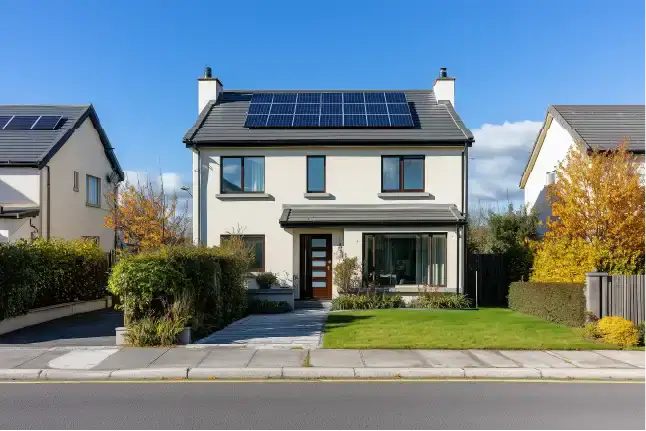
On my regular five-minute walk to the local Centra last week, I noticed a neighbour’s roof gleaming with newly installed solar panels. It wasn’t something I’d seen on that street before, and it got me paying attention. Slate, tile, flat extensions – every roof I passed looked a little different, with no two houses quite the same.
It got me thinking: when roofs vary this much across Ireland, does it actually matter what type you have when it comes to installing solar panels?
The short answer is yes – but maybe not in the way most people expect.
In most cases, solar panels can be installed on a wide range of roof types across Ireland.
What matters isn’t just the material of the roof, but a combination of factors including orientation, available space, structural condition and shading.
That said, some roof types are easier to work with than others, and may influence installation methods, cost or overall system design.
In practice, experienced installers will assess all of these factors before recommending a system. At Activ8 Solar Energies, this typically forms the starting point of any solar design, ensuring the system is built around the home rather than just the roof.
Concrete and clay tiled roofs are among the most common in Ireland and are generally very well suited to solar panel installation.
Panels are typically mounted using brackets that sit beneath the tiles and attach securely to the roof structure. Once installed, the panels sit slightly above the roof surface, allowing for airflow and efficient performance.
Because tiled roofs are so common, installation methods are well established and relatively straightforward.
Slate roofs are also common, particularly in older properties.
While solar panels can absolutely be installed on slate roofs, the process tends to be more careful and labour-intensive. Individual slates may need to be removed and replaced during installation to ensure a secure and weatherproof fit.
This doesn’t prevent solar installation, but it can slightly increase installation time and cost compared to tiled roofs. Most installations are completed within one day, but a longer installation may be required if a roof is complex, steep or difficult to access.
Flat roofs are often found on extensions, commercial buildings and some modern homes.
Instead of mounting panels directly onto the roof surface, flat roof systems typically use angled frames to position panels at an optimal tilt.
This allows installers to maximise exposure to daylight and adjust panel angles for better performance. In some cases, it can also avoid the need for roof penetrations altogether.
Flat roofs can be an excellent option for solar, particularly where there is a large, unobstructed surface area.
While roof type is important, orientation often has a bigger impact on performance.
South-facing roofs generally produce the most electricity, but east–west systems are also very effective and are commonly used across Ireland.
Even roofs that aren’t perfectly positioned can still generate meaningful amounts of electricity when systems are designed correctly.
In most cases, roof direction and shading will have a greater influence on performance than the material of the roof itself. This is something Activ8 Energies takes into account when designing systems for Irish homes.
Many homeowners assume that solar panels are only suitable for newer houses, but that’s not the case.
Older homes with slate roofs, dormer layouts or less conventional designs can still be strong candidates for solar.
The key consideration is the structural condition of the roof. If the roof is in good condition and has sufficient space, solar panels can usually be installed successfully.
In some cases, homeowners choose to combine solar installation with roof upgrades or broader energy improvements.
It’s normal for homeowners to have questions about whether their roof is suitable for solar panels.
Some of the most common concerns include:
In reality, modern solar systems are designed to integrate safely with existing roof structures. When installed correctly, they should not cause damage and are built to withstand Irish weather conditions.
The most important factor in any solar installation isn’t the roof type alone – it’s the overall system design.
A well-designed system takes into account factors such as roof orientation, shading, electricity usage patterns, available space and long-term performance.
This ensures the system is tailored to the home rather than simply fitted to the roof.
If you’re considering solar panels, the best way to understand what works for your home is to have it properly assessed.
Whether your home has traditional slate, standard tiles or a modern flat roof, solar panels can be fitted effectively when the system is designed. The key is tailoring the setup to your home’s layout, electricity usage and available supports like SEAI grants.
Activ8 Solar Energies has delivered more than 25,000 energy upgrades across Ireland, working with a wide range of roof types – from modern tiled homes to older slate properties.
Once you understand what’s possible, solar panels become far less about the type of roof you have – and more about how your home uses energy.
March 31, 2026

For many UK businesses, rising electricity costs remain one of the most unpredictable operational expenses.
At the same time, there is increasing pressure to reduce carbon emissions and improve sustainability performance. Solar power is often seen as a logical solution – but upfront installation costs can still be a barrier.
In the UK, this is why Power Purchase Agreements (PPAs) are becoming an increasingly popular way for businesses to adopt solar without upfront cost.
Through a PPA, businesses can install solar panels on their premises without the need for upfront capital, while benefiting from lower and more predictable electricity costs over the long term.
A Power Purchase Agreement is a long-term contract between a business and an energy provider.
Under a typical solar PPA, a third party installs and owns the system, the business uses the electricity generated on-site, and pays for it at an agreed rate – typically lower than standard grid prices.
The key difference is that the business does not need to fund the installation itself. Instead, it purchases the electricity generated by the system over time.
In a commercial PPA arrangement:
Because most commercial buildings have strong daytime electricity demand, a high percentage of solar generation can typically be used on-site.
This is where PPAs tend to deliver the most value.
Power Purchase Agreements are growing in popularity across the UK for several reasons.
The solar system is funded by the provider, removing the need for large initial spend.
PPA rates are typically set below standard commercial electricity tariffs.
Electricity is supplied at a fixed or predictable rate, helping businesses manage future cost exposure.
Solar generation supports sustainability targets and ESG reporting.
Power Purchase Agreements tend to work best for businesses with consistent daytime electricity demand, as this allows a high proportion of the solar energy generated on-site to be used directly. Buildings with suitable roof space or adjacent land are particularly well suited, especially where the business expects to remain on-site over the long term and has relatively stable energy usage.
In practice, this often includes manufacturing facilities, warehouses and logistics centres, retail parks and office buildings, where energy demand aligns closely with daylight hours and available installation space.
Power Purchase Agreements are not limited to private businesses. In the UK, they can also be used by public sector bodies and non-profit organisations, including hospitals, schools, universities and charities.
In many cases, these organisations are particularly well suited to solar installations. Buildings such as hospitals and large public facilities tend to have consistent, often round-the-clock electricity demand, along with significant roof space or campus-style layouts. This allows a high proportion of the electricity generated on-site to be used directly.
For non-profit organisations, the structure of a PPA can also be appealing from a financial perspective. Because there is no upfront capital investment required, organisations can reduce electricity costs and improve sustainability performance without diverting funding from core services.
As energy costs and carbon reduction targets continue to be a focus across both the private and public sectors, PPAs are becoming an increasingly practical option for a wide range of organisations.
Some businesses choose to purchase solar systems directly, while others prefer a PPA model.
Buying solar outright involves a higher upfront cost but provides full ownership and maximum long-term savings.
A PPA model requires no upfront investment, offers immediate electricity savings, and provides more predictable pricing with lower financial risk.
The right approach depends on a business’s capital priorities and financial strategy.
Activ8 Energies, in partnership with SSE Airtricity, delivers commercial solar solutions for businesses across the UK and Ireland.
Through Power Purchase Agreements with Activ8 Energies and SSE Airtricity, businesses can access fully funded solar installations, long-term electricity supply agreements, site-specific system design and ongoing performance monitoring and maintenance.
This allows organisations to reduce electricity costs and carbon emissions without diverting capital from core operations.
If you’re considering solar for your business, the first step is understanding how your site uses electricity and whether it is suitable for a PPA structure.
Activ8 Energies works with UK businesses and organisations to assess energy demand, roof space and operational requirements to design solar solutions that deliver measurable long-term value.
March 31, 2026

For most businesses considering solar, the starting point is straightforward – reduce electricity costs.
But it doesn’t take long before another question comes up. What happens to the electricity you don’t use?
On a sunny day, many commercial buildings will generate more electricity than they need at certain times. Offices may be partially occupied, machinery may not be running at full capacity, or weekends may see lower demand altogether.
So can that excess electricity be sold back to the grid?
The short answer is yes – but how it works (and how much value it delivers) is worth understanding properly.
Yes, businesses in Ireland can export surplus solar electricity back to the grid.
This is done through what’s known as a microgeneration or small-scale generation export arrangement, depending on the size of the system.
When your solar panels generate more electricity than your business is using at that moment, the excess can be sent back into the national grid – and you can receive payment for it.
Export payments are typically made by electricity suppliers for each unit of electricity (kWh) sent back to the grid.
The rate varies depending on the supplier and contract, but the key idea is simple:
These payments are often referred to as Clean Export Guarantee (CEG) payments in Ireland.
This is one of the most common questions, and the answer depends on several factors, including the size of the solar system, how much electricity your business uses during the day, the export rate offered by your supplier and how much surplus energy is generated.
In addition to export payments, businesses may also be eligible for SEAI supports for commercial solar, which can cover a portion of installation costs and improve overall payback.
In most commercial setups, however, systems are designed so that the majority of electricity is used on-site rather than exported.
That’s because the biggest financial benefit comes from avoiding the cost of buying electricity, not selling it.
It might seem counterintuitive, but the most valuable solar electricity is the electricity you use yourself.
For example:
In practice, commercial solar systems are designed around how a business actually uses electricity day to day. By aligning generation with energy demand, it’s possible to maximise on-site usage while still benefiting from export where surplus arises.
Export capability is useful, but solar works best for businesses that can use a high proportion of the electricity they generate.
These typically include manufacturing facilities, warehouses and logistics centres, retail units and office buildings with consistent daytime demand.
In these environments, solar can offset a large portion of electricity usage while still providing export value when excess generation occurs.
There are some technical and regulatory considerations when exporting electricity to the grid.
These can include grid connection requirements, system size thresholds and export capacity limits set by network operators.
In most cases, these factors are assessed during the design and approval stage of a project. An experienced installer will take them into account to ensure the system operates efficiently and in line with grid requirements.
Solar can generate income through export payments, but it’s more accurate to view it as a cost reduction strategy with an added revenue element.
For most businesses, the primary benefit of solar is reducing electricity spend, with export payments providing additional value and long-term price stability supporting more predictable financial planning.
In some cases – particularly where there is excess roof space and lower on-site usage – export can play a more meaningful role, but it rarely replaces the core benefit of reducing energy costs.
If you’re considering solar, understanding how your business uses electricity is the key starting point.
Activ8 Solar Energies works with commercial clients across Ireland – from manufacturing and logistics to pharmaceutical and food production – designing solar systems based on real energy usage, site potential and long-term performance.
For businesses looking to avoid upfront investment, solar can also be delivered through Power Purchase Agreement (PPA) models, allowing electricity to be purchased at a fixed rate over time.
By assessing energy demand, roof space and grid connection, it’s possible to design a solar solution that reduces costs and generates long-term value – with export payments forming part of the overall return.
March 31, 2026

Ireland has officially reached 1 gigawatt (GW) of rooftop solar – a major milestone in the country’s clean energy transition. But behind that headline figure is a more powerful story about delivery, scale and impact.
Activ8 has installed approximately 180 MW of that total – accounting for 18% of all rooftop solar capacity in Ireland today.
This means that nearly one in every five units of rooftop solar power being generated across Irish homes, farms and businesses has been delivered by Activ8. It’s a clear reflection of the role we’ve played in bringing solar into the mainstream and helping thousands of customers take control of their energy.
With more than 170,000 systems now installed nationwide, rooftop solar has rapidly become one of Ireland’s most practical and popular renewable energy solutions. At Activ8, we’ve been at the forefront of that growth – scaling our operations to meet demand while maintaining a consistent focus on quality, performance and customer experience.
Solar PV installed at Tayto Snacks by Activ8 Solar Energies
Gary Connolly, Chief Commercial Officer at Activ8, said:
“Reaching 1 GW of rooftop solar is a huge moment for Ireland – but what really stands out for us is that Activ8 has delivered 18% of that capacity. That’s 180 MW of clean energy installed across homes and businesses nationwide. It highlights both the scale of demand and the trust customers place in us to deliver reliable, high-performing solar systems.”
This contribution has been built over years of sustained growth, driven by increasing awareness of solar’s financial and environmental benefits, alongside strong government support such as the SEAI solar PV grant.
Approximately 50,000 new solar installations are now being completed each year in Ireland, according to ESB Networks. Activ8 has played a significant role in enabling that pace – helping customers navigate the grant process, design the right system for their needs and maximise long-term savings.
Kevin’s Solar Success with Activ8: From €300 electricity bills to energy credit!
The 180 MW installed by Activ8 isn’t just a number – it represents thousands of individual projects delivered across communities nationwide, from family homes and farms to SMEs and large commercial sites. Each installation contributes to lower energy bills, reduced carbon emissions and greater energy independence.
As Ireland continues towards its target of 8 GW of solar by 2030, Activ8 remains focused on scaling its impact even further – building on the strong foundation that has already seen us deliver nearly a fifth of the country’s rooftop solar capacity.
Reaching 1 GW is a national achievement. Delivering 18% of it is Activ8’s.
March 31, 2026

At Activ8 Solar Energies, we are proud to announce our official charity partnership for the year with the Irish Cancer Society.
This partnership reflects our ongoing commitment to supporting meaningful causes that make a real difference in communities across Ireland. Irish Cancer Society plays a vital role in funding cancer research, providing patient support services, and advocating for better outcomes for those affected by cancer. We are honoured to stand alongside them in their mission this year.
We were especially proud to share this announcement on Daffodil Day, a national day of hope and solidarity for everyone impacted by cancer. It felt like the perfect moment to begin our partnership and publicly show our support.
To mark the occasion, our Activ8 team took part in Daffodil Day by wearing yellow in the workplace in solidarity with those affected by cancer. The day served as a reminder of the importance of community, awareness, and collective action.
As part of our Daffodil Day efforts, we are also delighted to share that €415 was raised through staff contributions. Every euro goes towards supporting the Irish Cancer Society’s essential work, helping to fund services that make a tangible difference in people’s lives.
We are incredibly grateful to our team for their generosity and participation.
This announcement marks the beginning of what we hope will be a meaningful and impactful partnership throughout the year. At Activ8 Solar Energies, we believe in using our platform to contribute positively beyond our core business, and we look forward to supporting the Irish Cancer Society through upcoming initiatives, fundraising activities, and awareness campaigns.
Together, we aim to help power hope, support, and progress for individuals and families affected by cancer across Ireland.
March 20, 2026