
Activ8 Solar Energies Blog

All the latest solar related news in Ireland and around the world

Latest News

Featured News

Our News & Blog

All News & Blogs

All the latest solar related news in Ireland and around the world

Travel around County Carlow and the shift is becoming hard to miss.

From family homes in Carlow town and Tullow to bungalows around Bagenalstown, rural properties and newer estates across the county, solar panels are becoming a more regular feature on rooftops.

Electricity remains one of the biggest household expenses, more people are switching to electric vehicles, and homeowners want greater certainty over their energy costs. That combination is driving steady interest in solar.

So are solar panels worth it in Carlow?

For many homes, the answer is yes.

Why More Homeowners in Carlow Are Choosing Solar 

Carlow has a strong mix of housing – from older bungalows and rural homes to detached and semi-detached properties built in more recent decades.

Many offer good roof space and relatively open surroundings, which can work well for solar. Rising electricity prices and a greater focus on energy efficiency have also encouraged more homeowners to look at the option.

Activ8 has already completed residential solar installations across County Carlow, including in areas such as Tullow, Nurney, Ballinabrannagh, Royal Oak and Quinagh.

Do Solar Panels Work Well in Carlow? 

The climate may be more Carlow town than Monte Carlo, but that’s not a problem at all.

Solar panels don’t need constant sunshine – they generate from daylight and continue to produce power on bright, overcast days as well as sunny ones.

Carlow is also relatively well placed. Met Éireann’s long-term figures show that the east and southeast generally receive more sunshine than western and northwestern parts of Ireland.

Like the rest of Ireland, Carlow receives more than enough daylight across the year for a properly designed solar PV system to deliver results.

How Much Could You Save With Solar Panels in Carlow?

Savings depend on several factors: the size of your system, your electricity usage, roof orientation, how much solar electricity you use yourself and whether you include battery storage.

Your daily routine matters too. A household using more electricity during daylight hours may be able to use more of its solar generation directly.

The best way to estimate potential savings is therefore to look at your actual electricity usage and design the system around your home rather than relying on a generic national figure.

What Solar Grants Are Available in Carlow? 

Eligible Carlow homeowners can currently receive an SEAI Solar PV Grant of up to €1,800 towards an installation.

The grant provides €700 per kWp up to 2kWp and €200 for each additional kWp up to 4kWp. A qualifying system of 4kWp or larger therefore reaches the current €1,800 maximum.

Your home must meet the eligibility criteria and grant approval needs to be in place before work begins.

Is Battery Storage Worth Considering?

Battery storage is becoming an increasingly popular addition to home solar systems.

A battery allows you to store surplus electricity generated during the day and use it later in the evening, when household demand is often at its highest.

It won’t be necessary for every home. Whether a battery makes sense depends on your electricity usage, system size and when you tend to use power.

What If You’re Thinking About an Electric Car? 

Electric vehicles are becoming a more common sight on Carlow roads, and an EV can make solar particularly interesting for a household. In the first two months of 2026, new electric car registrations in Carlow were up over 46% on the previous year.

If your car is at home while your panels are generating, some of the electricity produced on your roof can potentially be used to help charge it.

If you’re planning to buy an EV in the next few years, it’s worth discussing that when your original solar system is being designed rather than treating the two decisions separately.

Will Solar Panels Improve My BER Rating?

Solar PV can make a positive contribution to the energy performance of your home and may help improve its BER ratings.

The exact improvement will depend on the property and the other energy-efficiency measures already in place.

For homeowners investigating insulation, heat pumps or other upgrades, solar is often considered as part of a wider approach to improving the home’s energy performance.

Are Solar Panels Worth It for Your Carlow Home? 

For many households, yes.

The strongest candidates tend to have suitable roof space, reasonable electricity usage and a system designed around how the household actually consumes power.

Solar won’t look exactly the same for every home. A bungalow outside Bagenalstown may need a very different system to a family home in Carlow town.

That’s why the starting point should be the property itself.

Frequently Asked Questions 

Do I Need a South-Facing Roof for Solar Panels in Carlow? 

No. A south-facing roof can be ideal, but east- and west-facing roofs can also work well. Roof pitch, available space and shading are also important.

How Many Solar Panels Will I Need? 

There’s no single number that suits every Carlow home. It depends on your electricity consumption, available roof space and future needs such as an EV or heat pump.

Do Solar Panels Work on Cloudy Days in Carlow? 

Yes. Solar PV works from daylight rather than heat. Met Éireann notes that even on days without direct sunshine, solar energy continues to reach the surface as diffuse radiation.

Can I add a battery later?

In many cases, yes. If you think you may want battery storage in future, it’s worth discussing this when the original solar system is being designed so future expansion can be considered.

Can Older Homes in Carlow Have Solar Panels? 

Yes, provided the roof is suitable. The age of the house isn’t the deciding factor – roof condition, orientation, available space and shading are more important.

Thinking About Solar Panels in Carlow?

No two homes in Carlow use electricity in exactly the same way, which is why no two solar systems should automatically be identical.

With 20 years in business and more than 25,000 solar installations completed across Ireland, Activ8 understands how to design systems around real households and realistic energy needs.

Whether you’re considering solar panels alone, battery storage, EV charging or a more complete home-energy upgrade, get in touch with our team for a tailored assessment.

If you are considering solar panels in Carlow, get in touch with the Activ8 team for a tailored assessment of your home.

September 16, 2026

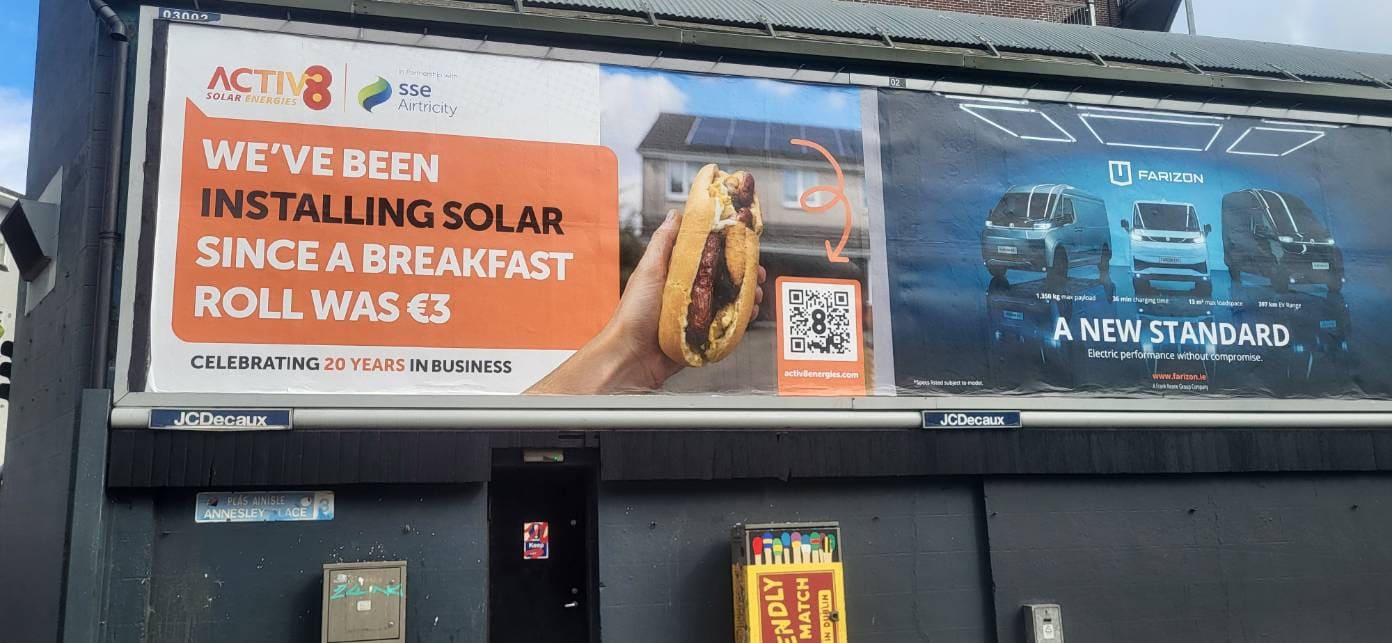
A breakfast roll was €3. And in 2006, we weren’t just eating them. We were singing about them.

Pat Shortt’s The Jumbo Breakfast Roll spent six weeks at number one and finished the year as Ireland’s best-selling single of 2006, even outselling Shakira’s Hips Don’t Lie.

Phones had buttons and the iPhone didn’t exist.

And spotting solar technology on the roof of an Irish home was unusual enough to make you look twice. Twenty years later, quite a lot has changed.

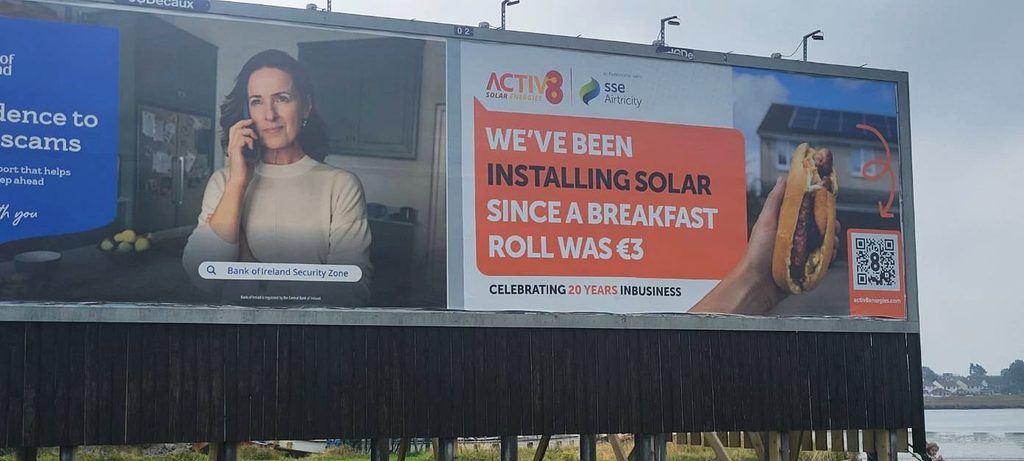
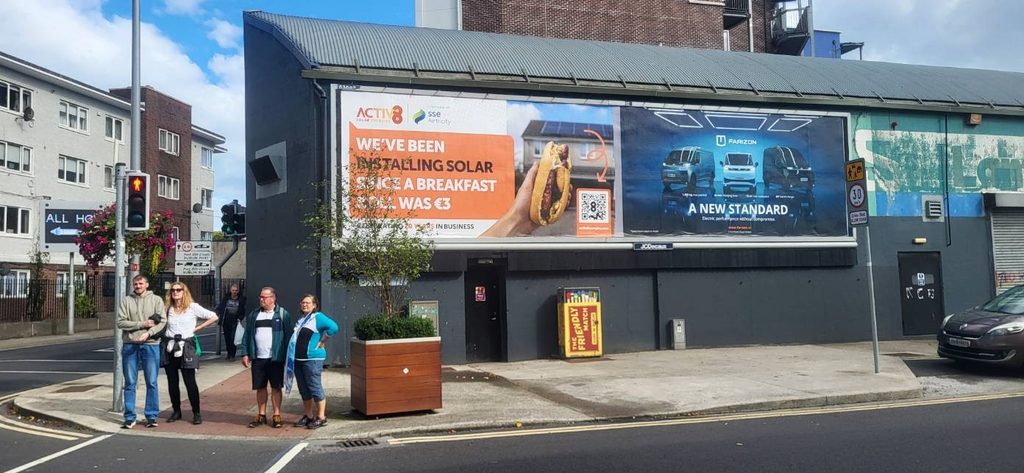
That’s the idea behind the advertising campaign you may have spotted on billboards or heard on the radio recently as Activ8 Solar Energies celebrates 20 years in business.

One of those billboards carries a simple message:

“We’ve been installing solar since a breakfast roll was €3.”

It’s a bit of fun.

But it’s also a surprisingly effective way of putting 20 years into perspective.

What Was Ireland Like 20 Years Ago?

Let’s go back to 2006 when Ireland was still in the middle of the Celtic Tiger years.

More than a million of us had been putting money into SSIAs, with the first accounts beginning to mature that year. A new car? A holiday? Home improvements? Pay something off? Those were the kinds of conversations taking place around Irish kitchen tables.

The Luas was still relatively new. Dublin Airport’s Terminal 2 didn’t exist. Neither did the iPhone.

There was no Instagram. No WhatsApp. No Spotify. Twitter was only getting started, while Facebook had yet to become the everyday part of Irish life it would eventually become.

If you wanted to take a decent photograph, there was a fair chance you brought a camera. If you got lost, you might actually have to ask someone for directions.

And if somebody mentioned TikTok, you’d probably have assumed they were talking about a clock.

Then there was the soundtrack.

Pat Shortt released The Jumbo Breakfast Roll in February 2006. It was essentially an ode to one of Ireland’s great culinary institutions, and the country absolutely loved it.

Six weeks at number one. The biggest-selling single of the year. Shakira, Gnarls Barkley, Justin Timberlake and the rest had to settle for looking up the charts at a song about a breakfast roll.

It was a very particular time and place. Which is precisely why, 20 years later, we couldn’t resist putting the breakfast roll on a billboard.

What Did Solar Energy Look Like in Ireland 20 Years Ago? 

Solar wasn’t part of everyday conversation around Irish homes in anything like the way it is today. Seeing solar technology on a house was relatively unusual.

Today, take a drive through almost any Irish town, village or housing estate and you’ll probably spot solar panels quite quickly.

And the questions homeowners ask have changed with them.

Do solar panels actually work in Irish weather?

How many solar panels would I need?

Is my roof suitable?

Should I get a solar battery?

What grants are available?

Would solar make sense if I’m buying an electric car?

These are now perfectly ordinary questions for Irish homeowners. And the numbers behind that transformation are remarkable.

How Much Has Solar Energy Grown in Ireland?

More than 200,000 Irish homes now have solar panels, while Ireland passed another major solar milestone in 2026 when total installed capacity exceeded 3GW.

Solar has moved from being an unusual sight to becoming an increasingly familiar part of the Irish landscape.

For homeowners, that means solar isn’t some technology that might become mainstream at some point in the future. It’s already sitting on rooftops all over the country.

And Activ8 has had a front-row seat for much of that transformation.

How Has Home Solar Changed in 20 Years?

The conversation about installing solar today is very different from the one homeowners would have had 20 years ago.

Solar PV can now form part of a much wider home-energy system.

Homeowners can consider battery storage, allowing surplus electricity generated during daylight hours to be stored and used later.

Electric vehicles mean some households can use electricity generated on their own roof to help power their car.

Surplus solar electricity can be exported back to the national grid.

Solar can also form part of a wider home-energy upgrade alongside technologies such as heat pumps and improvements to insulation, windows and doors.

And there is Government support towards the cost.

In 2026, eligible homeowners can receive an SEAI Solar PV Grant of up to €1,800. The current scheme provides €700 per kWp up to 2kWp and €200 for each additional kWp up to 4kWp, capped at €1,800.

Are Solar Panels Now Mainstream in Ireland?

With more than 200,000 Irish homes now having solar panels, we’re certainly getting there.

Perhaps an even better indication is the type of conversations we’re now having with homeowners.

Solar isn’t only being considered by early adopters with a particular interest in renewable technology.

It might be a couple in their seventies wondering whether it’s still worthwhile installing solar at their age.

It might be a family trying to get more control over their electricity bills.

It might be somebody buying their first electric car.

Or it might simply be a homeowner who has noticed that several houses on their road now have panels and started wondering whether their own roof could do the same job.

We’ve answered many of those questions elsewhere on this site.

Twenty years ago, these weren’t questions most Irish households were asking. Today, they very much are.

20 Years and More Than 25,000 Solar Installations Later

And that brings us back to the reason for the breakfast roll and the old mobile phone.

Activ8 Solar Energies is celebrating 20 years in business.

During that time, we’ve installed more than 25,000 solar systems.

We’ve watched solar move from something relatively unfamiliar to a technology now found on more than 200,000 Irish homes.

We’ve seen battery storage and electric vehicles become part of the conversation. We’ve seen Government grants and supports evolve.

And we’ve seen Irish homeowners become far more familiar with where their electricity comes from, what it costs and how much of it they could potentially generate themselves.

A lot has changed in 20 years.

We’re pleased to report that the breakfast roll has survived, although good luck trying to find one for three quid.

Frequently Asked Questions About Solar Energy in Ireland

How long has Activ8 Solar Energies been in business?

Activ8 Solar Energies is celebrating 20 years in business in 2026 and has installed more than 25,000 solar systems during that time.

How many homes in Ireland have solar panels?

More than 200,000 Irish homes now have solar panels, illustrating how significantly domestic solar has grown in Ireland over the past two decades.

How much solar capacity does Ireland have?

Ireland passed 3GW of installed solar capacity in 2026, marking another significant milestone in the development of solar energy in Ireland.

Were solar panels common in Ireland 20 years ago?

No. Solar technology was a much less common sight on Irish homes 20 years ago. Today, more than 200,000 Irish homes have solar panels installed.

Celebrating 20 Years of Activ8 Solar Energies

Our latest advertising campaign is having a little fun with how much Ireland has changed during Activ8’s 20 years in business.

But behind the nostalgia is something we’re extremely proud of.

Twenty years in business. More than 25,000 solar installations. And an Irish solar landscape that has changed almost beyond recognition along the way.

So if you’ve spotted one of our anniversary billboards or heard us on the radio recently, hopefully it’s brought back a few memories.

And after 20 years, we’re looking forward to seeing what comes next.

We have absolutely no idea what a breakfast roll will cost in 2046.

But we’d quite like it to stay below a tenner.
September 10, 2026

It’s almost that time of year again.

For three days every September, a field in the Irish midlands effectively becomes one of the busiest places in the country.

The National Ploughing Championships 2026 take place in Screggan, Tullamore, Co. Offaly, from Tuesday 15th to Thursday 17th September, and Activ8 Solar Energies will be there.

Despite the name, anyone who has been to the Ploughing knows that tractors and muddy wellies are only part of the story.

The event has become an annual day out for families and visitors from towns, villages and rural communities across Ireland, with everything from food and entertainment to business, technology, lifestyle and home improvement represented across the site.

And if solar panels have been on your mind lately, we’d love you to drop in for a chat.

Thinking About Solar Panels for Your Home?

One of the advantages of an event like the Ploughing is that you can have a proper conversation.

You might have been considering solar panels for months but still have questions.

Is my roof suitable?

How many solar panels would I need?

Would solar be worthwhile for an older house?

Do I need a solar battery?

What grants can I get?

Would solar make sense if I’m planning to buy an electric car?

Or perhaps you’ve simply looked at your electricity bills lately and started wondering how much of that electricity you could generate yourself.

The Activ8 team will be at the National Ploughing Championships throughout the three days to talk through those questions and help homeowners understand what might work for their particular property.

There isn’t one solar system that’s right for every Irish home. Roof space and condition, orientation, shading, household electricity consumption and when that electricity is used can all influence the system that’s recommended.

If you live outside one of Ireland’s larger towns or cities, you can also read our guide “Solar Panels for Rural Homes in Ireland: Are They Worth It?”

Where Can You Find Activ8 at the National Ploughing Championships 2026?

You’ll find Activ8 Solar Energies at:

Stand 60/61 – DOME
Block 4, Row 31 – Stand 596

20 Years of Powering Irish Homes With Solar

This year’s Ploughing comes at a particularly appropriate time for Activ8.

We’re celebrating 20 years of powering Irish homes with solar, with more than 25,000 solar systems installed during that time.

And a lot has changed in Irish solar over those two decades.

Solar panels have gone from being a relatively unusual sight on Irish rooftops to an increasingly familiar feature on homes across the country.

For us, however, one thing hasn’t changed: a solar system should be designed around the home and the people living in it.

That’s why talking to homeowners about their actual electricity use, property and future plans remains such an important part of the process.

What Solar Grants Are Available in Ireland in 2026?

Grants are understandably one of the subjects we’re asked about most often.

In 2026, eligible homeowners can receive an SEAI Solar PV Grant of up to €1,800 towards installing solar panels.

If you’re unsure whether your home qualifies or how the grant process works, our team can talk you through it at the Ploughing.

What If I Live in an Older or Rural Home?

Don’t assume that an older house, bungalow or rural location automatically rules your home out for solar.

The important considerations include the available roof area, its condition and orientation, potential shading and how much electricity your household uses.

That’s particularly relevant at the Ploughing, where we’ll meet homeowners living in everything from older bungalows and detached rural houses to relatively new family homes.

Win Tickets to the All-Ireland Senior Championship Final

Of course, you don’t have to spend your entire day at the Ploughing talking about electricity bills and solar panels.

We’re also giving visitors the opportunity to win tickets to the All-Ireland Senior Championship Final of their choice – football or hurling.

The challenge?

Could your code crack the safe?

Visit the Activ8 stand during the National Ploughing Championships to find out.

Frequently Asked Questions About Activ8 at the National Ploughing Championships 2026

When are the National Ploughing Championships 2026?

The National Ploughing Championships take place from Tuesday 15th to Thursday 17th September 2026 in Screggan, Tullamore, Co. Offaly.

Where can I find Activ8 at the National Ploughing Championships?

Activ8 Solar Energies will be at Stand 60/61 – DOME, Block 4, Row 31 – Stand 596.

Can I talk to Activ8 about solar panels for my home at the Ploughing?

Yes. The Activ8 team will be available throughout the event to answer questions about solar panels, home suitability, grants and other aspects of installing solar PV.

How much is the Solar PV Grant in Ireland in 2026?

Eligible homeowners can currently receive an SEAI Solar PV Grant of up to €1,800 towards the cost of installing solar panels.

Come and Talk to Activ8 at Ploughing 2026

Whether you’re actively planning a solar installation or are only beginning to think about it, come and say hello.

You don’t need to arrive knowing your kWp from your kilowatt-hour.

Bring your questions. Tell us a little about your home and electricity usage, and our team can explain the options that may be worth considering.

After 20 years and more than 25,000 solar installations, we’ve encountered plenty of different Irish homes along the way.

We’ll see you in Screggan.

September 8, 2026

The National Ploughing Championships might have farming at its heart, but anyone who has attended over the years knows it’s become much more than that.

For three days, it’s also a gathering place for tens of thousands of families and homeowners from towns, villages and rural communities across Ireland.

Activ8 Solar Energies will be there again this September, and we’re expecting to have plenty of conversations about one subject in particular: the cost of powering our homes.

For people living outside Ireland’s larger towns and cities, that conversation can be slightly different.

Detached homes are common and properties can be larger. Two cars may be a necessity rather than a luxury. Oil heating remains familiar in many homes. And with fewer options for public transport, switching one – or both – of those cars to electric can make an increasingly noticeable difference to household electricity use.

So, does living in rural Ireland make solar panels more or less worthwhile?

For many homes, there are some very good reasons why the answer could be more.

Why Rural Homes Can Be Well Suited to Solar Panels 

There isn’t really such a thing as a typical rural Irish home. Indeed, recent proposals signed off by Government could make it easier to build one-off housing nationwide.

It could be a bungalow built during the 1970s, a two-storey farmhouse that’s been in the family for generations, or a large detached house built during the Celtic Tiger years.

But many share characteristics that can work particularly well for solar.

Larger detached homes often have more available roof space than terraced or semi-detached properties in urban areas. They may also have garages, sheds or other buildings that can potentially form part of the conversation when assessing a property.

More space doesn’t automatically mean a home is suitable for solar. Roof condition, orientation and shading from nearby trees or buildings all matter. That’s why every property needs to be assessed individually.

Do Solar Panels Work in Rural Ireland?

You don’t need to live somewhere with Mediterranean sunshine to make solar panels worthwhile.

Solar PV panels generate electricity from daylight and continue to produce electricity on overcast days, although output will naturally be lower than on bright sunny days.

In fact, around 75% of the annual electricity generated by a solar PV system in Ireland is produced between May and September.

So whether your home is in rural Meath, Monaghan, Cavan, Mayo or anywhere else in the country, the basic principle is the same.

The important questions are how suitable your property is and how much of the electricity generated you can actually use.

What About Large Detached Homes? 

A larger home will often use more electricity simply because there’s more of it to power. There may be more appliances, more occupants, home offices, electric showers or other demands throughout the day.

That doesn’t mean the answer is simply to install as many panels as will fit on the roof.

A properly designed solar system should take account of how much electricity the household actually uses, when it uses it, the available roof area and the orientation of the property.

The objective is to design the right system for the home rather than the biggest one possible.

What If Your Rural Home Is Older? 

Age alone doesn’t rule a property out.

Activ8 regularly works with homeowners living in older detached homes and bungalows across Ireland.

What matters more is the condition of the roof, available space, orientation, shading and the household’s electricity requirements.

If the home needs wider energy improvements, it can also make sense to look beyond solar in isolation and consider insulation, heating and other measures as part of a broader home energy upgrade.

Solar Panels and Electric Cars in Rural Ireland 

For anyone living in rural Ireland, the car tends to be difficult to avoid.

The school run, commuting to work, shopping, sport and simply getting from A to B can mean considerably more driving than for somebody living in the middle of a city.

That’s one reason the combination of an electric vehicle and home solar is worth considering.

An EV naturally increases household electricity consumption, but some of that additional energy can potentially be supplied by electricity generated on your own roof.

If you’re considering changing to an EV in the coming years, it’s worth mentioning that when your solar system is being designed rather than treating the two decisions completely separately.

Is Battery Storage Worth Considering? 

Battery storage can be particularly useful where much of the household’s electricity consumption happens outside the hours when the solar panels are generating most strongly.

Rather than immediately exporting surplus electricity, a battery allows some of it to be stored and used later.

Whether a battery makes financial sense will depend on your individual usage patterns, system size and electricity tariff, so it shouldn’t automatically be treated as essential for every rural home.

What Solar Grants Are Available for Rural Homeowners?

The same SEAI Solar PV Grant available to other eligible homeowners applies to homes in rural Ireland.

In 2026, the maximum domestic Solar PV Grant is €1,800.

Eligibility isn’t based on whether you live in a town or the countryside. Among the requirements, the property must have been built and occupied before 2021 and must not previously have received solar PV funding for the same MPRN.

It’s important to apply for and receive your SEAI grant offer before installation work begins.

Frequently Asked Questions About Solar Panels for Rural Homes 

Are rural homes suitable for solar panels? 

Many are. Detached rural homes often have good roof space for solar panels, but suitability depends on factors including roof condition, orientation, shading and the household’s electricity usage.

Do solar panels work well in rural Ireland? 

Yes. Solar panels generate electricity from daylight rather than requiring direct sunshine, so Ireland’s climate doesn’t prevent them from working effectively.

Can solar panels be installed on an older rural home?

Yes. The age of the house itself isn’t usually the deciding factor. The condition and suitability of the roof are more important, along with factors such as available space and shading.

Are bungalows suitable for solar panels? 

They can be particularly suitable because many bungalows have relatively large roof areas. However, every property needs to be assessed individually.

Can I get a grant for solar panels on a rural home? 

Yes. Eligible rural homeowners can access the same SEAI Solar PV Grant as homeowners elsewhere in Ireland. In 2026, the maximum domestic grant is €1,800.

Heading to the National Ploughing Championships? 

Activ8 Solar Energies will be at the National Ploughing Championships this September.

If you’re coming along and have been wondering whether solar panels would make sense for your home, come and have a chat with the Activ8 team. You’ll find us at Stand 60/ 61, DOME, Block 4, Row 31, Stand 596.

Whether you live in a bungalow, farmhouse, older detached property or a relatively new rural home, we can talk you through solar panels, battery storage, EV charging, SEAI grants and the wider home energy upgrade options available.

And if you’re not heading to the Ploughing, you can get in touch with Activ8 at any time for a tailored assessment of your home.

August 26, 2026

Low Carbon Energy has today become Activ8 Energies, marking the next stage in the evolution of the business and establishing a single brand across its operations in the UK and Ireland. 

The rebrand follows Activ8 Energies’ acquisition of the business in 2025 and brings the UK operation under the Activ8 Energies identity, creating a clearer proposition for customers and reflecting the scale, expertise and capability of the wider organisation.

For more than 15 years, Low Carbon Energy has built a strong reputation as one of the UK’s leading commercial renewable energy specialists, delivering projects for organisations including Boeing, BMW, Porsche, Co-op, Drax Power, Tata Steel, Wickes, United Utilities and the NHS. Most recently, the business completed the landmark 3MW solar installation at Liverpool John Lennon Airport, capable of generating up to 25% of the airport’s annual electricity demand through on-site renewable generation. 

The move builds on that established UK track record, bringing it together with Activ8 Energies’ wider operations across Ireland, the UK and Europe. It combines the experience and relationships of the existing UK team with Activ8 Energies’ growing technical capability, resources and experience delivering renewable energy projects at scale. 

For existing Low Carbon Energy customers, the rebrand is exactly that, a new name. The team, the relationships and the commitment to delivering high-quality renewable energy solutions remain unchanged. Customers will continue to work with the same people they know and trust, with no impact on existing projects, contracts or day-to-day support. 

For organisations considering a renewable energy partner, Activ8 Energies brings together decades of specialist renewable energy expertise, an established track record of delivery and the capability to support increasingly ambitious energy projects across the UK. 
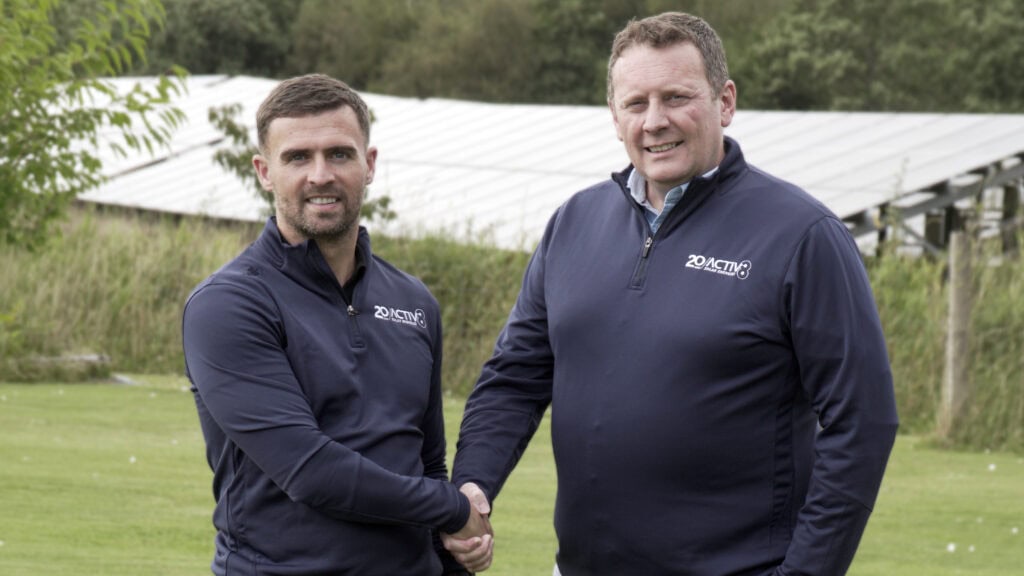
Benedict Ennis, MD Activ8 Energies UK with Ciaran Marron, CEO Activ8 Energies

Ciaran Marron, CEO of Activ8 Energies, said: 

“The business has earned an outstanding reputation in the UK by consistently delivering high-quality renewable energy projects and building long-term relationships with its customers. 

Becoming Activ8 Energies is a natural progression. It creates a single identity across our operations while better reflecting the scale of the organisation and the strength that sits behind our business today. 

Our strategic relationship with SSE has played a pivotal role in the growth of Activ8 Energies over recent years. Today, as we celebrate 20 years in business, we’re able to combine specialist renewable energy expertise with the capability, investment and long-term confidence that comes from being part of one of the UK’s leading energy groups.” 

Benedict Ennis, Managing Director, UK, Activ8 Energies, said: 

“This is an exciting milestone for our business and gives us a much stronger platform for growth in the UK. 

The people, the service and the relationships our customers value remain exactly the As Activ8 Energies, we can combine the agility and specialist expertise of our team with the wider capability of Activ8 and the strength and backing of SSE. That combination puts us in a very strong position to meet the growing ambitions of organisations looking to invest in renewable energy.” 

August 25, 2026

Remember the iconic Financial Regulator TV ad from the mid-2000s?

A man stands up on a Dublin bus and loudly announces:

“I don’t know what a tracker mortgage is.”

One by one, other passengers admit to things they don’t understand either.

The point wasn’t that anyone was foolish. Quite the opposite.

It was a reminder that lots of us quietly pretend to understand technical terms because we assume everyone else does.

“Solar PV” is probably one of those phrases today.

You’ll see it on installers’ websites, SEAI information, energy articles and news reports.

Some people know exactly what it means but many don’t, which is perfectly understandable.

So let’s answer one of the simplest –  and most common – questions homeowners ask.

What does Solar PV actually mean?

What Does PV Stand For? 

PV stands for Photovoltaic, which is a bit of a mouthful.

The term comes from two sources.

“Photo” refers to light and “Voltaic” relates to electricity.

Put the two together and photovoltaic simply describes the process of converting light into electricity.

Which is exactly what solar panels do.

So when someone talks about a Solar PV system, they’re simply referring to solar panels that generate electricity.

Is Solar PV the Same as Solar Panels? 

For most homeowners, yes, and the two terms are often used interchangeably.

If someone says they’re installing Solar PV, they almost certainly mean they’re installing solar panels that generate electricity for the home.

It’s industry terminology rather than a completely different technology.

What’s the Difference Between Solar PV and Solar Thermal? 

This is where some confusion can arise.

Solar PV generates your electricity, while solar thermal heats your water.

Years ago, solar thermal systems were relatively common in Ireland.

Today, most homeowners looking to reduce electricity bills are talking about Solar PV, which is why you’ll hear the term much more often.

Why Do Installers Say “Solar PV”? 

Mostly because that’s the technical name for the technology.

It’s a bit like saying “EV” instead of electric vehicle or “BER” instead of Building Energy Rating.

People working in the industry use the abbreviation every day.

Homeowners, understandably, often don’t.

The important thing to remember is that when an installer talks about Solar PV, they’re simply talking about solar panels that generate electricity.

Does Every Solar System Use PV? 

If you’re generating electricity from rooftop solar panels, then yes.

Every modern domestic solar electricity system uses photovoltaic technology.

Whether it’s a small system supplying part of a home’s electricity or a larger installation with battery storage and EV charging, the electricity itself is generated using photovoltaic cells.

Why Does the Term Matter? 

To be honest, it doesn’t matter very much.

You don’t need to remember the word photovoltaic to decide whether solar is right for your home.

But understanding the terminology does make researching solar a little easier.

Suddenly, phrases like “Solar PV installation,” “Solar PV grants,” “Solar PV system,” and “Solar PV installer” feel far less intimidating, as they’re all referring to essentially the same thing.

Don’t Be Put Off by the Jargon 

Every industry has its own language.

Mortgage brokers talk about LTVs. Car dealers mention PCPs.

The solar industry has PV, inverters, kWh and kWp.

It can feel like learning another language at first, but homeowners don’t need to become solar engineers.

They simply need enough information to make a confident decision about what’s right for their home.

A good installer should always explain the terminology rather than assume everybody already understands it.

Common Questions About Solar PV 

What does PV stand for in solar panels? 

PV stands for photovoltaic, which describes the process of converting daylight into electricity.

Is Solar PV the same as solar panels? 

For most homeowners, yes. Solar PV is simply the technical term for solar panels that generate electricity.

Is Solar PV the same as solar thermal? 

No. Solar PV generates electricity, while solar thermal systems heat water.

Why do installers call it Solar PV? 

Because photovoltaic is the technical name for the technology used in modern electricity-generating solar panels.

Thinking About Solar for Your Own Home? 

Understanding the terminology is only the first step.

With over 20 years’ experience and more than 25,000 installations across Ireland, Activ8 Solar Energies helps homeowners cut through the jargon and understand how solar works in real life.

If you’d like to learn more about solar panels, battery storage, EV charging, available grants and projected savings, you can get in touch with the Activ8 team here.

August 24, 2026

I’m in a constant battle with my mobile phone battery. It was sitting at 42% when I started writing this. By the time I came back to proof-read it, it’d dropped to 31%.

A mate of mine spends every long trip in his new electric vehicle wondering whether the charge will get him to his destination.

Battery anxiety has become part of modern life.

So it’s hardly surprising that one of the first questions homeowners ask about solar battery storage is: How long does it actually last?

Or, more specifically…Will it get me through the night?

Fair enough question as, after all, solar panels do most of their work during the day, while many households use a large proportion of their electricity after the sun has gone down.

The good news is that, for many homes, a battery can provide electricity well into the evening and sometimes right through until morning.

The honest answer, however, is the same one you’ll hear to many solar questions.

It kind of depends.

What Does a Solar Battery Actually Do? 

A solar battery stores excess electricity generated by your solar panels during the day instead of exporting it all back to the grid.

That stored electricity can then be used later, including during the evening and overnight when your panels are no longer producing power.

In simple terms, it allows you to use more of the electricity you’ve generated yourself rather than buying it back from the grid later.

So, How Long Will It Last? 

There’s no single answer because every household uses electricity differently.

A battery doesn’t empty based on time.

It empties based on what you’re asking it to power.

A home using a few lights, the television, Wi-Fi and charging a couple of phones during the evening will use far less electricity than a household running a heat pump, charging an EV and putting on a late-night load of washing.

That’s why two identical batteries can appear to last very different lengths of time in different homes.

What Uses the Most Electricity Overnight?

Many homeowners are surprised by where their electricity actually goes.

Some of the biggest overnight electricity users include heat pumps, electric vehicle charging, immersion heaters, electric showers, tumble dryers and electric heating.

By comparison, TVs, LED lighting, laptops, Wi-Fi routers and phone chargers use relatively modest amounts of electricity.

Understanding how your own household uses electricity is often more important than simply choosing the biggest battery available.

Can a Battery Power the Whole House?

Potentially, yes, but not indefinitely.

A battery isn’t designed to keep every appliance running continuously for days.

Instead, it’s there to reduce the amount of electricity you need to buy from the grid, particularly during the evening when your solar panels have stopped generating.

Exactly how long it lasts depends on both the size of the battery and how much electricity your home is using.

Does a Bigger Battery Mean It Lasts Longer?

Generally speaking, yes.

A larger battery can store more electricity than a smaller one but bigger isn’t automatically better.

The ideal battery is one that’s matched to both your solar generation and your household’s electricity usage.

Installing the largest battery available doesn’t always represent the best value if your home simply doesn’t need that much storage.

That’s why system design matters just as much as the battery itself.

Is Battery Storage Worth It in Ireland? 

For many homeowners, battery storage can significantly increase the amount of solar electricity they use themselves rather than exporting it back to the grid.

That can reduce electricity bills and improve the overall value of a solar system.

Whether battery storage is worthwhile depends on a range of factors, including how much electricity you use during the day, whether you’re usually at home, if you own or plan to buy an electric vehicle, whether a heat pump is part of your future plans, your electricity tariff and your overall household demand.

Every home is different, which is why there’s no one-size-fits-all answer.

So, Will a Solar Battery Last All Night?

For many households, it certainly can.

For others, it may provide power for part of the evening before additional electricity is drawn from the grid.

The important point is that battery performance depends far more on how much electricity you’re using than on how many hours have passed.

That’s why a professional assessment looks at your household’s energy habits rather than simply recommending the biggest battery available.

Common Questions About Solar Batteries 

Can a solar battery power my house all night?

It can for many households, but it depends on the battery size and how much electricity your home uses overnight.

What affects how long a solar battery lasts? 

The biggest factors are battery capacity and your household’s electricity consumption.

Does charging an electric vehicle drain a solar battery quickly?

Charging an EV uses considerably more electricity than most everyday household appliances, so it can reduce how long a battery lasts unless the system has been designed with that demand in mind.

Is a bigger battery always better?

Not necessarily. The best battery is one that’s properly matched to your home’s electricity usage and solar generation.

Thinking About Battery Storage for Your Own Home? 

Battery storage isn’t about trying to stay off-grid for days at a time.

It’s about making better use of the electricity your solar panels already generate.

With over 20 years’ experience and more than 25,000 installations across Ireland, Activ8 Solar Energies helps homeowners understand whether battery storage makes sense for their home, their electricity usage and their future plans.

If you’d like to explore battery storage, solar panels, EV charging, available grants and projected savings, you can get in touch with the Activ8 team here.

August 24, 2026

Most homeowners probably don’t spend much time thinking about health and safety paperwork when they decide to install solar panels.

They’re usually thinking about electricity bills, battery storage, SEAI grants or whether the roof gets enough sunlight, which is completely understandable.

But solar installation is still construction work.

There are people working at height, electrical systems being installed and multiple trades operating on-site over the course of the installation.

Which does raise a fairly obvious question: if something goes wrong during the installation, who’s actually responsible?

It’s not necessarily the first thing homeowners think about when researching solar panels in Ireland, but it’s still an important part of choosing the right installer.

Solar Installation Is Still Construction Work 

One thing many homeowners don’t initially realise is that solar installation involves far more than simply attaching a few panels to a roof.

Depending on the property, installations can involve scaffolding, roof access, electrical work, wiring, inverter installation and coordination between multiple trades.

That means solar projects still fall within wider construction safety regulations in Ireland.

And while homeowners understandably expect installers to manage all of that professionally, it’s still worth understanding how responsibility and site safety are actually handled during the project itself.

What Does PSCS Mean? 

PSCS stands for Project Supervisor Construction Stage.

It’s a role defined under Irish health and safety regulations for construction projects.

In simple terms, the PSCS is responsible for managing safety during the construction phase of a project. That includes coordinating work activities, managing on-site safety procedures and helping ensure work is carried out safely and properly throughout the installation.

For homeowners, the important thing is simply knowing somebody is clearly responsible for overseeing the installation properly from start to finish.

Why This Matters for Homeowners 

Most people installing solar panels simply want confidence that the work is being carried out professionally, safely and with proper oversight.

That’s where clearly defined responsibility becomes important.

If multiple contractors, roof workers and electricians are operating on-site, homeowners naturally want reassurance that somebody is actively managing the process and overseeing safety standards throughout the installation.

In reality, most homeowners will never directly deal with PSCS paperwork or construction compliance requirements themselves.

But knowing those responsibilities are being properly managed still provides an additional layer of reassurance around the installation process overall.

Not Every Solar Company Operates the Same Way

One thing homeowners often discover while researching solar is that installation models can vary quite a bit between companies.

Some providers manage installations entirely through their own in-house teams, while others rely more heavily on subcontractors and third-party crews.

That doesn’t automatically make one approach right or wrong, but it does make accountability and project oversight especially important.

Homeowners should feel comfortable asking who is managing the installation, who is responsible for safety on-site and who ultimately stands over the finished work.

The clearer those answers are upfront, the more confidence homeowners usually have throughout the project.

Why Experience and Oversight Matter 

Solar has grown rapidly in Ireland over the past few years, and the industry has become significantly busier as demand has increased.

That growth is positive overall, but it also means homeowners are increasingly trying to distinguish between providers based not just on price, but on experience, accountability and professionalism.

Activ8 Solar Energies operates as PSCS during installations, meaning responsibility for managing safety during the construction stage is clearly defined and professionally overseen throughout the project.

Combined with over 20 years of experience and more than 25,000 installations nationwide, that gives homeowners much greater clarity around who is managing the installation process from start to finish.

Solar Installation Should Feel Professional From Beginning to End 

For most homeowners, solar panels are a long-term investment.

Naturally, people want confidence not just in the panels themselves, but in the entire installation experience surrounding them.

That includes product quality, installation standards, aftercare support, project management and site safety throughout the installation process.

The technical side of solar can sometimes feel complicated enough already. Homeowners shouldn’t also feel uncertain about who is responsible for managing the work taking place on their property.

Common Questions About Solar Installation Safety

What does PSCS mean in solar installation? 

PSCS stands for Project Supervisor Construction Stage. It refers to the party responsible for managing safety during the construction phase of a project under Irish regulations.

Is solar panel installation considered construction work?

Yes. Solar installation can involve roof access, scaffolding, electrical work and multiple trades operating on-site, meaning construction safety regulations apply.

Should homeowners ask who is responsible for safety during installation? 

Yes. Homeowners should understand who is overseeing the installation process, managing site safety and standing over the work being carried out.

Do all solar companies manage installations the same way? 

No. Some companies use their own in-house installation teams, while others rely more heavily on subcontractors or external crews.

Thinking About Solar for Your Own Home? 

If you’re considering solar panels, it’s worth looking beyond just electricity savings and understanding how the installation process itself is managed as well.

With over 20 years’ experience and more than 25,000 installations across Ireland, Activ8 Solar Energies manages projects professionally from start to finish, helping homeowners feel confident not just in the solar system being installed, but in the process surrounding it too.

If you’d like to learn more about solar panels, battery storage, EV charging or how solar installation works for your own home, you can get in touch with the Activ8 team here.

August 23, 2026

In an era of online terms and conditions, streaming subscriptions, budget airline add-ons and endless small print, most of us have probably become a little too comfortable clicking “accept” without reading everything properly. Usually, that doesn’t matter too much.

But occasionally it can come back to bite – particularly with larger financial decisions like car finance, home renovations and yes, solar panel installations.

That’s not because solar contracts are designed to catch people out. In most cases, they’re fairly straightforward.

But by the time homeowners reach the signing stage, they’ve often already spent weeks researching grants, savings, batteries and installers. The excitement has kicked in.

And naturally enough, the paperwork itself can end up getting less attention than it probably deserves.

Check Exactly What Products Are Being Installed

One of the most important things homeowners should check is whether the exact products being quoted are clearly stated in writing.

That includes the solar panels themselves, the inverter, any battery storage system and monitoring equipment.

Most homeowners understandably spend time researching brands, warranties and product quality before deciding to move ahead. But supply chain shortages and stock issues have become more common across the industry in recent years.

That has occasionally led to situations where homeowners agree to one product during the sales process, only for a different panel or inverter to appear on installation day.

That’s why it’s important to check whether the contract clearly specifies exactly what products are being installed and whether substitutions are possible.

Activ8 Solar Energies, for example, proudly stands behind its own Atlas Duo solar panel range with a 25-year product warranty and a 30-year performance warranty, giving homeowners much greater confidence in exactly what’s being installed on their roof.

Check Who Will Actually Be Carrying Out the Installation

Many homeowners naturally assume the company they’re buying from will also be carrying out the installation itself. That isn’t always the case.

Some solar providers subcontract installation work to external crews, while others use their own in-house teams.

That’s an important distinction because homeowners should understand exactly who will be working on the roof, overseeing the installation and ultimately standing over the quality of the finished system.

For many people, there’s added reassurance in knowing the installation is being handled directly by experienced in-house teams rather than passed between multiple contractors.

Activ8 Solar Energies uses its own in-house installation teams across Ireland, helping ensure greater consistency, oversight and quality control throughout every stage of the process.

Check What’s Actually Included in the Price 

Solar quotes can sometimes look similar at first glance while covering very different things.

That’s why homeowners should carefully check exactly what’s included in the quoted price.

For example, does the price include scaffolding, BER paperwork, monitoring systems, grant administration and all installation work? Are there additional costs if electrical upgrades are needed? Is battery compatibility included if you decide to expand the system later?

These aren’t necessarily red flags. But they are the kind of details homeowners should understand clearly before signing anything.

The more transparent the contract is upfront, the fewer surprises tend to arise later.

Check the Warranty Terms Carefully 

Most homeowners ask whether a solar system comes with a warranty.

Fewer take time to properly understand what the warranty actually covers and that distinction matters.

There’s often a difference between product warranties, performance warranties, workmanship warranties and ongoing aftercare support.

It’s worth checking how long each part of the system is covered for, who handles warranty claims and what happens if a fault develops several years after installation.

Solar panels are a long-term investment, so homeowners naturally want confidence that support will still exist well into the future.

Check the Estimated Timelines 

Another thing worth reviewing carefully is the expected installation timeline.

Most homeowners understandably focus on the installation date itself, but solar projects can also involve surveys, paperwork, grant approvals and ESB Networks processes.

That means timelines can vary depending on demand, weather conditions and grid applications.

A good installer should explain the expected process clearly rather than giving vague or unrealistic promises around completion dates.

Check Whether the System Can Expand Later

Electricity usage has changed dramatically in Irish homes over the past few years.

Many households that originally only wanted solar panels are now considering battery storage, EV charging and heat pumps as well.

That’s why it’s worth checking whether the proposed system allows for future expansion if household electricity needs change later.

Even if homeowners don’t plan to add batteries or an EV immediately, understanding future compatibility now can help avoid limitations further down the line.

Check Who Is Responsible for Safety During Installation 

Most homeowners understandably focus on the solar system itself, but it’s also important to understand who is responsible for safety and compliance while work is taking place on the property.

Solar installation is still construction work involving roof access, electrical work and multiple trades operating on-site.

That’s why homeowners should feel comfortable asking who holds responsibility for site safety, compliance and project oversight during installation.

Activ8 Solar Energies operates as PSCS (Project Supervisor Construction Stage), meaning responsibility for managing safety during the construction phase is clearly defined and professionally overseen.

For homeowners, that provides an additional level of reassurance that the installation process is being managed properly from start to finish.

Don’t Rely on Verbal Promises Alone 

This is probably one of the simplest but most important points.

If something matters to you, make sure it’s clearly reflected in writing.

That could include specific products, installation timelines, battery compatibility, warranty details, monitoring systems or agreed pricing.

Most installation issues don’t happen because anybody deliberately misled a homeowner. They happen because assumptions were made or expectations weren’t clearly documented upfront.

A good solar contract shouldn’t feel rushed, confusing or deliberately technical.

Homeowners should feel clear about exactly what’s being installed, who’s installing it, what’s covered and what happens afterwards.

Common Questions About Solar Install Contracts 

What should be included in a solar installation contract? 

A solar contract should clearly outline the products being installed, warranties, pricing, timelines, installation details and any responsibilities around grants or paperwork.

Can solar installers change the panel brand after signing? 

Some contracts allow for substitutions depending on stock availability. That’s why homeowners should check whether the exact products are clearly specified in writing.

Should I check whether installers use subcontractors? 

Yes. Homeowners should understand who will actually be carrying out the installation work and who is responsible for the finished system.

What happens if something goes wrong after installation? 

That depends on the installer, warranty terms and aftercare support provided. It’s important to understand who handles faults, warranty claims and future support before signing.

Thinking About Solar for Your Own Home? 

If you’re considering solar panels, taking time to properly understand the contract and installation process upfront can make the entire experience much clearer and less stressful.

With over 20 years’ experience and more than 25,000 installations across Ireland, Activ8 Solar Energies helps homeowners understand exactly what’s being installed, how systems are designed and what makes sense for their own long-term energy goals.

If you’d like to learn more about solar panels, battery storage, EV charging or what a system could look like for your own home, you can get in touch with the Activ8 team here.

August 22, 2026

My son was recently organising Transition Year work experience and mentioned he might be interested in estate agency.

After putting the feelers out to a couple of local estate agents I know, the conversation eventually drifted onto the property market more generally and how much things have changed over the past few years.

I asked both of them whether landlords and tenants were becoming more conscious of BER ratings and energy efficiency when it came to rental properties.

The response was fairly immediate: “Yes 100%.”

And that probably tells you quite a lot about how attitudes towards energy efficiency have shifted in Ireland recently.

A few years ago, things like solar panels, EV chargers and BER ratings were often viewed as nice extras.

Increasingly, they’re becoming part of how rental properties are judged in the first place.

And it probably explains why more landlords are beginning to view solar as something worth seriously considering.

For many property owners, the answer is increasingly yes, but the conversation is slightly different compared to owner-occupier homes.

Can Tenants Install Solar Panels Themselves? 

In most situations, no.

Because solar panels involve structural work, roof access and long-term changes to the property itself, tenants would generally need landlord approval before any installation could happen.

In reality, most solar installations on rental homes are decisions made by landlords or property owners rather than tenants themselves.

And understandably so. Solar panels are a long-term investment tied directly to the property.

Why More Landlords Are Looking at Solar 

For many landlords, the conversation around solar has changed quite a bit over the past few years.

Initially, solar panels were often viewed mainly through the lens of environmental sustainability.

Now, the conversation is usually far more practical.

Landlords are increasingly thinking about BER ratings, long-term property value, rental competitiveness, rising electricity costs, future energy regulations and making properties more attractive to tenants.

In other words, solar is increasingly being viewed as part of a property’s long-term efficiency and appeal rather than simply an optional upgrade.

BER Ratings Matter More Than They Used To 

This is probably one of the biggest shifts in the Irish rental market.

Tenants have become much more conscious of energy efficiency and running costs, particularly after several years of rising electricity prices.

That means BER ratings now carry more weight than they once did.

Solar panels can contribute positively towards improving a property’s BER rating, helping demonstrate stronger overall energy performance.

And while BER isn’t the only factor tenants consider, it has absolutely become a more visible part of how rental properties are viewed in Ireland.

Lower Running Costs Can Improve Tenant Appeal 

One thing landlords are increasingly aware of is that renters now think much more carefully about monthly running costs than they did a few years ago.

Electricity bills have become a genuine concern for many households.

Properties with solar panels may help reduce electricity costs for tenants, particularly during brighter months when systems are generating more electricity.

That doesn’t necessarily mean landlords can automatically charge significantly higher rent purely because solar panels are installed.

But it can help make a property feel more modern, efficient and future-focused compared to similar homes without energy upgrades.

Solar Can Also Support Long-Term Property Value

For many landlords, rental property is ultimately a long-term asset.

And energy efficiency is becoming a much bigger part of property value conversations generally.

Homes with stronger BER ratings, lower running costs and modern energy systems are increasingly viewed differently by buyers and renters alike.

Solar panels aren’t the only factor influencing property value, obviously, but they are increasingly part of the broader conversation around futureproofing homes in Ireland.

Grants and Financing Still Help 

SEAI grants continue helping reduce the upfront cost of residential solar installations in Ireland.

And as financing options have expanded in recent years, solar has become more accessible for property owners who may not want to commit to large upfront costs immediately.

That has made the conversation easier for many landlords who previously viewed solar as something financially out of reach.

Landlords Are Increasingly Thinking Long-Term 

That’s probably the biggest overall trend.

A few years ago, many landlords focused mainly on immediate maintenance and short-term costs.

Now, more property owners are also thinking about future energy efficiency expectations, tenant demand, BER standards, running costs and long-term property competitiveness.

Solar increasingly sits within that wider conversation. We’re seeing landlords particularly interested in solar where tenants work from home during the day.

Because ultimately, energy efficiency is becoming less of a “bonus feature” and more of an expected part of modern housing.

Common Questions About Solar Panels for Rental Properties 

Can tenants install solar panels on rented houses in Ireland? 

Usually not without landlord approval. Solar installation involves structural and long-term changes to the property itself.

Can solar panels improve a rental property’s BER rating? 

Yes. Solar panels can contribute positively towards a property’s BER rating and overall energy performance.

Do solar panels increase rental property value? 

Solar panels may improve long-term property appeal and energy efficiency, although value depends on the property, location and overall condition.

Are solar panels worth considering for landlords?

For many landlords, yes. Solar can support energy efficiency, tenant appeal, BER improvements and long-term futureproofing of the property.

Thinking About Solar for Your Rental Property? 

For many landlords, solar is no longer just an environmental conversation. It’s increasingly about long-term property quality, energy efficiency and future competitiveness in a changing rental market.

With over 20 years’ experience and more than 25,000 installations across Ireland, Activ8 Solar Energies helps property owners understand what genuinely makes sense for their building, energy usage and long-term goals.

If you’d like to learn more about solar panels, BER improvements, battery storage or what solar could look like for your rental property, you can get in touch with the Activ8 team here.

August 21, 2026

Most of us struggle to decide what we’re having for dinner next Tuesday. What do watch next on Netflix. Where to head on holidays this year.

Yet when it comes to solar panels, we’re often expected to somehow predict how much electricity we’ll be using in five or ten years’ time.

Will there be an electric vehicle sitting in the driveway? A heat pump in the utility room? Someone working from home full-time?

Nobody has a crystal ball, which is why one of the most common questions homeowners ask is: Can you add more solar panels later if your electricity needs increase?

The answer is often yes but there are a few things worth understanding before making that decision.

Why Homeowners Consider Expanding Their Solar System

Most households don’t stand still.

Children grow up, working patterns change.

Electric vehicles become more common, heat pumps are installed.

Electricity usage can increase significantly over time.

A solar system that feels perfectly sized today may look quite different a few years from now.

That’s why some homeowners deliberately leave room for future expansion rather than installing the largest possible system immediately.

Can More Solar Panels Be Added Later? 

In many cases, yes they can.

Additional panels can often be added to an existing solar system, provided there is suitable roof space available and the overall system design allows for expansion.

However, it’s not quite as simple as attaching a few extra panels whenever the mood takes you.

The existing system needs to be capable of accommodating those additional panels.

That’s why discussing future plans during the original design stage can be helpful.

Even if you’re not ready to install extra panels today, it’s useful to know what options may be available later.

Why Future-Proofing Matters 

One of the most common examples involves electric vehicles.

A household that currently uses relatively little electricity may see consumption increase significantly after switching from petrol or diesel to an EV.

The same can happen when a heat pump is installed or when more family members begin working from home.

Designing a system with potential future growth in mind can sometimes make later expansion easier and more cost-effective.

Roof Space Matters Too 

This might sound like it’s stating the obvious, but future expansion requires somewhere to put the additional panels.

If a roof is already filled to capacity during the original installation, adding further panels later may not be possible without considering alternative roof sections.

That’s why installers often assess both current requirements and future possibilities during the survey process.

While nobody can predict the future perfectly, it’s useful to avoid unnecessarily limiting future options.

What About the Inverter? 

The inverter plays an important role when considering future expansion.

Depending on the system design, an inverter may have capacity to accommodate additional panels in the future.

In other cases, upgrades or modifications may be required.

This doesn’t mean expansion is impossible, but simply means the original system design can influence how straightforward future additions will be.

Another reason why discussing long-term plans early in the process can be worthwhile.

Should You Install Extra Panels Now Instead? 

Sometimes homeowners face a different question.

Rather than asking whether panels can be added later, they wonder whether they should simply install more panels from the beginning.

There isn’t a universal answer.

It depends on factors such as how much electricity you use today, how much roof space is available and whether future plans include an EV, a heat pump or other changes that could increase energy consumption.

For some households, installing additional panels from the outset may make sense, while for others, a phased approach may be perfectly reasonable.

Solar Is Rarely a One-Time Conversation 

One of the biggest misconceptions around solar is that every decision needs to be final.

The reality is that many homeowners continue evolving their energy systems over time.

Some start with solar panels before later adding battery storage.

Others change to an EV several years after going solar.

Some expand their systems as household electricity demand increases.

That’s why a good solar design isn’t simply about today’s electricity usage, but about understanding where a household might be heading in the years ahead.

Common Questions About Expanding a Solar System

Can you add more solar panels to an existing system? 

In many cases, yes. However, the ability to expand depends on factors such as available roof space, inverter capacity and the original system design.

Is it cheaper to install more solar panels now or later? 

This depends on the specific circumstances. Installing panels during the original installation may sometimes be more cost-effective than returning to expand the system later.

Can I add solar panels after buying an electric vehicle? 

Potentially, yes. Many homeowners review their solar requirements after purchasing an EV, as household electricity demand often increases.

Can I add battery storage later as well? 

In many cases, battery storage can also be added after the original solar installation, depending on system design and compatibility.

Thinking About Solar for Your Own Home?

No two households use electricity in exactly the same way, and future energy needs can change significantly over time.

With over 20 years’ experience and more than 25,000 installations across Ireland, Activ8 Solar Energies designs solar systems around both current electricity usage and future plans, helping homeowners make informed decisions today without limiting tomorrow’s options.

If you’d like to explore what solar could look like for your home, including battery storage, EV charging, available grants and projected savings, you can get in touch with the Activ8 team here.

August 19, 2026

I’ve been living in Meath since 2001 and the county has changed enormously over the past twenty-five years.
Places like Ashbourne, Ratoath, Dunshaughlin and Clonee have grown rapidly, while towns such as Navan, Trim and Kells continue to attract families looking for a little more space than Dublin can often offer.
Unfortunately, electricity bills have been growing too.
For many households, the cost of powering a home today looks very different to what it did just a few years ago.
Whether you’re commuting into Dublin every day or working from home a few days a week, rising electricity bills have become something almost every household notices.
It’s one of the reasons more homeowners across Meath are looking at solar panels.
But are they actually worth it? For many homes, yes.
And perhaps more importantly, Meath has many of the characteristics that make solar an excellent long-term investment.


Why More Homeowners in Meath Are Choosing Solar


Meath is one of Ireland’s fastest-growing counties, with thousands of modern family homes, generous roof space and increasing numbers of electric vehicles on the roads.
For many households, solar panels offer an opportunity to generate some of their own electricity rather than relying entirely on the grid.
Combined with battery storage, homeowners can also store surplus electricity generated during the day for use later in the evening.
With electricity prices remaining significantly higher than they were just a few years ago, it’s easy to see why solar has become an increasingly popular home improvement.


Meath by the Numbers


Meath ranked among Activ8’s busiest areas for residential solar installations during the first half of 2026, making the county one of our fastest-growing areas for solar demand.

The greatest demand came from areas including Navan, Ashbourne, Trim, Ratoath and Dunshaughlin, reflecting both Meath’s growing population and increasing interest in reducing household electricity bills.

Do Solar Panels Work Well in Meath?


Absolutely.
One of the biggest misconceptions is that solar panels need constant sunshine. Spoiler alert – they don’t.
Solar panels generate electricity from daylight rather than heat, which means they continue producing electricity even on bright cloudy days.
While Meath doesn’t receive Mediterranean levels of sunshine, it enjoys solar conditions very much in line with the rest of Leinster, making it well suited to residential solar installations. Modern systems continue generating electricity throughout the year, with output naturally increasing during the longer days of spring and summer.
In fact, Activ8’s Atlas solar panels are engineered in Ireland specifically for Irish weather conditions, including low-light performance and challenging winter weather.

What Grants Are Available? 


Most homeowners installing solar panels in Meath may be eligible for support through the SEAI Solar PV Grant Scheme.
The grant can significantly reduce the upfront cost of installing solar panels, making the investment more affordable for many households.
Your eligibility depends on factors including your property and the current grant criteria, so it’s always worth checking the latest guidance before proceeding.

How Much Could You Save? 


Every home is different, so potential savings depend on factors including your household’s electricity usage, your roof’s size and orientation, whether you install battery storage, how much electricity you use during the day and any future plans for an electric vehicle or heat pump.
Rather than focusing on headline savings figures, a properly designed solar system should be based on how your home actually uses electricity.

Solar Panels and Electric Vehicles


As someone who does the school run in rural Meath most mornings, it’s hard not to notice how many more electric vehicles are appearing on the roads. That’s not just anecdotal either. Recent figures show Meath is one of Ireland’s leading counties for EV adoption, making the combination of solar panels and home EV charging an increasingly attractive option for local homeowners.
Many homeowners are now combining solar panels with home EV charging, allowing them to generate some of the electricity used to power their car.
For households with long daily commutes, producing more of your own electricity can make an even bigger difference over time.


Will Solar Panels Improve My BER Rating?


Many homeowners first begin researching solar after hearing about BER ratings.
While solar panels aren’t the only factor that influences a BER rating, they can contribute positively to a home’s overall energy performance alongside improvements such as insulation and heating upgrades.
That’s one reason solar has become an increasingly popular choice for homeowners looking to improve both energy efficiency and long-term running costs.

Why Choosing the Right Installer Matters 


Solar panels are expected to remain on your roof for decades.
That’s why choosing an experienced installer matters just as much as choosing the equipment itself.
With over 20 years’ experience and more than 25,000 installations across Ireland, Activ8 Solar Energies designs every system around the individual home rather than taking a one-size-fits-all approach.
Activ8 also uses directly employed installation teams and its own Atlas solar panel range, engineered specifically for Irish conditions.

So, Are Solar Panels Worth It in Meath?

For many homeowners, Meath has many of the characteristics that make solar particularly attractive, including modern homes with good roof space, growing EV ownership, rising electricity costs and an increasing focus on energy efficiency.
The best way to know what’s possible is through a professional assessment that looks at your roof, electricity usage and future plans rather than relying on general assumptions.


Common Questions About Solar Panels in Meath 


Do solar panels work well in Meath?


Yes. Solar panels generate electricity from daylight rather than heat, making them well suited to Irish weather conditions throughout the year.


Can I get an SEAI grant for solar panels in Meath? 


Many homeowners may qualify for the SEAI Solar PV Grant, subject to the current eligibility criteria.


How much do solar panels cost in Meath? 


The cost depends on the size of the system, your roof, whether you include battery storage and your household’s electricity usage.


Will solar panels improve my BER rating? 


They can contribute positively to your home’s energy performance, alongside other energy-efficiency improvements.


Thinking About Solar Panels in Meath?


No two homes use electricity in exactly the same way.
That’s why no two solar systems should be identical.
If you’d like to see what solar looks like on homes similar to yours, you can browse some of Activ8’s recent residential solar installations across County Meath.
With over 20 years’ experience and more than 25,000 installations across Ireland, Activ8 Solar Energies helps homeowners across Meath understand what solar could look like for their home, including battery storage, EV charging, available grants and projected savings.

If you’re thinking about installing solar panels in Meath, you can get in touch with the Activ8 team for a tailored assessment.

August 18, 2026

Storms seem to have become a national obsession in Ireland over the past few years. 

Not that we were ever short of wind and rain, but names like Ophelia, Darwin and Éowyn now tend to dominate the news cycle whenever severe weather arrives. 

And whenever those weather warnings start appearing, homeowners naturally begin looking around the house wondering what might be vulnerable. 

Will the trampoline survive? Should the garden furniture be brought in? Will I still have a wheelie bin tomorrow? 

And for people considering solar panels, another question often follows: What happens to solar panels during a storm? 

It’s a reasonable concern as solar panels sit on the roof, fully exposed to whatever weather Ireland decides to throw at them. 

The good news is that modern solar systems are specifically designed with exactly those conditions in mind. 

Solar Panels Are Designed for Outdoor Conditions 

One of the biggest misconceptions around solar panels is that they’re somehow delicate. 

In reality, solar panels are designed to spend decades outdoors. 

That means they must cope with wind, rain, hail, temperature fluctuations and everything in between. 

Manufacturers carry out extensive testing before panels ever reach a homeowner’s roof, helping ensure they can withstand the environmental conditions they’re likely to encounter throughout their lifespan. 

Because let’s face it, if solar panels only worked in perfect weather, they wouldn’t be much use in Ireland. 

What About High Winds?

This is probably the concern homeowners raise most often. 

When strong winds hit, people naturally worry about panels becoming loose or even lifting from the roof. 

Modern solar installations are designed to prevent exactly that. 

The mounting systems used to secure panels are fixed directly to the roof structure rather than simply attached to roof tiles themselves. 

And before installation takes place, factors such as roof type, pitch and local conditions are taken into account when designing the system. 

Activ8’s Atlas solar panels are engineered in Ireland specifically for Irish weather conditions, including high winds and challenging weather environments. 

That doesn’t mean homeowners should ignore storm warnings altogether, but properly installed solar systems are built with severe weather very much in mind. 

Do Solar Panels Work During Stormy Weather? 

Yes. Solar panels generate electricity from daylight rather than heat. 

That means they continue generating electricity during cloudy conditions and overcast weather. 

Generation levels are naturally lower during particularly dark or stormy periods compared to bright summer days, but the system itself doesn’t stop working simply because the weather deteriorates. 

As with any solar installation in Ireland, overall performance is measured across the year rather than during individual weather events. 

Can Hail Damage Solar Panels?

Another common concern is hail. 

Again, modern solar panels are designed to withstand outdoor conditions, including hail testing as part of industry certification standards. 

While extremely severe weather can potentially damage almost anything exposed outdoors, significant hail damage to properly installed solar panels is relatively uncommon. 

In many cases, the roof itself would likely be suffering damage at the same time. 

What Happens If There’s a Power Cut During a Storm?

This is where many homeowners are surprised. 

Most standard grid-connected solar systems automatically shut down during a power outage. 

That isn’t a fault. It’s a safety feature designed to protect utility workers carrying out repairs on the electricity network. 

As a result, even if your solar panels are generating electricity, the system will usually stop exporting power until grid electricity is restored. 

Some battery systems can provide backup power functionality, but that depends on the specific system design and installation. 

The Bigger Risk Is Usually Installation Quality

If there’s one thing homeowners should focus on, it’s not whether solar panels can withstand Irish weather. 

It’s whether the system has been designed and installed properly in the first place. 

A professionally designed system using quality components and experienced installers is generally far more important than worrying about individual storms. 

That’s why choosing an experienced installer often matters just as much as choosing the panels themselves, because ultimately, a solar system is only as good as the installation supporting it. 

So, Should Storms Put You Off Installing Solar Panels?

For most homeowners, no. Irish weather isn’t exactly a new phenomenon. 

Solar manufacturers, engineers and installers understand the conditions systems will face over their lifetime. 

That’s why modern solar panels are designed, tested and installed to operate safely in the kinds of weather Irish homeowners experience every year. 

Storms can be disruptive and can damage trees, fences, roofs and garden furniture. 

However, properly installed solar systems are specifically built with those conditions in mind. 

Common Questions About Solar Panels and Storms

Can solar panels blow off a roof during a storm?

Properly installed solar panels are secured using mounting systems fixed to the roof structure and designed to withstand significant wind loads. 

Do solar panels still work during bad weather?

Yes. Solar panels generate electricity from daylight, meaning they continue producing electricity during cloudy and overcast conditions, although output is usually lower. 

Can hail damage solar panels?

Modern solar panels are tested against hail and outdoor weather conditions. Significant damage is relatively uncommon. 

What happens if there’s a power cut during a storm?

Most standard grid-connected solar systems automatically shut down during power outages as a safety precaution. Some battery systems may provide backup power depending on system design. 

Thinking About Solar for Your Own Home?

Weather is one of the most common concerns homeowners raise when considering solar panels in Ireland. 

With over 20 years’ experience and more than 25,000 installations nationwide, Activ8 Solar Energies designs systems specifically for Irish conditions, helping homeowners understand exactly how solar performs in the real world rather than just in ideal conditions. 

If you’d like to learn more about solar panels, battery storage, EV charging or what a solar system could look like for your own home, 

 you can get in touch with the Activ8 team here. 

August 17, 2026

Travel through County Wicklow and the change is becoming clear.

From homes in Bray and Greystones to properties around Wicklow town, Arklow, Blessington and the surrounding countryside, solar panels are appearing on a growing number of rooftops.

Electricity continues to be one of the biggest household expenses, electric vehicles are more common, and many homeowners want greater control over their energy costs. That mix is encouraging more people across Wicklow to look at solar.

So are solar panels worth it in Wicklow?

For a significant number of homes, yes.

Why More Homeowners in Wicklow Are Choosing Solar

Wicklow has a varied housing stock – coastal properties, suburban estates, older bungalows and larger homes set in more open countryside.

Many of these properties benefit from good roof space and relatively unobstructed surroundings, which can suit solar well. Higher electricity prices, the rise in electric vehicles and a stronger interest in energy efficiency have all contributed to the growing demand.

County Wicklow was one of Activ8’s busiest regions for residential solar installations in the first half of 2026, making it one of the counties where residential installations have been particularly active.

Do Solar Panels Work Well in Wicklow? 

The climate may be more Brittas Bay than Brittany, but that is not a barrier for modern solar systems.

Panels don’t rely on constant sunshine. They generate electricity from daylight and keep producing power on bright overcast days as well as clear ones. Like the rest of the country, Wicklow receives enough daylight over the year for solar PV to perform effectively.

How Much Could You Save?

Potential savings depend on several factors: how much electricity your household uses, the size and orientation of the roof, whether you add battery storage, how much power is used during the day, and any plans for an electric vehicle or heat pump.

Many Wicklow homeowners find that solar helps reduce reliance on the grid and brings greater certainty around future electricity costs.

What Grants Are Available? 

Homeowners in Wicklow may qualify for the SEAI Solar PV Grant, which reduces the upfront cost of a system.

The grant is available nationwide, subject to eligibility rules. Activ8 can manage the grant application as part of the installation process.

Is Battery Storage Worth Considering? 

Battery storage is becoming a frequent addition to domestic solar systems.

Instead of exporting surplus electricity to the grid during the day, a battery stores it for later use – particularly useful in the evening when household demand is usually highest. It is also worth considering if you are planning an electric vehicle or heat pump in the future.

Solar Panels and Electric Vehicles 

Electric vehicles are an increasingly familiar sight on Wicklow roads. Indeed, the county boasts the second-highest EV adoption rate in the country.

For many households, solar and EV ownership work well together. Charging the car with electricity generated on your own roof can lower running costs and make better use of the power your system produces.

Will Solar Panels Improve My BER Rating? 

A growing number of Wicklow homeowners first explore solar after learning about BER ratings.

Solar panels alone will not transform a BER score, but they can contribute positively to a home’s overall energy performance when combined with measures such as improved insulation or a more efficient heating system. This is one reason solar is often chosen as part of a broader energy upgrade.

Are Solar Panels Worth It in Wicklow? 

For many properties, yes.

Wicklow offers a good range of homes with suitable roofs, strong demand for lower energy bills and rising interest in electric vehicles. When the roof conditions and household usage align, solar can be a practical long-term choice.

Every home is different. If reducing electricity costs and gaining more control over your energy use is a priority, solar is worth considering.

Frequently Asked Questions 

Do solar panels work in Wicklow? 

Yes. They generate electricity from daylight rather than needing constant direct sun, so they perform effectively across Ireland, including County Wicklow.

Is there a grant for solar panels in Wicklow? 

Yes. Eligible homeowners can apply for the SEAI Solar PV Grant to help reduce installation costs.

How many solar panels does my home need? 

It depends on your electricity usage, available roof space, orientation and any future plans such as an electric vehicle or heat pump.

Can I add a battery later? 

In many cases, yes. It is still better to discuss possible expansion when the original system is being designed.

Thinking About Solar Panels in Wicklow? 

No two homes use electricity in exactly the same way, so no two solar systems should be identical.

You can see examples of recent work on properties across the county in Activ8’s Wicklow case studies.

With more than 20 years’ experience and over 25,000 installations across Ireland, Activ8 helps homeowners understand what is realistic for their property – whether that involves solar panels, battery storage, EV charging or a complete home energy upgrade.

If you are considering solar panels in Wicklow, get in touch with the Activ8 team for a tailored assessment of your home.

July 28, 2026

My wife was browsing houses online last night.

We’re not even remotely thinking about moving. She just likes looking when there’s nothing worth watching on the television on a Tuesday night. 

She found one. 

“Wow.” 

Six bedrooms. Ten acres in Meath. Edwardian, no less. Beautiful. 

“What’s the BER?” I asked. 

F. 

The dream died fairly quickly. 

There was a time when most people only thought about BER ratings when they were selling a house. 

The estate agent would mention it. The assessor would arrive with a clipboard. A certificate would appear somewhere among the paperwork. 

And that was usually the end of it. 

Things have changed considerably in recent years.  

Rising energy costs across Ireland have made homeowners far more conscious of how much it actually costs to heat and power a home. Buyers are paying closer attention too. 

In fact, many property listings now display BER ratings almost as prominently as the number of bedrooms. 

Which is why Ireland’s new BER rating system is worth understanding, not because homeowners suddenly need to become energy-efficiency experts. 

But because BER ratings are becoming increasingly important in how homes are bought, sold, upgraded and valued. 

What Has Changed with BER Ratings?

In May 2026, Ireland introduced a simplified BER rating scale. 

Previously, most homeowners were familiar with ratings such as A1, A2, A3, B1, B2 and so on. 

The new system replaces those sub-categories with a simpler scale: 

A0, A, B, C, D, E, F and G. 

The intention is to make BER ratings easier for homeowners, buyers and renters to understand at a glance. 

An A rating remains excellent, while a G rating remains poor. 

The difference is that the system is now considerably simpler. 

What Is an A0 BER Rating?

One of the biggest changes is the introduction of a new A0 category. 

This is reserved for homes that achieve extremely high levels of energy efficiency without relying on fossil fuels. 

In simple terms, these are homes operating at the very top end of modern energy performance standards. 

Most existing homes won’t suddenly become A0-rated overnight, but the new category reflects the growing emphasis being placed on low-carbon and renewable energy technologies. 

Do Existing BER Certificates Need to Be Replaced? (H2) 

No. 

This is one of the most common questions homeowners have been asking. 

If your BER certificate is still valid, it remains valid. 

You do not need to arrange a new assessment simply because the rating system has changed. 

Existing BER certificates continue to have a ten-year validity period from the date they were issued. 

The new scale will apply when new assessments are carried out. 

If you’re not actually sure what your current BER rating is, you can check it free of charge through the SEAI National BER Register by searching your property’s address, BER number or MPRN. 

Why BER Ratings Matter More Than They Used To

The rating system itself has changed, but homeowner attitudes have changed too. 

A decade ago, BER ratings often felt like an administrative requirement. A box to tick when you were selling up and moving on.  

Today, they’re increasingly viewed as a practical indicator of running costs and energy efficiency. 

People want to know: 

How expensive is the house to heat? 

How efficient is it? 

What upgrades might be needed in the future? 

Those questions matter far more when energy bills are significantly higher than they once were. 

Buyers Are Paying More Attention Too

Talk to almost any estate agent today and they’ll tell you that energy efficiency has become a much bigger part of property conversations. 

That doesn’t mean buyers automatically reject homes with lower BER ratings. 

Far from it. 

But a strong BER can provide reassurance around comfort, running costs and future-proofing. 

It’s one of several factors that increasingly forms part of the overall picture when people are assessing a property. 

After all, most buyers can change the paint colour, replace a kitchen or landscape a garden over time. Reducing a home’s energy bills is often a more expensive challenge. 

Where Do Solar Panels Fit Into All of This?

Solar panels aren’t the only factor that influences a BER rating. 

Nor are they always the single biggest improvement a homeowner can make. 

Insulation, heating systems, ventilation and overall energy efficiency all play important roles. 

However, solar can make a meaningful contribution to a home’s energy performance. 

That’s one of the reasons many homeowners investigating BER improvements eventually find themselves looking at solar too. 

Because while BER ratings may have changed, the underlying goal remains the same: 

Reducing energy consumption and generating more of your own electricity. 

The Direction of Travel Is Clear

Whether you’re planning to sell your home next year or stay in it for the next twenty years, energy efficiency is becoming increasingly important. 

The BER changes introduced in 2026 aren’t really about creating more paperwork. 

They’re about making energy performance easier to understand. 

And they reflect a wider trend that’s unlikely to reverse anytime soon. 

Homeowners are paying more attention to energy. 

Buyers are paying more attention to energy. 

And the homes that perform well are increasingly standing out. 

So, Should Homeowners Be Concerned About the New BER Ratings?

For most people, no. 

The changes don’t suddenly alter how your home performs. 

They don’t invalidate existing BER certificates. 

And they don’t require homeowners to take immediate action. 

What they do highlight is the growing importance of energy efficiency in Ireland, and that’s something homeowners are likely to hear much more about in the years ahead. 

Common Questions About the New BER Ratings

What has changed with BER ratings in Ireland?

Ireland introduced a simplified BER scale in May 2026, replacing ratings such as A1, A2 and B3 with a simpler A0 to G system. 

What is an A0 BER rating?

A0 is a new category for highly energy-efficient homes that do not rely on fossil fuels. 

Do I need a new BER certificate?

No. Existing BER certificates remain valid for up to ten years from the date of issue. 

How can I check my current BER rating?

You can check your BER rating through the SEAI National BER Register using your property’s address, BER certificate number or MPRN. 

Do solar panels improve a BER rating?

In many cases, yes. Solar panels can contribute positively to a home’s energy performance, although BER ratings are influenced by a range of factors including insulation, heating and ventilation. 

Thinking About Improving Your Home’s Energy Performance?

BER ratings may have changed, but the fundamentals of energy efficiency remain the same. 

With over 20 years’ experience and more than 25,000 installations across Ireland, Activ8 Solar Energies helps homeowners understand how technologies such as solar panels, battery storage and EV charging can contribute to long-term energy performance and lower electricity costs. 

If you’d like to explore what solar could look like for your home, including potential savings, available grants and BER-related benefits, you can get in touch with the Activ8 team here. 

July 16, 2026

There’s a phrase in investing that says: 

“Time in the market beats timing the market.” 

It’s a simple enough idea.  

Nobody consistently knows exactly when shares will rise, fall or hit their lowest point. The people who spend years waiting for the perfect moment often end up missing opportunities altogether. 

Solar grants can sometimes feel a bit similar. 

Every time energy prices rise or a new government announcement appears in the headlines, the same question starts popping up: 

“Should I wait and see if the grants increase?” 

It’s a fair question, particularly following recent calls for the Government to increase solar supports again as households continue dealing with higher energy costs. 

But before putting plans on hold, it’s worth looking at where solar grants currently stand and whether waiting actually makes sense. 

What Is the Solar Grant Currently Worth? 

At the moment, homeowners installing solar panels can access an SEAI Solar PV grant worth up to €1,800. The grant remained unchanged for 2026 after the Government previously considered further reductions. 

Combined with the 0% VAT rate on residential solar installations, the grant continues to make solar significantly more affordable than it was just a few years ago. 

For many households, it still represents a meaningful contribution towards the overall cost of installation. 

Why Are People Talking About Increasing Grants Again?

The conversation has resurfaced largely because of rising energy prices and growing concerns around Ireland’s reliance on imported fossil fuels. 

Recent industry calls have argued that increasing solar supports could encourage more homeowners to generate their own electricity and reduce pressure on household energy bills. 

There have also been suggestions that additional support could be considered for battery storage, allowing households to store more of the electricity they generate themselves. 

Given recent geopolitical events and energy market volatility, it’s not difficult to see why the discussion has returned. 

Could Grants Actually Increase?

Possibly, but it’s important to separate discussion from policy. 

Government ministers have acknowledged the calls for increased support, but no formal announcement has been made regarding higher residential solar grants. 

Equally, recent government decisions have focused on maintaining grant levels rather than increasing them. The €1,800 grant was retained for 2026 after industry engagement and government review. 

In other words, an increase is possible. It’s just not something anyone can confidently predict. 

The Bigger Question: Should You Wait?

This is where the conversation becomes more interesting because most homeowners aren’t really asking whether grants will increase. 

They’re asking whether they should delay installing solar panels. 

And nobody knows what future budgets will contain. 

Grants could increase or they could stay exactly where they are. 

Alternatively they could eventually reduce again as solar technology becomes more affordable and adoption continues to grow. 

What we do know is that every month spent waiting is another month without generating your own electricity. 

Another month paying full grid prices. 

Another month without export payments for surplus electricity sent back to the grid. 

Waiting Has a Cost Too

One thing that’s often overlooked in grant discussions is that waiting carries a cost of its own. 

Imagine a homeowner delays installation for twelve months hoping an additional €500 or €1,000 might become available through a future grant increase. 

During that same period, they may have missed out on a year’s worth of electricity generation and bill savings. 

The maths won’t be identical for every household, but it does highlight why focusing solely on potential future grants can sometimes overlook the benefits available today. 

Solar Adoption Continues to Grow Regardless 

Interestingly, demand for solar has continued growing even as grant levels have reduced from earlier highs. 

More than 10,000 solar PV grant applications were submitted during the first three months of 2026 alone, representing significant year-on-year growth. 

That suggests many homeowners are increasingly viewing solar as a long-term energy decision rather than simply a grant-driven purchase. 

And that’s probably reflective of how the conversation around solar has evolved in Ireland over recent years. 

So, Will Solar Grants Increase? 

The honest answer is that nobody knows. 

There are certainly calls for higher grants and there are arguments in favour of increasing support. 

However, until any formal announcement is made, future grant levels remain speculative. 

For most homeowners, the decision is less about predicting future government policy and more about whether solar makes sense for their home today. 

Common Questions About Solar Grants 

How much is the solar panel grant in Ireland currently?

The SEAI Solar PV grant currently provides up to €1,800 towards the cost of a residential solar installation. 

Has the solar grant been reduced before?

Yes. Solar grants were higher when the scheme was first introduced and have gradually reduced as installation costs have fallen. 

Has the Government announced an increase in solar grants?

No. While there have been calls for increased support, no increase has been announced. 

Should I wait to see if grants increase?

That depends on your circumstances. However, waiting may also delay the electricity generation, savings and export payments that a solar system could already be producing. 

Thinking About Solar for Your Own Home?

While future grant levels may change, the fundamentals of solar remain the same. 

With over 20 years’ experience and more than 25,000 installations across Ireland, Activ8 Solar Energies helps homeowners understand what makes sense for their own property, electricity usage and long-term energy goals rather than trying to predict future budgets. 

If you’d like to explore what solar could look like for your home, including available grants, battery options, EV charging and projected savings, you can get in touch with the Activ8 team here. 

July 16, 2026

We’ve been looking at booking a summer family holiday recently. 

Somewhere sunny, but not so hot that you’re watching wildfires from the hotel balcony. Nice food in the hotel, but not so tied to an all-inclusive wristband that you can’t explore the local restaurants. Pool for the kids? Beach nearby? Walking distance to somewhere worth visiting? 

Before long, you’re comparing twenty different options and wondering whether you need a holiday just to recover from all the research. 

Comparing solar panel quotes can feel surprisingly similar. 

Most homeowners are told to get three or four quotes before making a decision. Sensible advice. 

The problem is that once those quotes arrive, you’re often left comparing completely different systems. 

One company recommends ten panels. Another suggests fourteen. One includes a battery. Another doesn’t. One focuses on projected savings while another talks about payback periods. 

And before long, what seemed like a straightforward comparison starts feeling a lot more complicated. 

Start by Looking Beyond the Price

Naturally, most people look at the final figure first, which is understandable. 

Solar is a significant investment and homeowners want to know what it’s going to cost, but price on its own rarely tells the full story. 

A quote that comes in several thousand euro cheaper than another may include fewer panels, lower-spec components, shorter warranties or less comprehensive aftercare support. The goal isn’t necessarily to find the cheapest quote or the most expensive quote. 

It’s to understand exactly what you’re getting for the money being spent. 

Are You Actually Comparing Like-for-Like Systems? 

One of the biggest challenges with solar quotes is that different companies often recommend different system sizes. 

One installer may propose ten panels, another may recommend fourteen. 

One may include battery storage, another might not. 

One may design the system around current electricity usage, while another may factor in future EV charging or a planned heat pump. 

That makes direct price comparisons difficult unless you understand exactly what each quote is trying to achieve. 

Before comparing costs, it helps to understand whether the systems themselves are actually comparable in the first place. 

Check the Quality of the Components Being Proposed

Not all solar panels are the same and neither are inverters, batteries or monitoring systems. 

Most homeowners spend a lot of time comparing installation prices but relatively little time understanding the actual products being installed. 

That’s why it’s worth checking exactly which panel, inverter and battery brands are being specified. 

It’s also worth asking whether those products are guaranteed to be available when installation day arrives. 

Supply chain issues have improved considerably compared to previous years, but homeowners should still know exactly what products they’re agreeing to have installed. 

Warranties Matter More Than Many People Realise 

Solar panels are designed to operate for decades, which means warranties deserve more attention than they sometimes receive. 

When comparing quotes, it’s worth looking at product warranties, performance warranties and workmanship guarantees rather than simply focusing on the installation cost. 

A slightly cheaper quote can look less attractive if warranty coverage is significantly weaker. 

Likewise, homeowners should understand who actually handles warranty claims if something goes wrong several years down the line. 

Unlike some providers who install whichever panel is available through the supply chain, Activ8 Solar Energies proudly stands behind its own Atlas Duo solar panel range, backed by a 25-year product warranty and a 30-year performance warranty. 

Ask Who Will Actually Install the System

This is something more homeowners are starting to ask. 

Many people assume the company providing the quote will also be the company carrying out the installation but that isn’t always the case. 

Some providers use subcontracted installation crews, while others use their own directly employed teams. 

Homeowners should understand who will actually be working on the roof, who is responsible for the installation itself and who ultimately stands over the finished system. 

Activ8 Solar Energies uses its own in-house installation teams across Ireland, helping provide greater consistency, accountability and quality control throughout the installation process. 

Don’t Ignore Aftercare and Support

Solar isn’t something most homeowners think about every day once it’s installed and that’s usually a good sign. 

But if questions arise later, or if monitoring systems flag an issue, it’s reassuring to know support is available. 

That’s why aftercare should form part of any quote comparison. 

It’s worth understanding what happens after installation, who provides support and what level of assistance is available if needed. 

Beware of Quotes That Focus Entirely on Savings

Savings projections can be useful. 

But they should also be treated realistically as electricity prices change, household usage changes and, indeed, future circumstances change. 

Any installer claiming to know exactly how much money you’ll save over the next twenty-five years is making assumptions about factors nobody can predict with complete certainty. 

Good solar proposals generally provide realistic expectations rather than overly optimistic promises. 

Consider the Company’s Track Record Too

Solar is a long-term investment. 

Most homeowners aren’t simply buying solar panels. They’re choosing a company that may be supporting that system for years or even decades to come. 

That’s why it’s worth looking beyond the quote itself and considering the experience behind it. 

How long has the company been operating? 

How many systems have they installed? 

What do previous customers say about the installation and aftercare experience? 

Price matters, but long-term confidence matters too. 

The Cheapest Quote Can Sometimes Become the Most Expensive

This is probably the biggest lesson homeowners discover after spending time comparing solar proposals. 

A cheaper installation isn’t always better value. 

If system design is poor, warranties are weaker, support is limited or components aren’t comparable, initial savings can disappear surprisingly quickly. 

Because solar isn’t simply a purchase, it’s a long-term energy system that’s expected to perform for many years. 

And that’s why many homeowners ultimately focus less on the headline price and more on overall value. 

So, What Makes a Good Solar Quote?

A good solar quote should be clear, transparent and easy to understand. 

It should explain what’s being installed, why it’s being recommended, how the system has been designed and what support exists afterwards. 

Homeowners shouldn’t feel like they need a holiday after trying to understand what they’re being offered. 

And if two quotes look dramatically different, that’s usually a sign that asking a few extra questions is worthwhile before making a decision. 

Common Questions About Solar Quotes

Should I always choose the cheapest solar quote?

Not necessarily. Lower prices can sometimes reflect smaller systems, different components, shorter warranties or reduced aftercare support. 

Why are solar panel quotes so different?

Different installers often recommend different system sizes, components, battery options and assumptions around future electricity usage. 

What should be included in a solar quote?

A solar quote should clearly outline the panels, inverter, battery (if applicable), warranties, installation details, projected performance and overall cost. 

Is it worth getting multiple solar quotes?

Yes. Comparing multiple quotes helps homeowners understand different approaches and identify whether proposed systems are genuinely comparable. 

Thinking About Solar for Your Own Home?

No two homes use electricity in exactly the same way, which is why no two solar proposals should be identical either. 

With over 20 years’ experience and more than 25,000 installations across Ireland, Activ8 Solar Energies designs systems around real homes, real electricity usage and long-term energy goals, helping homeowners understand not just what a system costs, but why it’s being recommended in the first place. 

If you’d like to explore what solar could look like for your own home, including battery options, EV charging, SEAI grants and projected savings, you can get in touch with the Activ8 team here. 

July 15, 2026

The landmark renewable energy project will see almost four hectares of rooftop space converted into a clean energy asset, delivering 6MW through an SSE Airtricity PPA partnership.

07 July 2026, Dublin – Activ8 Solar Energies has commenced work on what will become Ireland’s largest rooftop solar installation for Mannok, one of Ireland and the UK’s leading manufacturers of construction products and plastic packaging, marking a significant step forward in the decarbonisation of Irish industry.

Delivered through a Power Purchase Agreement (PPA) with SSE Airtricity, the 6MW solar project is now under development across 3.88 hectares of rooftop space at Mannok’s manufacturing facilities in Co. Cavan. Once completed and energised, the installation will comprise of approximately 10,000 solar panels and will provide a significant portion of Mannok’s overall electricity demand while avoiding an estimated 792 tonnes of carbon emissions each year.

Spanning an area equivalent to almost three GAA pitches once complete, the project highlights the growing role of onsite renewable energy in helping Irish industry reduce emissions, manage energy costs and strengthen operational resilience. As one of Ireland and the UK’s most diverse manufacturers of construction products and plastic packaging, the investment in what will become Ireland’s largest rooftop solar installation demonstrates Mannok’s commitment to sustainable manufacturing and long-term energy resilience.

“This project marks a major milestone for both Activ8 and Mannok,” said Ciaran Marron, CEO of Activ8 Energies. “The commencement of Ireland’s largest rooftop solar installation demonstrates what can be achieved when ambitious businesses invest in renewable energy at scale. By investing in this significant solar project, Mannok is taking a meaningful step towards reducing emissions, strengthening energy resilience and helping to drive transition to a lower-carbon future.”

Speaking on the announcement Dara O’Reilly, CEO of Mannok, said: “Sustainability is an increasingly important part of how we operate as a business. This project represents another significant step in that journey. Once complete, the installation will enable us to generate renewable electricity onsite, helping us to reduce our carbon footprint while enhancing the resilience of our manufacturing operations. We are proud to partner with Activ8 and SSE Airtricity on a project that demonstrates our commitment to innovation and continuous improvement. Mannok’s 2030 Vision is our roadmap to decarbonisation and that this project is another significant step in that direction.”

Structured as a fully funded Power Purchase Agreement with SSE Airtricity, the project will enable Mannok to benefit from onsite renewable electricity generation without upfront capital investment.

“Projects like this highlight the growing importance of Power Purchase Agreements in delivering long-term energy price certainty for Irish industry, while also supporting the transition to lower-carbon operations,” said Stephen Gallagher, Managing Director of SSE Airtricity. “By removing the need for upfront capital investment, businesses can access renewable energy solutions with immediate benefits and predictable costs. This project is made possible by our fully funded solar initiative announced with Activ8 earlier this year and demonstrates our commitment to helping customers decarbonise with confidence. We are delighted to partner with Mannok on this landmark development.”

The project marks a significant milestone for Activ8, as the company celebrates 20 years in business. Supported through Activ8 and SSE Airtricity’s funded solar initiative worth up to €200 million, this development highlights the growing opportunity for large industrial manufacturers to adopt onsite renewable energy without upfront capital costs. Through a Power Purchase Agreement (PPA), Activ8 and SSE Airtricity fund, install and maintain the solar PV system, while Mannok benefits from purchasing the electricity generated at a reduced rate for the duration of the agreement.

For media inquiries or interview requests, please contact activ8@harrispr.ie.

About Activ8 Solar Energies

Activ8 Solar Energies is Ireland’s longest-established solar provider, with 20 years of experience and more than 350,000 solar panels installed nationwide. In partnership with SSE Airtricity, Activ8 is at the forefront of Ireland’s renewable energy transition, delivering innovative and reliable solar solutions tailored for Irish homes and businesses.

About Mannok

Mannok comprises two business units with production facilities located in Derrylin, County Fermanagh; Ballyconnell, County Cavan; Granard, County Longford, as well as a cement import facility in Rochester, Kent. It currently employs over 800 staff.  Mannok Pack is a leading producer of rigid plastic packaging for the food sector in the UK and Ireland.  Mannok Build is a leading supplier of construction inputs ranging from aggregates and cement, to insulation, precast concrete, rooftiles, aerated thermal concrete blocks and asphalt. Mannok is a subsidiary of Çimsa and part of the Sabancı Holding, one of Türkiye’s leading holding companies. Through Mannok’s 2030 Vision Sustainability Strategy, it is committed to its decarbonisation roadmap with the goal of being carbon neutral by 2050.

About SSE Airtricity

SSE Airtricity is one of Ireland’s leading energy providers, supplying electricity, gas and energy services to over 700,000 homes and businesses across the island of Ireland. Part of the SSE plc Group, SSE Airtricity is committed to driving the transition to a net zero energy system through investment in renewable energy, flexible solutions and innovative customer offerings. Through Power Purchase Agreements (PPAs), SSE Airtricity supports businesses in reducing carbon emissions, improving energy resilience and accessing clean electricity with no upfront capital investment.

Since 2008 SSE plc has invested significantly in Ireland and plans to invest €1.25bn in Ireland to 2030. SSE plc owns and operates 31 onshore wind farms across the island of Ireland, totalling 700MW, capable of generating enough wind power to power over half a million homes annually and offsetting over half a billion kilos in carbon emissions.

July 7, 2026

Travel around County Kildare and the shift is hard to miss.

From family homes in Naas and Newbridge to bungalows outside Maynooth, modern estates in Celbridge and larger properties near Kildare town, solar panels are becoming a regular feature on rooftops across the county.

Electricity remains one of the biggest household expenses, more people are switching to electric vehicles, and homeowners want greater certainty over their energy costs. That combination is driving steady interest in solar.

So are solar panels worth it in Kildare?

For many homes, the answer is yes.

Why More Homeowners in Kildare Are Choosing Solar 

Kildare has a strong mix of housing – from older bungalows and farmhouses to large numbers of modern detached and semi-detached homes built in recent decades.

Many of these properties offer good roof space and relatively open surroundings, which can work well for solar. Rising electricity prices, the growth in electric vehicles and a greater focus on energy efficiency have all encouraged more homeowners to look at the option.

County Kildare was one of Activ8’s busiest regions for residential solar installations in the first half of 2026, as more homeowners than ever embraced the switch to solar energy.

Do Solar Panels Work Well in Kildare? 

The climate may be more Athy than Athens, but that’s not a problem at all.

Modern systems don’t rely on constant sunshine. They generate electricity from daylight and continue to produce power on bright overcast days as well as sunny ones. Like the rest of Ireland, Kildare receives more than enough daylight over the course of a year for solar PV to deliver strong results.

How Much Could You Save? 

The amount you could save depends on several factors: your household’s electricity use, the size and orientation of the roof, whether you include battery storage, how much power is used during daylight hours, and any plans for an electric vehicle or heat pump.

Many Kildare homeowners find that solar reduces their dependence on the grid and provides greater predictability around future electricity costs.

What Grants Are Available? 

Homeowners in Kildare may be eligible for the SEAI Solar PV Grant, which helps reduce the initial cost of installation.

The grant is available across Ireland, subject to eligibility criteria and current SEAI rules. Activ8 can manage the grant process as part of the overall installation.

Is Battery Storage Worth Considering? 

Battery storage is an increasingly popular addition to home solar systems.

Rather than exporting surplus electricity to the grid during the day, a battery stores it for use later – particularly useful in the evening when demand is usually highest. It is also worth considering if you are planning to buy an electric vehicle or install a heat pump in the future.

Solar Panels and Electric Vehicles 

Electric vehicles are becoming more common on Kildare roads. Indeed, there’s been a 62% increase  in electric vehicle sales in Kildare year-on-year.

For many households, solar and EV ownership complement each other well. Charging the car with electricity generated on your own roof can significantly lower running costs and make better use of the power your system produces.

Will Solar Panels Improve My BER Rating? 

A growing number of Kildare homeowners first investigate solar after hearing about BER ratings.

While solar panels are not the only influence on a BER score, they can make a positive contribution to a home’s overall energy performance when combined with measures such as improved insulation or a more efficient heating system. This is one reason solar is often chosen as part of a wider energy upgrade.

Are Solar Panels Worth It in Kildare? 

For a large number of homes, yes.

Kildare offers a good supply of properties with suitable roofs, strong demand for lower energy bills and rising interest in electric vehicles. When the roof conditions and household usage line up, solar can be a practical long-term investment.

Every home is different. If reducing electricity costs and gaining more control over your energy use matters to you, solar is worth exploring.

Frequently Asked Questions 

Do solar panels work in Kildare? 

Yes. They generate electricity from daylight rather than requiring constant direct sun, so they perform effectively across Ireland, including County Kildare.

Is there a grant for solar panels in Kildare? 

Yes. Eligible homeowners can apply for the SEAI Solar PV Grant to help lower the cost of installation.

How many solar panels does my home need? 

It depends on your electricity usage, available roof space, orientation and any future plans such as an electric vehicle or heat pump.

Can I add a battery later? 

In many cases, yes. It is still advisable to discuss possible expansion when the original system is being designed.

Thinking About Solar Panels in Kildare? 

No two homes use electricity in exactly the same way, which is why no two solar systems should be identical.

You can view examples of recent installations on properties across the county in Activ8’s Kildare case studies.

With more than 20 years’ experience and over 25,000 installations across Ireland, Activ8 helps homeowners understand what is realistic for their property – whether that involves solar panels, battery storage, EV charging or a complete home energy upgrade.

If you are considering solar panels in Kildare, get in touch with the Activ8 team for a tailored assessment of your home.

June 28, 2026

As I write this watching the rain drizzle down outside my office window, it’s hard to believe that Sunday marks Midsummer.

Midsummer?

It hasn’t even started yet.  

Also known as the Summer Solstice, 21st June is the longest day of sunlight in the year.

Which should make it a pretty good day for solar generation.

So we dug out the stats from one Activ8 customer on 2024’s Summer Solstice to see what actually happened.

It turns out their solar panels were still generating electricity at 11:15pm.

Solar Production Started Before Most People Were Awake

Looking at data from 21st June 2024, this customer’s solar system recorded its first electricity generation at approximately 3:30am.

At that stage, most people were still asleep.

Lights were off and the kettle certainly wasn’t on.

But the solar panels had already started generating electricity which is one of the things many homeowners don’t realise about solar.

Panels don’t suddenly switch on when the sun appears overhead.

They begin generating electricity as soon as sufficient daylight becomes available.

And It Was Still Producing Electricity at 11:15pm

Perhaps even more surprising was when generation stopped.

The customer’s system recorded its final solar production of the day at approximately 11:15pm, long after that night’s Euro 2024 matches had finished.  

That’s almost bedtime for some households.

In other words, this solar system was generating electricity for an astonishing 19 hours and 45 minutes, not bad for a country that often gets accused of lacking sunshine.

How Much Electricity Was Generated?

Across the day, the system generated approximately 37kWh of electricity.

To put that into perspective, that’s more electricity than many Irish households use over several days.

Of course, every home is different and generation levels vary depending on factors such as system size, roof orientation, location, weather conditions and shading.

However, it provides a useful real-world example of what’s possible during the peak of the Irish solar season.

What Happened to All That Electricity?

One of the most interesting parts of the data wasn’t the amount generated, but what happened to the electricity afterwards.

Approximately 14.79kWh was used directly within the home throughout the day.

A further 22.21kWh was exported back to the grid.

In other words, around 60% of the electricity generated wasn’t needed immediately and was available to be exported.

This is where solar can become particularly attractive for homeowners who benefit from export payments through Ireland’s Microgeneration Support Scheme.

The Household Barely Needed Electricity From the Grid

Another figure that stands out was grid usage.

Despite normal household electricity demand, the property imported just 0.17kWh from the grid across the entire day.

That’s an exceptionally low figure.

While every home’s experience will differ, it demonstrates how significantly solar generation can reduce reliance on imported electricity during brighter months.

Does Solar Only Work Well on the Longest Day of the Year?

No.

The Summer Solstice represents something of a best-case scenario because it delivers the longest daylight hours of the year, but solar generation remains strong throughout spring and summer.

Even outside peak summer months, modern solar systems continue generating electricity whenever daylight is available.

In fact, one of the biggest misconceptions in Ireland is that solar only works during heatwaves or cloudless skies.

Solar panels generate electricity from daylight rather than heat.

Which is fortunate, because Ireland isn’t exactly famous for Mediterranean temperatures either.

Why Ireland’s Long Summer Days Matter

One thing that often gets overlooked in conversations about solar is daylight.

Ireland may not enjoy the same sunshine levels as southern Europe, but during summer we benefit from exceptionally long days.

Around the Summer Solstice, daylight stretches from early morning until late evening.

That gives solar panels a much longer window to generate electricity than many homeowners realise.

As this customer’s data shows, generation can begin shortly after 3:30am and continue until after 11:00pm. Those extra hours add up.

So, How Long Do Solar Panels Generate Electricity in Ireland?

The honest answer is that it depends on the time of year, weather conditions and the specific system involved.

But as this real-world example shows, solar generation can begin shortly after 3:30am and continue until after 11:00pm around the Summer Solstice.

That’s almost twenty hours of electricity production from a single day.

For a country that supposedly doesn’t get enough sunshine for solar panels, that’s not a bad return.

Common Questions About Solar Production in Ireland

How many hours a day do solar panels work in Ireland?

Solar panels generate electricity whenever sufficient daylight is available. During the Summer Solstice, some systems may produce electricity for close to twenty hours.

Do solar panels work on cloudy days?

Yes. Solar panels generate electricity from daylight rather than direct heat, meaning they continue producing electricity during cloudy and overcast conditions.

What time do solar panels start working?

This depends on the season and available daylight. During midsummer, generation can begin shortly after 3:30am in some parts of Ireland.

What time do solar panels stop generating electricity?

Solar production gradually reduces as daylight fades. Around the Summer Solstice, generation can continue until after 11pm.

Thinking About Solar for Your Own Home?

Real-world performance is often the best way to understand what solar can achieve.

With over 20 years’ experience and more than 25,000 installations across Ireland, Activ8 Solar Energies helps homeowners understand how solar performs in real Irish conditions rather than relying on assumptions about the weather.

If you’d like to explore what solar could look like for your home, including battery storage, EV charging, available grants and projected savings, you can get in touch with the Activ8 team here.

June 21, 2026

There probably aren’t many counties in Ireland where solar has been part of the conversation for as long as it has in Monaghan.

That’s no coincidence. Activ8 Solar Energies has been headquartered in Carrickmacross for over 20 years, helping thousands of homeowners across Ireland make the switch to solar.

Today, solar panels are no longer something you only see occasionally around the county. They’re becoming an increasingly familiar sight.

Which naturally leads to one question:

Are solar panels worth it in Monaghan?

For many homeowners, the answer is yes.

With electricity costs remaining a significant household expense and more families thinking about electric vehicles, battery storage and energy independence, solar is becoming an increasingly attractive investment for homes across County Monaghan.

Why More Homeowners in Monaghan Are Choosing Solar

Monaghan has always been a county where homeowners take pride in their properties and think long-term.

That’s one reason solar has become so popular.

Modern homes, generous roof space, growing EV ownership, rising electricity costs and an increasing focus on energy efficiency have all contributed to more homeowners considering solar.

Do Solar Panels Work Well in Monaghan?

Absolutely. One of the biggest misconceptions about solar panels is that Ireland simply doesn’t receive enough sunshine.

The climate may be more Castleblayney than Casablanca, but that’s not a problem. Fortunately, solar panels don’t rely on constant sunshine.

They generate electricity from daylight, meaning they’ll continue producing power on bright overcast days as well as sunny ones.

Like the rest of Ireland, Monaghan receives more than enough daylight throughout the year for solar to make financial sense for many households.

How Much Could You Save?

Every home is different, so savings depend on factors including your household electricity usage, roof size and orientation, whether you install battery storage, how much electricity you use during the day and your future plans for an electric vehicle or heat pump.

Many homeowners find solar helps reduce reliance on the grid while offering greater certainty over future electricity costs.

What Grants Are Available?

The grant is available throughout Ireland, subject to eligibility criteria and current SEAI rules.

Activ8 Solar Energies can guide homeowners through the grant process as part of their installation.

Homeowners in Monaghan may be eligible for the SEAI Solar PV Grant, helping reduce the upfront cost of installation.

What About Electric Vehicles?

Electric vehicles are becoming an increasingly common sight on Monaghan’s roads.

For many households, solar panels and EV ownership are a natural combination.

Charging an electric vehicle using electricity generated from your own roof can significantly reduce running costs while making even better use of the electricity your solar system produces.

Will Solar Panels Improve My BER Rating?

Many homeowners first begin researching solar after hearing about BER ratings.

While solar panels aren’t the only factor that influences a BER rating, they can contribute positively to a home’s overall energy performance alongside improvements such as insulation and heating upgrades.

That’s one reason solar has become an increasingly popular choice for homeowners looking to improve both energy efficiency and long-term running costs.

Are Solar Panels Worth It in Monaghan?

For many homeowners, yes.

Monaghan combines good roof space, suitable daylight conditions and growing demand for lower household energy bills, making solar an increasingly attractive long-term investment.

Every property is different, but for homeowners looking to reduce electricity costs while improving energy independence, solar is certainly worth exploring.

Frequently Asked Questions

Do solar panels work in Monaghan?

Yes. Solar panels generate electricity from daylight rather than direct sunshine, making them effective throughout Ireland.

Is there a grant for solar panels in Monaghan?

Yes. Eligible homeowners can apply for the SEAI Solar PV Grant to reduce the cost of installation.

How many solar panels does my home need?

That depends on your electricity usage, roof size, roof orientation and future plans such as purchasing an electric vehicle or installing a heat pump.

Can I add more solar panels later?

In many cases, yes. However, it’s worth discussing future expansion during the initial design of your system.

Thinking About Solar Panels in Monaghan?

No two homes use electricity in exactly the same way.

That’s why no two solar systems should be identical.

If you’d like to see what solar looks like on homes similar to yours, you can browse some of Activ8’s recent residential solar installations across County Monaghan.

With over 20 years’ experience, more than 25,000 installations across Ireland and headquarters in Carrickmacross, Activ8 Solar Energies helps homeowners across Monaghan understand what solar could look like for their home, including battery storage, EV charging, available grants and projected savings.

If you’re thinking about installing solar panels in Monaghan, you can get in touch with the Activ8 team for a tailored assessment.

June 1, 2026

Drive around County Wexford and the trend is becoming hard to ignore.

From homes in Wexford town and Enniscorthy to properties in Gorey, New Ross and the surrounding rural areas, solar panels are appearing on more and more rooftops across the county.

Electricity remains one of the biggest household expenses, electric vehicles are growing in number, and many homeowners want better control over their energy costs. That combination is encouraging steady interest in solar.

So are solar panels worth it in Wexford?

For a large number of homes, yes.

Why More Homeowners in Wexford Are Choosing Solar

Wexford has a broad mix of housing – coastal properties, older farmhouses, bungalows and modern family homes in towns and villages.

Many of these properties offer good roof space and relatively open surroundings, which can work well for solar. Higher electricity prices, the rise in electric vehicles and a stronger focus on energy efficiency have all contributed to the growing demand.

Wexford was one of Activ8’s busiest areas for residential solar installations in the first half of 2026, with more homeowners than ever choosing to make the switch.

Do Solar Panels Work Well in Wexford? 

The climate may be more Courtown than Corfu, but that does not stop modern solar systems from performing well.

Panels don’t rely on constant sunshine. They generate electricity from daylight and continue producing power on bright overcast days as well as clear ones. Like the rest of Ireland, Wexford receives enough daylight over the year for solar PV to deliver solid results.

How Much Could You Save? 

Potential savings depend on several factors: your household’s electricity use, the size and orientation of the roof, whether you include battery storage, how much power is used during daylight hours, and any plans for an electric vehicle or heat pump.

Many Wexford homeowners find that solar reduces reliance on the grid and provides greater certainty around future electricity costs.

What Grants Are Available? 

Homeowners in Wexford may be eligible for the SEAI Solar PV Grant, which helps lower the upfront cost of installation.

The grant is available across Ireland, subject to eligibility criteria and current SEAI rules. Activ8 can manage the grant process as part of the overall installation.

Is Battery Storage Worth Considering?

Battery storage is becoming an increasingly popular addition to home solar systems.

Rather than exporting surplus electricity to the grid during the day, a battery stores it for use later – particularly useful in the evening when demand is usually highest. It is also worth considering if you are planning an electric vehicle or heat pump in the future.

Solar Panels and Electric Vehicles 

Electric vehicles are an increasingly familiar sight on Wexford roads. Indeed, sales of electric vehicles in the county have risen 70% year-on-year.

For many households, solar and EV ownership complement each other well. Charging the car with electricity generated on your own roof can lower running costs and make better use of the power your system produces.

Will Solar Panels Improve My BER Rating? 

A growing number of Wexford homeowners first look into solar after hearing about BER ratings.

While solar panels alone will not transform a BER score, they can contribute positively to a home’s overall energy performance when combined with measures such as improved insulation or a more efficient heating system. This is one reason solar is often chosen as part of a wider energy upgrade.

Are Solar Panels Worth It in Wexford? 

For many properties, yes.

Wexford offers a good range of homes with suitable roofs, strong demand for lower energy bills and rising interest in electric vehicles. When the roof conditions and household usage line up, solar can be a practical long-term investment.

Every home is different. If reducing electricity costs and gaining more control over your energy use is a priority, solar is worth exploring.

Frequently Asked Questions 

Do solar panels work in Wexford? 

Yes. They generate electricity from daylight rather than needing constant direct sun, so they perform effectively across Ireland, including County Wexford.

Is there a grant for solar panels in Wexford? 

Yes. Eligible homeowners can apply for the SEAI Solar PV Grant to help reduce installation costs.

How many solar panels does my home need? 

It all depends on your electricity usage, available roof space, orientation and any future plans such as an electric vehicle or heat pump.

Can I add a battery later? 

In many cases, yes. It is still advisable to discuss possible expansion when the original system is being designed.

Thinking About Solar Panels in Wexford? 

No two homes use electricity in exactly the same way, which is why no two solar systems should be identical.

You can view examples of recent installations on properties across the county in Activ8’s Wexford case studies.

With more than 20 years’ experience and over 25,000 installations across Ireland, Activ8 helps homeowners understand what is realistic for their property – whether that involves solar panels, battery storage, EV charging or a complete home energy upgrade.

If you are considering solar panels in Wexford, get in touch with the Activ8 team for a tailored assessment of your home.

May 28, 2026

Drive around Dublin and you’ll notice something changing on the city’s rooftops.

From semis in Rathfarnham and terraces in Clontarf to newer estates in Lucan, Swords and Castleknock, solar panels are appearing on more and more homes across the capital and its suburbs.

Electricity costs remain high, more households are switching to electric cars, and people want better control over their energy bills. That combination has pushed a growing number of Dublin homeowners to look seriously at solar.

So are solar panels actually worth it in Dublin?

For a large number of properties, yes.

Why More Homeowners in Dublin Are Choosing Solar

Dublin’s housing mix is varied – Victorian terraces, 1930s semis, modern family homes and larger detached houses in the outer suburbs.

Not every roof is ideal. Some inner-city properties face shading from neighbouring buildings or limited usable space. But many homes, especially across the suburbs, have good roof space and orientation that work well for solar.

Higher electricity prices, the rise in electric vehicles and a stronger focus on energy efficiency have all played a part in the growing interest. Dublin emerged as one of Activ8’s leading areas for residential solar installations in the first half of 2026, with a growing number of homeowners making the move to solar.

Do Solar Panels Work Well in Dublin? 

The climate may be more Marino than San Marino, but that’s not an issue.

Modern panels don’t rely on constant sunshine. They generate electricity from daylight, not just direct sun, and continue producing power on bright cloudy days as well as clear ones. Ireland as a whole receives enough daylight throughout the year for solar PV systems to deliver solid results, and Dublin is no different.

How Much Could You Save? 

Savings vary from home to home. The main factors are how much electricity your household uses, the size and orientation of your roof, whether you add battery storage, how much power you consume during daylight hours, and any plans for an electric vehicle or heat pump.

Many Dublin homeowners find that solar reduces their reliance on the grid and gives them more predictability over future electricity costs.

What Grants Are Available? 

Dublin homeowners may qualify for the SEAI Solar PV Grant, which lowers the upfront cost of a system.

The grant applies nationwide, subject to the usual eligibility rules. Activ8 can handle the grant application process as part of the installation.

Is Battery Storage Worth Considering?

Battery storage is becoming a regular addition to domestic solar systems.

Instead of exporting excess electricity to the grid during the day, a battery holds it for use later – especially useful in the evening when demand is highest. It also makes sense if you’re planning an electric vehicle or heat pump down the line.

Solar Panels and Electric Vehicles 

Electric vehicles are now a familiar sight on Dublin roads.

Pairing solar with an EV can work particularly well. Charging the car with electricity generated on your own roof cuts running costs and makes better use of the power your system produces.

Will Solar Panels Improve My BER Rating? 

A lot of homeowners first look into solar after learning about BER ratings.

Solar panels alone won’t transform a BER, but they can improve a home’s overall energy performance when combined with measures such as better insulation or a more efficient heating system. That combination is one reason more people are choosing solar as part of a wider upgrade.

Are Solar Panels Worth It in Dublin? 

For many homes, yes.

Dublin offers a wide range of suitable properties, strong demand for lower energy bills and increasing numbers of electric vehicles. When the roof and usage patterns line up, solar becomes a practical long-term option.

Every property is different. If reducing electricity costs and gaining more control over your energy use is a priority, solar is worth exploring.

Frequently Asked Questions 

Do solar panels work in Dublin? 

Yes. They generate electricity from daylight rather than needing constant direct sun, so they perform effectively across Ireland, including Dublin.

Is there a grant for solar panels in Dublin? 

Yes. Eligible homeowners can access the SEAI Solar PV Grant to help reduce installation costs.

How many solar panels does my home need?

It depends on your electricity use, available roof space, orientation and any future plans such as an EV or heat pump.

Can I add a battery later? 

Often yes, though it’s better to discuss possible expansion when the original system is being designed.

Thinking About Solar Panels in Dublin? 

No two homes use electricity in the same way, so no two solar systems should be identical.

You can see examples of recent work on homes across the county in Activ8’s Dublin case studies.

With more than 20 years’ experience and over 25,000 installations nationwide, Activ8 helps homeowners work out what’s realistic for their property – whether that’s solar panels, battery storage, EV charging or a full home energy upgrade.

If you’re considering solar in Dublin, get in touch with the Activ8 team for a tailored assessment of your home.

May 28, 2026

With more than 25,000 customers and over 20 years in business, we’ve been asked some interesting questions over the years at Activ8 Solar Energies.

One homeowner recently asked if we could point the solar panels towards Lanzarote so they’d get more sun. We’re fairly sure he was joking.

But underneath the humour was something genuine. Most homeowners still have plenty of questions before installing solar panels. And to be fair, that makes complete sense.

Solar is still a relatively new purchase for a lot of people in Ireland. You might buy a car every few years or switch insurance annually, but most homeowners will only go through the solar process once.

Which means people often don’t really know what they should be asking installers in the first place.

And that matters, because not all solar systems – or solar companies – are the same.

Ask What’s Actually Included in the Quote

This is probably one of the biggest mistakes homeowners make early on.

Naturally, price matters. Solar is still a significant investment for most households, even with SEAI grants reducing upfront costs.

But comparing solar quotes purely on price can become misleading very quickly.

Two systems that look similar on paper may differ significantly in panel quality, inverter quality, battery capability, warranty terms, installation standards, aftercare support, monitoring systems and long-term performance expectations.

A cheaper quote isn’t automatically a bad one. But it shouldn’t be the only thing driving the decision either.

Ask Who Will Actually Be Installing the System

One question more homeowners are starting to ask is whether the installation team works directly for the company they’re buying from or whether the work is subcontracted out. That matters more than many people initially realise.

Homeowners should understand exactly who will be carrying out the work on the roof, overseeing the installation itself and ultimately standing over the quality of the finished system.

For many people, there’s added reassurance in knowing the installation is being handled directly by experienced in-house teams rather than passed between different contractors.

It also creates much clearer accountability throughout the entire process, from initial survey right through to installation and aftercare support.

Activ8 Solar Energies uses its own in-house installation teams across Ireland, helping ensure greater consistency, oversight and quality control throughout every stage of the installation.

Ask Whether the Installer Can Stand Over the Products Being Sold

Another important question is whether the installer can confidently stand over the products they’re recommending and guarantee the specific brand that will actually be installed.

Most homeowners understandably spend time researching panel quality, warranties and performance before making a decision. But supply chain shortages and stock issues have become more common across the industry in recent years.

That has occasionally led to situations where homeowners agree to one brand during the sales process, only for a different panel or component to appear on the day of installation.

That’s why it’s worth asking, “Can you guarantee the exact products being quoted?”

Established providers with long-term supplier relationships and their own dedicated product ranges can often provide greater consistency and reassurance around this.

Activ8 Solar Energies, for example, offers its own Atlas Duo solar panel range, giving homeowners much greater clarity around the products being installed and the standards being maintained throughout the process. Unlike some solar providers who install whichever panels happen to be available through suppliers at the time, Activ8 Solar Energies stands behind its own Atlas Duo solar panel range with a 25-year product warranty and a 30-year performance warranty, giving homeowners much greater confidence in exactly what’s being installed on their roof.

Ask Who Is Responsible for Site Safety During Installation

Most homeowners understandably focus on the solar system itself, but it’s also important to understand who is responsible for safety and compliance while installation work is taking place on the property.

Solar installation is still construction work, involving roof access, electrical work and multiple trades operating on-site.

That’s why homeowners should feel comfortable asking who holds responsibility for site safety, compliance and project oversight during the installation itself.

Activ8 Solar Energies operates as PSCS (Project Supervisor Construction Stage), meaning responsibility for managing safety during the construction phase is clearly defined and professionally overseen.

For homeowners, that provides an additional level of reassurance that the installation process is being managed properly from start to finish.

Ask How the System Is Actually Being Sized

One of the most important questions homeowners can ask is “How did you decide this system size suits my house?”

A good installer should be looking at electricity usage, occupancy patterns, roof orientation, shading, future plans, EV charging, heat pumps and battery usage rather than simply recommending the same setup to every house.

Because two similar-looking homes can have completely different electricity needs.

The best solar systems are usually the ones designed around how the household actually uses energy.

Ask What Happens if Your Electricity Usage Changes Later

This is something many homeowners don’t think about initially. But electricity usage often changes quite a bit over time.

Someone might start working remotely, buy an EV, install a heat pump or decide to add battery storage later.

So it’s worth asking whether the system can be expanded in future and whether it’s being designed with changing electricity usage in mind.

That’s becoming increasingly important as more households electrify more parts of daily life.

Ask About Warranties – But Also Ask Who Handles Problems

Most homeowners remember to ask about warranties. Fewer ask what actually happens if something goes wrong and that distinction matters.

Because there’s a difference between a manufacturer warranty existing on paper and knowing who actually deals with issues if they arise later.

It’s worth understanding who handles warranty claims, what support is available after installation, whether monitoring is included and who homeowners should contact if part of the system develops a fault.

A good installer should be comfortable answering those questions clearly and without hesitation.

Ask About BER Ratings, Grants and Paperwork

Solar installation isn’t just about panels on a roof anymore. There’s usually paperwork, grant applications, BER considerations and grid connection processes involved too.

That’s why homeowners should ask whether the installer handles the SEAI grant process, assists with paperwork and explains how the system may affect the property’s BER rating.

For many homeowners, clarity around the process itself is nearly as important as the technical side.

Ask About Batteries – Even if You Don’t Want One Yet

Battery storage has become much more common in Irish solar systems over the past few years.

Even if a homeowner doesn’t plan to install a battery immediately, it’s still worth asking whether one can be added later and whether the inverter is battery-compatible.

That’s because many homeowners are now thinking beyond simply generating electricity during daylight hours.

They’re thinking about storing excess electricity, using more solar power in the evenings, reducing reliance on the grid and creating more predictability around future electricity costs.

Ask How Performance Will Actually Be Monitored

Modern solar systems often come with apps or monitoring platforms that allow homeowners to track electricity generation and usage. That’s something worth understanding before installation.

It’s worth asking whether monitoring is included, whether generation can be tracked through a phone app and how easy the system is to understand day-to-day.

Because for many households, seeing how much electricity the system is generating becomes one of the most satisfying parts of having solar installed.

Ask About the Installer’s Own Experience

Solar has grown very quickly in Ireland over the past few years. That’s generally positive, but it also means the market has become far busier and more crowded.

Homeowners should feel comfortable asking how long a company has been installing solar in Ireland, how many systems they’ve completed and whether they use in-house installers or subcontractors. Experience matters, particularly when systems are being tailored around different roof types, household electricity usage and future expansion plans.

It’s also worth looking at whether the installer has been operating in Ireland long enough to properly support customers over the long term. Solar panels are a long-term investment, and homeowners naturally want confidence that support, warranties and aftercare will still be there years down the line.

That’s one area where established providers tend to stand apart. Activ8 Solar Energies, for example, has been installing solar systems in Ireland for over 20 years and has completed more than 25,000 installations nationwide, giving homeowners a much clearer sense of the experience and track record behind the advice they’re receiving.

The Best Solar Installers Usually Welcome Questions

That’s probably the simplest way to look at it. A good installer shouldn’t become defensive or impatient when homeowners ask detailed questions.

In reality, most reputable solar companies expect them because solar isn’t just another appliance purchase. It’s a long-term energy decision that affects electricity costs, household energy usage, future upgrades, property efficiency and overall confidence in the system itself.

The more clearly homeowners understand what they’re getting, the more comfortable they usually feel with the decision.

Common Questions About Choosing a Solar Installer

What should I ask before installing solar panels?

Homeowners should ask about system sizing, warranties, battery compatibility, monitoring, grants, future expansion options and ongoing support after installation.

Is the cheapest solar quote always the best option?

Not necessarily. Two systems may vary significantly in panel quality, inverter quality, warranty terms and long-term performance.

Should I ask about batteries even if I don’t want one yet?

Yes. Many homeowners add battery storage later, so it’s worth understanding whether the system is designed to support future upgrades.

How important is installer experience?

Very important. Experienced installers are usually better positioned to design systems properly around Irish homes, roof types and electricity usage patterns.

Thinking About Solar for Your Own Home?

If you’re considering solar, asking the right questions early on can make the whole process much clearer and far less overwhelming.

With over 20 years’ experience and more than 25,000 installations across Ireland, Activ8 Solar Energies designs systems around real homes, real electricity usage and long-term energy goals – helping homeowners understand what makes sense for their own situation clearly and without pressure.

If you’d like to speak with the Activ8 team about solar panels, batteries, EV charging, SEAI grants or how a system could work for your own home, you can get in touch here.

May 25, 2026